Jorge Capelán, Radio La Primerísima, January 3rd 2017
https://www.telesurtv.net/english/opinion/Cyberattack-on-Nicaraguas-Rad…
What foreign entity would hack a small cooperative radio in Nicaragua?
Nicaraguan Internet service provider, Güegüe, confirmed last Monday that the web site of La Primerísima, Nicaragua’s leading independent progressive radio station, has been the victim of a massive distributed denial of service attack. The extended, very sophisticated attack, very clearly targets Radio La Primerísima taking offline the radio’s web server which Güegüe has provided for over 15 years.
The millions of requests blocked the radio’s servers started at the end of the year and continue at teh moment almost a week later. They are the work of an international programming and system penetration operation described by Güegüe’s computer systems specialists as “massive, very expensive and professional” requiring logistical and programming resources no one in Nicaragua has.
The attack started on Saturday December 31st last year, forcing Radio La Primerísima off line for most of the day. The same thing happened the following day, New Year’s Day and up until today Güegüe and its hosting provider, the local internet company Ideay. For now, a solution to the sophisticated attack is very difficult to reach so the radio remains offline although it continues to broadcast locally out of Managua and its social media (Facebook, Twitter, ViKontakt, Facepopular e Instagram) are all active.
Getting the radio back on line will not be easy. So the obvious question is, what foreign entity would apply such extensive and costly resources to hack a small cooperative radio in a country like Nicaragua with a population of only around 6 million people? For our part, at Radio La Primerísima we think our radio may well be a victim of collateral damage from the US government’s declared decision to mount cyber-attacks against the Russian Federation.
Over the last few weeks, President Barack Obama and the US government’s security and intelligence agencies, including the Central Intelligence Agency, have stated that the Russian authorities hacked the Democratic Party’s computer systems. Based on vague and implausible evidence which the US authorities have not presented, the accusation alleges that the hacked information was then made available by the Russian authorities to be published by Wikileaks so as to intervene in the US presidential election in favor of Donald Trump.
In response to the alleged Russian cyber-attack, President Obama declared that the US government would promptly begin a series of secret measures in response. Among the not-so-secret measures available to the US authorities and allied agencies, like Britain’s Government Communications Headquarters (GCHQ), are very sophisticated automated system penetration tools. Such system tools are deliberately designed to execute exactly the kind of distributed denial of service attacks of which Nicaragua’s Radio La Primerísima is currently a target. The automated systems scan for patterns of key words and phrases and activate the attack once the patterns encountered correspond to the systems’ pre-programmed parameters.
For the 31 years it has been operating Radio La Primerísima has always been an openly pro-Sandinista media outlet, although it is economically independent of the Sandinista Front for National Liberation, currently in government. Also very well known is the close relationship between the Nicaraguan government and the government of the Russian Federation, led by President Vladimir Putin, derived from the historical solidarity between the two countries’ peoples, especially during the 1980s prior to the demise of the Soviet Union.
Radio La Primerísima’s editorial policy is committed to an anti-imperialist position in support of popular movements throughout Latin America and the Caribbean as well as the rest of the world. The radio has been a constant adovocate defending the Bolivarian Alliance of the Americas (ALBA), the evolving institutional system of the BRICS countries and all the movements arguing for a multipolar world aimed at improving the lives of all its peoples. Contributors to the radio are frequent collaborators with major international media outlets regarded as hostile to US government policy by the United States authorities like RT, TeleSur and HispanTV along with many other less well known alternative media regarded by global elites as deplorable and effective critics of Western imperialism.
A cyber-attack like the one currently affecting our small Radio La Primerísima cooperative, not even part of Nicaragua’s government media, shows two things. Firstly, massive industrial-scale resources have been used to attack a very small target, as if using a nuclear device to destroy an annoying bug. Secondly, in doing so, the attack betrays an absence of human intelligence because in the end it will very likely have a favorable effect in terms of our radio’s reputation and audience. That is why, on the basis of the available evidence from the attack, we think we have been victims of an automated system hack activated by a determinate pattern of key words or phrases derived from robot Internet searches.
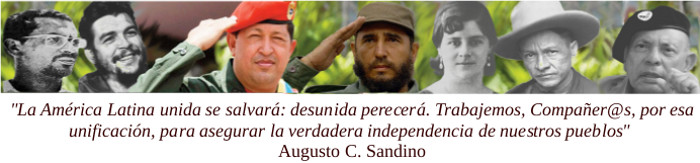
That means many other web sites in the world which are critical of NATO, of corporate globalization, of the United States government, or which defend the Russian Federation, China, Cuba or Venezuela, for example, may well be victims of similar attacks in the near future. Maybe we will never know the precise forensic details of the attack on our radio cooperative but we can certainly agree with Nicaragua’s national hero General Augusto C. Sandino when he quotes the saying, “you can fool all of the people some of the time, but you can’t fool all of the people all the time”.
You can follow Radio La Primerisima via:
Twitter: @laprimerisima
Facebook: Primerisima Nicaragua
Instagram: radio.primerisima
VK: primerisima_nicaragua
Facepopular: Primerisima Nicaragua
On air: 91.7 FM