A report from Managua - Moderate Rebels Podcast
Listen to original: https://soundcloud.com/moderaterebels/nicaragua-right-wing-us-coup-managua-episode-22
“I’ll never apologize for the United States of America. Ever, I don’t care what the facts are.”
Why are we going to sit down and talk to these quote unquote moderate rebels? Who are the truly moderate rebels? The search for the moderate rebel, do these moderate rebels really exist?
Ben Norton: Moderate. Rebels. You are listening to ‘Moderate Rebels’, I’m Ben Norton. This is a special episode in which Max Blumenthal is reporting from on-the-ground inside Nicaragua. And in the episode he debunks a lot of the talking points we’ve been hearing about the recent unrest in Nicaragua in Western corporate media outlets. Particularly Max outlines how there has been an attempted rightwing U.S.-backed coup against the Sandinista government, and Max has an informative interview with Nils McCune who is a researcher who actually lives in Nicaragua, unlike many of the Western journalists who have been misleadingly reporting on what’s been going on with a pro-opposition narrative. We’ll cut directly to Max’s report from inside Nicaragua, but first, here’s a clip from that interview:
Nils McCune: Well I remember the first reports when people started writing me from all over the world and saying, ‘Hey, what the hell’s going on there? Are there are protests, is the government killing people?’ And you know, from the beginning, it was clear that the rightwing was pretty involved in the very beginning of what was happening here. So I told people, ‘No, this is just, you know, it’s an attempt to move the waters a little bit, it’s an attempt for these NGOs that are sponsored by the United States and European Union, to try to make sure that they get those grants for next year.’
I never thought that making a splash would turn into a full-scale regime change operation. But from the beginning there were also people telling me, “Hey, look, but friends of mine from the left, or friends of mine who were in Nicaragua in the 1980s or people who are really progressives are all saying that this is real, this is a protest movement and the government is being repressive. So, from the first moment living here it was very clear that it was a rightwing operation to make some waves, but it was also clear that this had the potential to divide the international left.”
Max: Ok, so it’s July 26th, this is Moderate Rebels, I’m Max Blumenthal, this is the 65th anniversary of the assault on the Moncada Barracks by Fidel Castro and a group of compañeros in Cuba, back in 1953, that was the first shot of the Cuban Revolution. Actually, Fidel Castro was jailed and released only thanks to the intervention of Lazaro Cardenas, who is the founder of the PRD Party, which was also the party of AMLO, who is the newly-elected president of Mexico through the MORENO Party.
So a lot of developments in Latin America, as I mentioned, I’m here in Nicaragua, which has just celebrated the 39th anniversary of the Sandinista Revolution, the defeat of the dictatorship of Anastasio Somoza, and this anniversary occurred on a very momentous date this year because it also marked the defeat of a U.S.-backed coup attempt, something that can only be described as a coup attempt, another regime change operation modeled partly after the ‘color revolutions’ that we saw in Eastern Europe, Gene Sharp-style, with elements of Syria and Libya mixed-in.
I’m going to talk about that with my friend Nils McCune, who has been living in Nicaragua for several years and has been working with the rural campesino movement. He lives in Tipitapa and has lived through a very precarious few months. I’m also here with Nora McCurdy, who grew up in Nicaragua and may weigh-in on this discussion and who also has a really bad cough, so you might be hearing some of that as well. But first, Nils, I want to just ask you, how did you wind up in Nicaragua? Talk a little bit about the work you’ve been doing here, and then we can get into the events that began this April.
Nils: Sure, thanks Max. So I come from a labor background in the United States and as a kid I started to get more interested in the environmental question and the question of food, because it seems to be a way that people can become politicized in an important way. So I guess in my university education I started working on something called agroecology, which is the idea of how we can feed ourselves as peoples without destroying the planet, without requiring resources from other countries or other places. And that work first led me to do a masters degree in Cuba, which is the country that has the most advances in agroecology in the world based on their ‘special period’ and how they’ve been able to creatively get past the blockade put on them by the United States.
And in 2012, I came to Nicaragua, which is a country that has a long agrarian history, the land reform of the 1980s during the Sandinista Revolution, and has sort of the potential to be the country within Central America that can produce its own food. Right now Nicaragua produces between 80-90% of its own food. The last few years I’ve been working at four different school that the Via Campesina has here for social movement youth to learn the technical but also the political aspects of agroecology.
Max: Ok, so you were basically in a strategically-important location when a coup attempt began, something that was regarded in Western media as an uprising. The New York Times has called it ‘resistance’. I think in an article in the magazine edited by former Israeli prison guard Jeffery Goldberg has referred to it as sort of a ‘moment of Democratic potential’. This began on April 18th. What did you see?
Nils: Well, I remember the first reports when people started writing me from all over the world saying, ‘Hey, what the hell’s going on there? Are there protests, is the government killing people?’ And you know, it’s a small country here, we all kind of know who’s who and from the beginning it was clear the rightwing was pretty involved in the very beginning of what was happening here. So I told people, ‘No, this is just, you know, it’s an attempt to move the waters a little bit, it’s an attempt for these NGOs that are sponsored by the United States and European Union, to try to make sure that they get those grants for next year.’
I never thought that making a splash would turn into a full-scale regime change operation. But from the beginning there were also people telling me, ‘Hey, look, but friends of mine on the left, or friends of mine who were in Nicaragua in the 1980s or people who are really progressives are all saying that this is real, this is a protest movement and the government is being repressive.’ So, from the first moment living here it was very clear that it was a rightwing operation to make some waves, but it was also clear that this had the potential to divide the international left.
Max: Well, that division has taken place and I think we can get into that, or it’s pretty easy for the gulf to widen. We’ll talk about that down the line in this discussion. But what happened on April 18th? A lot of younger Sandinistas referred to a massive media manipulation, there were events at the public university UPOLI, where it was said that a student had died—the student turned up alive the next day. Then three people were killed on April 19th, and they all turned out to be on the government’s side, or bystanders. Correct me if I’m wrong, and tell me exactly how this began and what took place over the next few days, and what was it like for you being in Tipitapa? You described it in a conversation we had earlier this week as ‘apocalyptic.’
Nils: Yeah, so it’s interesting looking back, hindsight is 20/20, and there were several sort of like dress rehearsals for the regime change operation. It happened earlier this year, first there was a spattering of news across the country of child abductions, and the national police had to come out several times with public statements saying, ‘This isn’t real news, this is something that’s getting spread on social media. Nothing to be concerned about.’ And then in the very beginning of April I think it was, or the end of March, a fire broke out during the hot, dry season of Nicaragua, in a very important forest reserve that’s in the southeast part of Nicaragua called Indio Maiz, which is a biodiversity hotspot, the lungs of Mesoamerica.
This fire, which was started by a young farmer, who was burning an area to plant with rice, got out of control. It’s an area where there’s no roads, and to travel there would require some combination of air and small boats. So, the Nicaraguan government had a very difficult time containing the fire for the first five or six days. There were experts who thought that this fire would last for several months and a protest movement erupted of well-to-do university students in Managua, closing roads, shutting down traffic, and complaining that the Nicaraguans had not accepted the help of 60 Costa Rican firefighters. There’s a lot of details to all that because Costa Rica and Nicaragua have a long history—Costa Rica took some land from Nicaragua last time it intervened here. So, when the Nicaraguans said ‘No’ to the sixty military firefighters, it was because what Nicaragua needed at that time were airplanes that would allow it to put out the fire.
So, that fire luckily went out on its own pretty much after a rainstorm. And then, just a week later, COSEP, which is the organization of business owners that sort of is like the Chambers of Commerce here, walked out on negotiations with the government and with labor unions about a new law around social security. The social security system here in Nicaragua is public, but it’s been running a loss of nearly 80 million dollars per year. There was a need to find a solvency, and the IMF had asked Nicaragua to raise the retirement age and pretty much doubled the number of weeks that a worker would need to pay into the system to be able to have a retirement check.
The Nicaraguan government had its own counter-proposal which was to maintain the retirement age at 60 years old, to maintain the number of weeks that people would need to work, also to maintain a partial pension that’s available for people who were affected by the civil war here in the 1980s, and to increase the amount that people would pay in their paychecks by 0.75%, to increase the amount that employers would pay by, I believe it’s 2.5%, and to increase the amount that the government would pay from 0 to 0.5% I believe. So, there were these very slight increases all around but the largest increase on employers, and also the reform would have ended a loophole that allowed high-income individuals to claim a low-income in order to access health benefits.
So there’s some details to the reform but what’s interesting is that the empresarios here, the Chamber of Commerce, COCEP, called for protests, and the next day there were protests of these same mostly-middle class university students from private universities who had protested the fire. It’s very unlikely that they even knew what the reform consisted of at that time, but on April 18th they did protest.
What happened next is really incredible, Max, because we started getting hit up on our cell phones, on WhatsApp accounts and Facebook, by all kinds of frantic messages that night, and all day the next day talking about repression, talking about a student being killed. And on Facebook, paid advertisements and sponsored content that called to people to rise up in arms against the police.
Max: Let me see if I can play one of those right now:
¡Muchachos, muchachos escúchenme todos !. Mi nombre es Brut Steven. Repito, mi nombre es Brut Steven. Estamos encerrados en el edificio de la UPOLI. ¡Estamos encerrados, necesitamos ayuda! La juventud sandinista, los antimotines nos están tirando disparos, estamos nerviosos todos. Estamos nerviosos, todos estamos nerviosos, se pueden escuchar detonaciones. Estamos encerrados en el edificio --- de la UPOLI. Nos van a quemar la UPOLI con nosotros adentro. ¡Ayudenos! ¡Recen por nosotros!
So what the hell was that, it sounds like a little bit phony to me?
Nils: So Max, you have to understand the context here, Nicaragua is very safe country, it’s a place where people have been studying, in fact it’s been a place where people send their kids from around Central America because it’s such a safe country. And this recording obviously breaks all of that. So what it’s saying is a boy saying, he introduces himself, he says, ‘look, I need help, we’re students trapped inside UPOLI, outside are Sandinista youth and riot police and they’re going to build our building with all of us locked up inside here. So please help, pray for us.’ And in the background, you start to hear these sounds of explosions right as he said, ‘We can hear explosions,’ you start hearing explosions.
I mean, for me, listening to it, I can just imagine somebody at a mixing table cuing the explosions. It’s a joke, right, it’s a fake recording. We’ve interviewed someone who was there at UPOLI at the time, whose mom heard this, called her frantically, and she said, ‘No, we’re here, we’re protesting, but we’re fine.’ So, what we have is a partial truth where there were students who were protesting the reforms of INCE, without necessarily knowing what they were protesting, but feeling like the process hadn’t included them, that they hadn’t been properly consulted. But then that gets mixed in with this fake news saying that there’s police massacre of students, which for anyone who has a conscience, is a very, very hard thing, no one could accept that in this country.
This was the 19th of April, and that night there are conflicts in several cities of Nicaragua as people start to throw stones at police, and attack the INCE buildings, they tried to burn them with Molotov cocktails. In Tipitapa, a young man was killed, a Sandinista youth, and it’s still not totally clear how he died. It seems he may have been protesting, but it’s not clear, there were people who were protesting in Tipitapa who were given arms by a local anti-Sandinista politician, there was a police officer who was killed near UPOLI and somewhere else in Managua (I’m not sure whether it was a worker who was killed).
So on April 19th there were 3 deaths, and on the morning of the 20th all of those deaths were reported in the media here as repression. So the 20th and the 21st were days of full-scale riots across Nicaragua, and young people having confrontations with police, and also young people protesting for peace. It was interesting that the Sandinistas rallied more people, each of those days there were more people rallying in support of the INCE reforms and in support of peace than there were against the INCE reforms, and looking to burn out alcaldias and burn down public buildings. But of course all of this got swept into this media narrative that just talked about repression of peaceful protesters.
Max: Next you had, first of all, let’s put the UPOLI occupation in context. This became a base of operations for the opposition. This is a public university, one of the two main public universities in Managua that really serve the poor and working class young people from all around Nicaragua, all the way from the blue fields, Leon, wherever, and they were not able to go to school. Schools were being trashed. Who was at UPOLI? Who was in the building?
I got to meet Veronica Gutierrez and Leonel Morales, who are two students—Leonel opened the door for the quote-unquote students who came into UPOLI, he was the student union leader, he’s now in the hospital, and we can talk about him later. Basically he was nearly killed and thrown in a ditch for turning against the opposition, but who was in UPOLI, and who is Felix Maradiaga? What was he doing there? This is a really key figure in the whole story. What was going on the 3rd floor of UPOLI? I think you can kind of tell the story of this coup attempt if you start from there.
Nils: Sure so, the thing to remember here is that each day that passes the government is sort of trying to figure out what the hell is going on and respond to whatever happened the day before, and meanwhile there is a very elaborate plan for each day. So what happened with UPOLI is that there was fake news of a student death on April 18th, people started receiving that news in the evening time, people are talking about it, concerned about it, students want to show their solidarity. So April 19th, the students of UPOLI decide they’re gonna have a march. They tell Leonel, whose their president, ‘Look, isn’t the student union going to support us?’ So he marches with the students and as the student union, there’s a march, really to sort of clear up the question of the student who was reported to be killed.
After that march ended, there was a whole other group of people who arrived outside of UPOLI and started getting in a conflict with police officers, who started throwing rocks at cops, trying to create a battle situation. Because the police used tear gas that day, and people were being affected by the tear gas, Leonel opened up the gates of the university to allow people who were fighting against the police to enter into the university.
Nicaragua has a lot of university autonomy, so that means that the police officers are not allowed to enter the university unless they have the permission of the chancellor. So the protests sort of took refuge in the university, the police stayed outside, and this mix of students and non-students are in the university for several days, and as Veronica and Leonel told us, each day the operation started to take form.
Immediately, rather than neighbors who were feeling solidarity and bringing a plate of food, they were getting truckloads of food. They were getting truckloads of clothing so they wouldn’t have to leave the university, they were getting lots of money, they were starting to get morteros—so morteros are mortar launchers, it’s a traditional homemade weapon here that shoots off a ball of gunpowder. It’s not a very effective weapon for killing somebody but it’ll sure make people keep their distance because it can’t kill somebody but it can destroy your face or break a rib.
So these sort of makeshift weapons started showing up, truckloads of rocks started showing up, very large amounts of money started showing up, and after Daniel Ortega gave a speech calling for peace, and calling for dialogue, and reversing the decision to reform the INSS, to reform the social security system, the student union said, ‘Ok, let’s meet with everybody else who’s here.’ So they had a meeting with groups that call themselves Civil Society that had been present in UPOLI agitating for months before these protests started in April. At that meeting the student union said, ‘Look, this is great if you guys want to continue to protest, but because they’ve rescinded the reform, the protest needs to leave the university now. Because we have a university, we have a responsibility towards our university to make sure it doesn’t get destroyed, to make sure people don’t miss too many classes. So take your protest somewhere else.’
And upon this conversation finishing, these two student leaders who we were able to talk to learned from the security guards at the university that a group had entered into the university armed, looking for them. Because they weren’t going to let these university leaders push out the protest movement. So the student leaders escaped, they made a press statement that said, ‘Look, we’re the student union. We left with our students, and those who continue to be in UPOLI are not students.’ So that was this initial slap in the face of the coup attempt, because the coup from the beginning had the strategy to take over university spaces which by law here, police can’t get into, so it would allow them to create an operation.
So the operation they created was through this very interesting figure named Felix Maradiaga, a Harvard-trained, U.S.-raised, Nicaraguan who has also—he’s an Aspen fellow—who has been a hardcore opposition leader for several years here, but through a very sort of highbrow NGO called called IEEPP, which is an ‘Institute for Economic Studies and Public Policy’, which talks about community safety, studies of crime and different sources of public policy in the country. Its main emphasis has been to try to end the armed forces in Nicaragua, to try to propose that the military would be dismantled here. So, for many years this has functioned as a mouthpiece for a Washington policy that would disable Nicaragua’s ability to stop the imperial wheel here because obviously a country that has an independent foreign policy and its own army is more powerful than a country without an army.
This guy, in the moment that the conditions produced a social rupture and everyone in the country is being bombarded with fake news, starts to deliver money and weapons to UPOLI. There’s photos of him with armed men and a very important organized crime figure installs himself in UPOLI, a guy named Viper, that’s his code name. He was there for several weeks, the state media started reporting on his presence in UPOLI and the opposition media denied it. Then finally this guy left UPOLI and was subsequently arrested. When he was arrested, Felix Maradiaga sent out a tweet to his fans saying, ‘Lets all go and demand that our prisoners be released from Chipote.’ But then of course he said he had never heard of Viper and didn’t know who he was. But Viper gave a very interesting declaration in which he said, ‘Yeah, my job was to foment crime across Managua, to create panic, including car jackings, including assaults and even murder.’ He said, ‘Yeah, the one who was telling me what to do was Felix Maradiaga.’
So it’s a phenomenal situation here where we have someone who is the closest opposition figure to U.S. intelligence, the very highbrow Aspen fellow, who is ordering hits in Managua, and who is ordering car jackings, and who is ordering arson. All to create panic, to try to put the population into a confused state which would allow the opposition to take over the government here.
Max: And it nearly did, however I think one of the fatal flaws was the lack of public support. The public basically rejected these criminal elements. Just quickly about Felix Maradiaga, I think we can talk a little bit more about him. I tried to go to his office the other day at IEEPP, which is IEEPP, I’ve written about him at a Greyzone Project, an article on how the National Endowment for Democracy has boasted of laying the groundwork for insurrection.
Basically, Maradiaga is the main contact for the National Endowment for Democracy, which is the regime change arm of the U.S. government, it has been responsible for funding opposition movements that have led regime change operations, some of them known as color revolutions, across the world, including in Mongolia where it smashed the legacy of socialism and installed a rightwing libertarian government that’s responsible for record inequality in that country. There’s so many countries where the NED has been responsible for destabilization under the guise of spreading democracy and human rights.
From 2014 to 2017 the National Endowment for Democracy dumped about $4.1 million dollars into Nicaraguan opposition media. It’s been active in the country since the ‘80s, when it started supporting the Contras through a front group run by Oliver North. Felix Maradiaga, just to wrap up the story, he wasn’t at his office in this really wealthy neighborhood of Managua.
It was completely shuttered because he was in Washington with his crew meeting with Mark Green, who is the director of USAID, which is another U.S. government body that funds opposition groups in Nicaragua to secure $1.5 million dollars for the coup 2.0, the next round. I don’t know if Maradiaga will be back but he was seen at UPOLI with a beard next to armed figures, figures carrying guns. This is on video, it’s widely available, everyone in Nicaragua has seen it, in Washington they haven’t seen it. He shaved his beard and he kinda looks like pretty legit you know, he looks like he could be Marco Rubio’s legislative aid.
Also at the table at the USAID meeting was Victor Cuadras who was one of the original students who were revered as the defenders of democracy here. Most of those students, or many of them come from UCA, University of Central America, which is a private school that serves the wealthier population here, so you do have a class divide among the students. The students at UPOLI and at UNAN, which is a big public university that really reflects the legacy of Sandinismo, which was utterly ransacked.
I got to visit the campus the other day. I think any American who cares about public education would’ve been shocked to see what was done to this school by armed elements and these so-called students who occupied it, and just trashed the women’s dorms, they demolished the reproductive health center which was providing free health care including OBGYN and rehabilitation services to the local community, they just trashed it. They burned the child care center which served 300 children who were the children of the staff and that was because that was the base of operations for the armed elements. I was easily able to find homemade grenades just lying around there. And two students were on hand to really emphasize their resentment of these more privileged students and the criminal gangs who protected them, who destroyed their school and it prevented them from going back to class for least six months.
It’s not just them, you have students from other parts of the country who relied on UNAN in order to get internet, which they don’t have at home. It’s something I’ve been noticing when I talk to working people here, you talk to anyone who drives a taxi or sells food in the street or runs a shop and they say, ‘I couldn’t afford to go on strike, I have to work. The people who can afford to not work for awhile, the upper class, the upper-middle class to the extent that it exists, they’re the ones that can afford to do so. And those are the students who could study at home because they have wireless connections. The other students couldn’t.’
So you can definitely speak to that, speak to the class divide, but let’s also talk about the role of the Catholic Church here, because the Catholic Church was supposed to serve—first of all, a national dialogue was called by president Daniel Ortega where the students Lester Aleman, another one of these students who appears to have been involved in National Endowment for Democracy training courses (they’ve trained over 5,000 young people here, according to one of the trainees I’ve met)—they made the call for regime change in the national dialogue, in one of the first sessions. They said, ‘The only way we’re going to stop these protests is if you leave, Mr. President.’
The Catholic Church was supposed to be mediating these, they’re supposed to be a force for peace, for de-escalation, but instead we saw the Catholic Church at violent road blocks with priests egging on armed elements. We saw Silvio Baez, who is the most important Catholic official in Nicaragua, tweeting, pretty much calls for regime change. The bishops just clamoring for the president to go while posing as mediators. So talk a little more about the role of the Catholic Church, they were recently portrayed by this parachute New York Times journalists as ‘fighting for Democracy’ in Nicaragua. That isn’t really what I’ve gotten from talking with people who have had direct contact with the priests in these last few months.
Nils: Yeah I think what’s interesting about a coup that’s not a direct military coup is that it depends on manipulation. And it depends on lies. So, what we saw here was a very polished opposition that would show in the National Dialogue, which was called for by the president, who also invited the Catholic hierarchy to mediate the dialogue. The opposition, which in the dialogue called itself the Civic Alliance for Justice and Democracy, was made up of a sort of a “who’s who” of aristocracy and oligarchy families, people who are heads of NGOs that accept money from the US government, and this group of students that called them the 19th of April movement.
So what’s interesting about the way these work is there’s a need for one clean-cut sort of opposition that can talk to the cameras and then a very, very violent opposition that can control the streets and the cities. And I think the mistake that was made here by the opposition was to try to do a lot without counting on popular support. And without popular support, they had to resort to hiring gangsters, using paid pickets, buying weapons to arm the opposition, and starting to create spaces for drug gangs to take over these armed roadblocks that you mentioned, Max. So –
Max: The tranques.
Nils: The tranques. The famous tranques. This country was trankado which means that the tranques prevented transportation, they prevent people from getting to work, they became centers for crime, petty crime, like robberies and forced toll for workers who needed to cross a tranque to get to work, but also hate crimes including rape, including beatings of Sandinistas, public torture, all kinds of humiliation. People were stripped naked and painted in the blue and white colors of the national flag. And some people were burned.
So, from this phase of sort of mediatic manipulation around something that pretended to be a student protest, the coup attempt, here, at same time as the National Dialogue began, shifted into a new phase. Which was based on very aggressive street tactics to trap people where they were, only let non-Sandinistas move around freely. But they didn’t even allow non-Sandinistas to move around freely. They forced Sandinistas and non-Sandinistas to feel fear in the streets and that was something new here in Nicaragua.
So from this first moment, I’d say when probably 90% of the population who had received these messages, was sure that the police or Daniel Ortega had ordered some heinous crime, over the next month, and as the National Dialogue started to form and you see people like Lesther Aleman really sort of positioning themselves to be a future candidate, rather than trying to propose anything interesting for the country, while the government at this dialogue had very thoughtful responses, showed a real clear interest in the dialogue succeeding, and the Catholic Church as mediator sort of, you know, sending out these incredible Tweets warning that president that if he didn’t leave the country and resign, that he and his family could be murdered. So there’s bizarre stuff coming out of the priests.
So as this phase sort of took hold many, many people started to see the opposition as their kidnappers who were keeping them away from work, who were keeping them away from seeing their kids, who were putting them in danger. And it became clear that these tranques were being financed and they were being attended to logistically by the Catholic Church in each city. Many of the people working on the tranques were altar boys, the people who were bringing food to the tranques were churchworkers. The people who would bring the tranques back once the population would rise up and push them out using their own mortar launchers – the priests would come back and lead the march of tranquistas – the roadblock criminals – to take their role of closing off traffic.
So, we saw all of these things and a population for a week or two was convinced that the government had committed these heinous crimes, started to see that they were dealing with a very manipulate opposition, with a two-faced church, with a private industry which had betrayed its very beneficial relationship with the government, and a student movement which wasn’t really made up of students. [38:18]
So, one by one the pillars of the coup attempt started to fall and, you know, this Gene Sharp model is to knock out the pillars of support for a government, and one of the key elements is to plant distrust in the police. So that’s been, I think, the major element of this coup attempt, is to try and plant distrust in the police. I think they had hoped the army would come out into the streets because there was so much violence in the streets. The very first day of the National Dialogue, the bishops, the students, the NGO leaders had one demand which was all of the police into their barracks. So, the government complied with that demand, asking only for the tranques to be removed. The opposition didn’t want to remove the tranques and so what we had over the next week was tranques set up everywhere across the country because the opposition was basically working in conditions of impunity.
And, hate crimes proliferated across the country. There were many, many Sandinistas who had their houses burned and ransacked in those weeks. Thousands of Sandinistas went underground to try and prevent themselves and families from being hurt. People moved from house to house. There were daily and nightly vigils by workers and sympathizers of the government to make sure that the Sandinista headquarters in each town weren’t burned down.
Over these weeks, I think there was a total of about 65 government buildings burned across the country. Dozens of Sandinista headquarters in different towns were burned down and no other party has been attacked. No human rights organization has had its offices attacked. No opposition NGO has been attacked. Only the Sandinista Front, and as you mentioned, universities, public infrastructure –
Max: Radio Ya!
Nils: Right, a Sandinista radio station which is independent but has a leftist focus. So this turned into this massive, shocking and terrifying wave of terror and hatred towards leftists and towards Sandinistas across the country. And that lasted for a very long time because the police were in their barracks.
I think the order from the government was to not let the police leave their barracks until the population was really sure that the police weren’t the ones who were committing these crimes, because even as these hate crimes were being committed, all of the opposition media and all of its social media strength were telling people that these were acts of – that these were either self-attacks of Sandinistas against themselves to be able to justify attacks against peaceful protesters, or they would switch the identity so that the Sandinista who had been killed would now be counted as a peaceful protester who was the victim of government repression.
So you have this incredible situation of manipulation that’s happening at the same time as a wave of hate crimes against Sandinistas. And really, Max, that was what we all lived through for many weeks, and it was terrifying.
Max: And this story hasn’t been told in the US. It’s almost like there is a deliberate cover-up. Having been here, it’s amazing, to actually look into the eyes and hear the voices of people who were tortured, brutally tortured, simply for being Sandinista. I arranged to meet some of them. Many of their stories had been reported in local media, so I knew some of their names.
I wanted to meet one person in particular, Sander Bonilla, who was tortured on camera with a Catholic priest presiding directly over the torture, just on camera. It wasn’t reported in the US, I don’t know why. His testimony hasn’t been recorded by any human rights group, I don’t know why – well, of course I know why, he’s an inconvenient victim for Washington, which just for some reason seeks to destabilize this country.
So I go to meet Sander Bonilla in the City Hall in Managua, and the entire room is filled with people who are desperate to talk to some reporter who would listen to them. Because no Western reporter had bothered to come here and talk to them. No human rights group had bothered to talk to them. The whole room is packed. I’m with my friend Thomas Hedges, we’re recording a lot of what we’ve seen here on camera, we’re going to work on a documentary soon, and we had just a limited amount of time to take people into a room and record what they had to say on camera.
And one after another, they would sit at a desk with us and break down in tears, describing how they were brutally tortured by opposition criminals for the crime of being Sandinista – starting with Sander Bonilla, who said that he had burning plastic bags dripped on his skin after he was kidnapped at a tranque and taken to an unknown location with a mask over his head, and that the priest who presided over his torture has been since imploring him to rescind his testimony, while opposition media says that he’s a liar. He showed me his wrists, which still bore the scars of the rope that was used to tie him up.
I listened to an entire family break down in tears, describing how they were kidnapped and tortured. The father was missing an eye; his father had bandages all over his legs; son had a giant scar on his face. And the mother did the talking, while the father, the son, and the grandfather sobbed behind her.
Why, it’s just unbelievable that everywhere I went I meet people like that, including randomly. I went to Masaya, which is the city where the opposition attempted to declare a junta, much as the Syrian opposition set up rebel-controlled zones in places like East Aleppo and Idlib, Raqqa, where ISIS declared its capital. And you know, East Aleppo’s occupation by Gulf-funded rebels started with a version of the tranque. They started setting up roadblocks and boxing the area in, keeping everyone out so that they could develop their own narrative which was repeated faithfully by Western reporters.
That’s what the opposition attempted to do in Masaya, which is a city about 35 minutes from Managua, a city of 80,000. Its most densely populated area is Monimbó, and this meant that this was the most easy place to strangle with the tranque.
And the most ferocious roadblocks were set up there, with armed gangs who would extort motorists and terrorize the local population, particularly those like Emilio Alarcón who were Sandinista, who was pulled out of his house and smashed in his face. He lost five teeth, I met him when he had stitches. He was better, but he showed me photographs of his face and it looked like, you know, like a stromboli. He said, “They just beat me because I’m Sandinista, and I’m Sandinista because they put a roof over my head, they gave us electricity and they paved the street.”
You know, a lot of these areas – and I was here twelve years ago in Nicaragua, and I’ve been to these areas – and they didn’t have paved streets then, under the neoliberal government of Bolaños. That’s partly why there’s deep support for the Sandinistas.
So you know, I read this piece today in NACLA, which is considered a leftwing journal on Latin America, by this professor, I don’t remember his name, from Indiana University. And he starts off by quoting the MRS people, who are the former Sandinistas, and how they say bad things about Daniel Ortega. And he follows the usual script, he dismisses the US role in the coup and then he ends by saying, “Shame on you, Mr. Ortega, how dare you remove those courageous roadblocks at Monimbó” – you know, this professor who’s sitting in an office in Indiana.
And I would just love for his campus to be occupied by the kind of people that occupied UPOLI and UNAN, I would love to see his streets, the streets around his campus, strangled with tranques by the Bundy militia and MS-13 or whatever gang you can think of. And I wonder what this professor would ask of his government, or what any American would ask of their government. I think they would be calling for black helicopters with Federal agents rappelling into these opposition areas so fast there wouldn’t even be time for the opposition to mobilize. It would never be allowed to happen in this country, especially 40 minutes from Washington.
And we saw the same scenario in Syria, where rebels, so-called rebels from Jaish al-Islam, the Saudi-backed militia, had taken over an area just east of Damascus and were using it to launch attacks on Syria’s capital and even fire at civilian aircraft; and Americans had no idea that their government and its allies were supporting that kind of thing.
But they have to put it in context. How would you feel if this was happening in your neighborhood? Nicaraguans rejected it. And Nils, I want to ask you to speak to the kind of – the public mobilization, because you know this has been presented as a government against the people. I don’t think these tranques would have been defeated without massive public mobilization.
Some people refer to Sandinista paramilitaries, but we know that the police, because of a demand in the national dialogue, were ordered to stay in their stations for a month and a half or two months and were not able to go out and take out the roadblocks; and so average citizens started taking them on as well. So speak about what you saw in Tipitapa and elsewhere as far as public mobilization.
Nils: Yeah, thanks, Max. It’s so complex, because there were phases, right? This coup attempt has gone through so many phases by now.
There was this moment when the roadblocks have taken over the country, the police are in their stations, crime is – especially around the roadblocks – is becoming something that’s just abominable. There was a ten-year-old girl who was raped at a roadblock in Tipitapa, in the community of Las Maderas.
And Sandinistas are starting to talk to each other and say, “Look, we haven’t been told anything by the government. This National Dialogue doesn’t seem to be going anywhere. Everyone knows the role that the church is playing. Sandinistas’ houses are being marked with these very eerie pastel colors, these three dots in pastel colors.”
Thomas has taken some images of them, so you guys will get a chance to see them in the documentary. But Sandinistas’ houses are marked across the town and at least five or six in each town have been burned down. Sandinistas are really under attack, and it’s a life-and-death thing, I’ve never lived through something like this before. Everybody I knew started sharpening a branch or carrying a knife around with them.
And then the next week, a knife wasn’t enough, because the opposition had moved from mortar launchers to rifles, pistols, and AK-47 weapons. It was a very, very strange moment, where we really, really felt like we were under attack. I couldn’t leave my town, I couldn’t leave my town for 80 days. I had looked at flights, I had a work opportunity, I missed two plane flights. I was looking at ways that I could get my family out via water, because there’s a large lake in Nicaragua. But the case is that there was no way out.
And in this moment, Sandinistas started to get together. People were talking, and they were doing these nightly vigils around some of the key spaces in each city to make sure that the opposition wasn’t able to just destroy the entire public infrastructure. Because really, the idea is not just to take out one government and put in another, it’s to prevent Nicaragua from ever having a strong state again. So in this context, yeah, people organized.
At first there were cases, before the roadblocks became so armed, in which women organized and pushed out a roadblock, merchants organized, people who sell at the local farmers’ market organized, and they pushed out roadblocks.
But the roadblocks came back and they came back with heavier weapons. Many of these weapons were provided by opposition leader Chica Ramírez or Medardo Mairena, who were leaders of what they call a peasant movement, which really is an anti-Sandinista movement, it’s all it is. But they do use paid pickets and they do have good access to weapons. So the roadblocks became even more armed, it became something where it was unclear what we could do.
You know, the waiting game just lasted forever, but eventually the roadblocks started having to pay less to the people who were running them. So first they were paying about 500 córdobas a day, which is about twice what people normally earn here, 2 ½ times what they normally earn here. Then they were getting 300 córdobas a day, which is still a great salary here. Then they were being offered 100 córdobas a day, but of course all the alcohol they could drink, all the marijuana they could smoke, all the food they could eat.
But as the money started to go down, the roadblocks were starting to get in fights with one another, they were getting into armed fights with one another. It was turning into just sort of ridiculous. There wasn’t really a political purpose to it. There are very few people who have been involved in roadblocks who have any proposal whatsoever for the country. Most of them are just paid pickets.
So the population over this period of time has become increasingly organized, increasingly armed. And as they start to arrest the roadblocks, they started covering their faces, because – I haven’t had a chance to describe to you, but Sandinistas have been – all over the country they have had their photos published on rightwing websites, they have had their names published on rightwing websites, there have been lists published of businesses that should be burned down for not supporting the strike of the opposition. In many cases, they show somebody’s picture and the next day the person is attacked.
So under this incredible sense of threat and violence – and it was a real risk all the time, every time my wife left the home – it was like living in a war in a sense. In the 80s, the Contras never invaded the cities, they never took a major city, but all of a sudden this violence is happening in all of our cities.
So under those conditions, with the police in the barracks, many people figured out a way to get armed to protect themselves. Many people built up the walls around their house, other people moved into friends’ houses. So there’s been this monumental process of self-organizing.
I don’t think it’s been a violent process, it’s been a process of getting organized and recognizing the conditions under which we’re living, which is that if the people don’t do anything about it, this government is going to fall. And if it falls, all of us could be targets.
And so, I haven’t seen, what, the famous pro-government paramilitaries – there is a situation where there are civilians who cover their faces, when they’re doing vigils around city centers; and there are also police who cover their faces when they’re pushing out the roadblocks.
So at a certain point here, Max – probably the first major offensive of the government, counteroffensive of the government, was on June 19, exactly two months after the beginning of the protests, when they liberated all the routes, all the highways, to get into Masaya. And they got into the beleaguered police station which had been there for 60 days under siege by anti-government gangs.
Then after that, slowly across the country, police started taking out these roadblocks. And, you know, outside the country this is all presented as total repression against nonviolent protesters; inside the country the police are heroes, because they’re the ones who have been dying to enable Nicaraguans to return to peace.
Max: Yeah, so the death toll is something like 380 or 430 or something around there, around 400. And you know how I know that there was a regime change operation afoot – and when I say “regime change operation,” I mean an attack not just on a government but on the nation-state, a plan to reduce a country to a failed state like Libya – is that Ken Roth surfaced after the Nicaraguan government had essentially won and removed the roadblocks, allowing the economy which had bled $500 million to start functioning again, allowing citizens to start moving around.
Ken Roth, the dictator of Human Rights Watch, who has been in the same position for 25 years, catering to a small cadre of billionaires and elite foundations with almost no constituency base, blamed the government for every single death. Meaning that zero Sandinistas died according to Ken Roth. Mike Pence basically said the same thing.
We met Enrique Hendrix, who carried out a forensic study of the death counts which had been tabulated by ANPDH, which is the main human rights group here, that used to be funded by the US. It was founded in Miami, and it’s where the US Congress gets all its statistics from.
And even this human rights group, when he went person by person, he found that – this researcher Enrique Hendrix found that – about 60 people had died who were government supporters, Sandinistas. And about the same amount died who were involved in, not just the protests, but were involved in armed activity to overthrow the government, who may have been actually shooting at police or citizens.
The rest of the people – there were duplicate deaths, there were bystanders, there were people who died in accidents during that period. And so the death toll has been totally manipulated, as it was in Venezuela, where the majority of people who died in the guarimbas, recent ones, were [listed] on the opposition side. People have been burned on the government side. Basically, the whole information – all the information we’re getting outside of Nicaragua – is slanted towards one side.
And there’s a push to sanction this government now, in the US Congress, led by Ileana Ros-Lehtinen, part of the hydra of Ted Cruz, Marco Rubio, and Ros-Lehtinen, who are kind of Cuban right-wing exiles. And they want to start attacking Nicaragua’s economy. Nicaragua’s economy has been making a lot of achievements these past few years, I think we’ve been looking at 5% growth each year.
I mentioned that I’d been here before Ortega was elected, and the country has been transformed in many ways. Managua has certainly been transformed. Visiting the city center and seeing the Salvador Allende port, where public space has been created for families, and food in really nice restaurants is subsidized. It used to be a terrifying place to walk around, and now it’s beautiful, and it’s much safer than downtown Washington, DC, is at night. This is a mixed economy, where a lot of things are subsidized to make life easier for workers.
People have been doing well until the sanctions started coming in, like the Global Magnitsky Act. And what these sanctions did, first with the Magnitsky Act, was to threaten businesses that would work with the government. And so it forced a lot of these businesses, or pressured them, to join the coup. And now we’re going to see a deepening attack on the economy.
So I want to ask, what are you expecting here in the next few months, in the next year, and what is at stake – because I think a lot of people have been listening to this and getting a lot of details – but why does the United States want to destabilize Nicaragua, a country that presents no threat to it whatsoever?
Nils: Yeah, you know, it’s a tough one. I think internally there’s one situation, externally there’s an entirely different one. Internally, you know, the greatest threat that Nicaraguans face is the penetration of hatred into our lives, the way that using fake news and social media, disturbing images, we could lose ourselves and become like other Central American countries where organized crime is rampant and human life has lost much of its value.
You know, we haven’t had that here. It’s a country where kids feel safe playing in the street all evening, where people can walk home from work at three o’clock in the morning, where you can get drunk in the street and the only thing that’ll happen is someone will put a newspaper over you so you don’t catch a cold. It’s an interesting country in that sense, you know.
And the idea that we could hate each other is really terrible, and the fact that through this combination of citizens getting organized, the government having a very conciliatory tone throughout, and eventually the police clearing up the roadblocks, has really created sort of a pathway towards reconciliation and peace here.
That’s really important to be clear about. Nicaragua can heal from what it’s been through in the last three months. It has to be an honest – it can’t be a one-sided reconciliation. This is not just a government defeat of a coup attempt, it’s really the Nicaraguan people coming together to realize that they need to live together in peace, whatever their differences of opinion are, and look for democratic solutions to democratic problems, right?
So that’s one side of it. The other side of it is that, now that the opposition, the hard-core opposition, has been defeated entirely, militarily, it has been defeated in terms of its popular support, it has been defeated in terms of having any cards to play – it’s just shown everything it had, this was its one big chance. The preachers who were in favor of the coup have shown themselves, the priests who were in favor of the coup have shown themselves. And so it’s a really, it’s an exhaustive attempt.
So what they’ve done is immediately focus on the international arena. And as you know, it’s a very tough moment for the left in Latin America, there have been lots of defeats lately, and the bigger economies have been controlled by the right again – Argentina and Brazil. The election of López Obrador in Mexico is very important, but he hasn’t taken office yet.
But in general, it’s the worst context in maybe the last twelve years in Latin America. And that means that Nicaragua doesn’t have the votes to defend it at the Organization of American States. It was being defended by Nicaraguan chancellor Denis Moncada along with the chancellors of Venezuela and Bolivia. Of course, Cuba doesn’t participate in the Organization of American States.
And the United States, which has developed its capacities to affect the economies of other countries to a phenomenal degree, right? It’s no longer a blockade, it’s no longer sanctions in the old sense, but it’s these very highly sophisticated forms of financial war that they’re able to carry out on a country. Nicaragua is getting its name dragged through the dirt. Its peace is being called dictatorship around the world.
If the Sandinista Front were pulled out of power by force, this country would be plunged into chaos. They’re talking about a death toll of 300 people, there would be 30,000 people to begin with, in the first year, if the Sandinista Front were taken out of power by force. So the first thing that we need to be clear about is that the solution to this will require democratic methods and the Sandinista Front can’t be taken out by force.
But unfortunately, because the Nicaraguan people have survived this militarily, the European Union, the big NGOs, the United States, the World Bank, all of the organizations that have played a small but key role in Nicaragua’s economic growth of the last decade, are pulling their support right at the time when the public infrastructure here has been decimated by this regime change operation. So it’s a very dismal outlook right now.
The long-term outlook, I’d say, is that the Sandinista Front is stronger than before, so politically there could be some stability that comes out of this, we hope. But economically it’s going to be very, very difficult for Nicaragua to rebuild without having access to credit, without having access to loans, and having this continued psychological war potentially against some investors in this country.
Max: I want to ask you about one of the groups that has been sending people around the world to clamor for – and not explicitly – but to implicitly clamor for this economic attack on Nicaragua under left-wing guise, under the guise of Sandinismo. I’m referring to the MRS, the Movement for the Renovation of Sandinistas. They’re a party that has participated in Nicaraguan politics and typically polls around like 2%. I was here when they were at their height, when they got something like 12% or 9% -
Nils: Six percent.
Max: Six percent, OK, I doubled, I was a little bit favorable to them, I doubled it, they got 6%. So that was their high point. But they poll really well among the Western intelligentsia and the NGO world. They poll really well among the Open Society Institute and USAID, and they head up many of the foundations, these MRS figures.
And they have played a really important role in dividing the Western left on the question of Nicaragua right now, and painting Daniel Ortega not only as a dictator but as a figure with very little popular support.
One of these figures, Óscar René Vargas, recently called – he’s in France now, but he recently went on the opposition channel here, 100% Noticias, and called for hundreds of people, like average Nicaraguans, to die attacking El Carmen, which is the neighborhood where Daniel Ortega and his family live. And he said, so what, hundreds of people will die, but that’s what will produce the change we want to see. His son actually – I ran into him the other day – he had denounced his father as a golpista, as a coup monger.
This is the MRS. Talk about their history, and then give me your impression of reading online the debate that’s taking place on social media and in various journals among self-proclaimed leftists about Nicaragua – reading that from Tipitapa, having just experienced a months-long coup attempt.
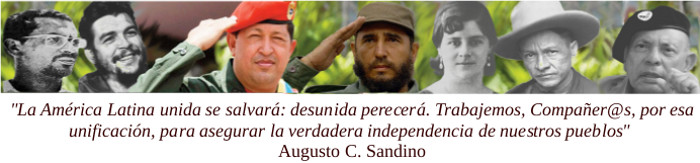
Nils: I think that for decades, probably for centuries, the elite have done politics, right? And everybody else has the job of just sort of carrying out the economic activity that allows the elite to stay where they are. And in Nicaragua, that model lasted for decades and decades until the 1920s when, out of the civil war that the United States got involved in and used as a pretext to occupy the country, a figure named Augusto César Sandino formed his own army to fight against the US presence here.
And that army was based upon the idea of a difficult struggle in which the elite would cede ground to workers and to peasants, because only workers and peasants have the strength to carry out a long-term struggle for their own interests that’s capable of beating imperialism. That was his thesis, and he was really the developer of guerrilla warfare in the Americas, he was the first person to use it.
It was successful. The US Marines left Nicaragua after six years of occupation. And then Sandino was betrayed and killed by Somoza, the Somoza regime got started. But the reason that’s important to keep in mind is that when the Sandinista Revolution successfully took power in 1979, there was a combination of oligarchy families that were very unhappy with Somoza, as well as young revolutionaries from all social classes.
So several of the very top-level, cabinet-level, cadre of the Sandinista Front of the 1980s were in fact the children of these oligarchy families, for example, the Cardenal brothers who were the Ministers of Education and Culture, as well as Carlos Fernando Chamorro who was the owner of La Barricada. So during that time there was a role for the sort of, the black sheep of these oligarchy families to get to be revolutionaries in that context.
But as soon as the Sandinista Front lost power in 1990, there was an exodus of these children of the oligarchy from the party, because they were used to being ministers. They didn’t want to have to be opposition figures in an opposition party, they didn’t want to have to defend the gains of the revolution out on the street, fighting cops. They didn’t want to suffer with the Nicaraguan people.
Many of them left and bought houses in Los Angeles or in Miami or in Spain. Many of them went on to write books. And what’s interesting is that – [interrupted for a moment by Max’s lifting up a book, The Country under My Skin] – yeah, Gioconda Belli, right? Belli is one of the other famous oligarchy families here in Nicaragua.
So these people have led their illustrious lives. They’ve maintained contact in some cases with the US solidarity activists who gave their time, their energy, their sweat, sometimes their lives, to support the Sandinista Revolution, and who were often able to make good friends with people who spoke English, people who had high-level positions in the Sandinista Front.
So the ex-Sandinistas have always sort of had the ear of the US and European Left. And this part of the MRS was formed out of a combination of legitimate grievances with the Sandinista Front at the 1994 congress, as well as sort of a social democratic tendency which at the time wanted to reject Marxism, said that socialism was a passé idea, and wanted to form new alliances.
So once that party was formed, they sort of started to create their own idea for what they could do. They never had popular support, they never did neighborhood organizing like the Sandinista Front had, and they never went out to defend the gains of the revolution. So as soon as they went into an election, they were able to garner only this classic 2%.
Meanwhile, the Sandinista Front, with all of its heirs, stuck with the large majority of the people, suffered with the large majority of the people, and has never had less than 35% support here. So that’s really a key to start to understand these two political forces that sort of claim the Sandino tradition.
There’s a little bit more to it. There’s a figure named Monica Baltodano who has sort of an ultra-left analysis. So we have the MRS, which is a social democratic analysis, which is the MRS Movement for Sandinista Renovation, and then there’s an ultra-left MRS, which is the Movement for the Rescue of Sandinismo.
In both cases, they’re the intellectual left-sounding arm of reactionary politics in Nicaragua, which have continually tried to destroy the Sandinista Front and destroy historical memory of struggle, to enable the elite to turn Nicaragua into a copy of several other countries where the Left has never been able to successfully take power and run a country.
The secret here, and what makes Nicaragua different, is that there is a historical memory of defeating the Somoza regime and defeating the elite in building up a popular basis for a nation. And that memory is what allows Nicaraguans to face imperialism. It’s a constant source of strength, and that’s what they’re going after.
So that’s my take on the MRS. They’re very strong outside of the country, they’re very weak within the country. There’s not one MRS member in Tipitapa because it’s a very working-class city. I would doubt that there are any working-class MRS members in all of Nicaragua. They do hold enormous sway over the NGO sector, and they are who has been the most agile in receiving foreign support in this country.
Max: Well, it looks like for now the right wing and the tranquistas and the NGO left have failed in Nicaragua. We’ll see what happens over the coming months as they come back for more. They’ve left behind a trail of chaos, and I think you are living through that right now.
You’ve asked me to keep this interview short, and we went over an hour, because you have to drive home at night and it’s not safe getting back from Managua to Tipitapa. That wasn’t the case before April when this chaos began to unfold. So I’ll let you get on the road, Nils McCune, but that was an incredible discussion. I learned a lot, and I hope everyone else did.
This is Moderate Rebels and I’m Max Blumenthal in Managua, Nicaragua. I’ve got a flight back tonight, and I’ll be producing several articles and a documentary in the coming days and months, so look out for that. And you can support this show at Patreon.com/ModerateRebels. Thanks again for listening.