
Stephen Sefton, February 8, 2026
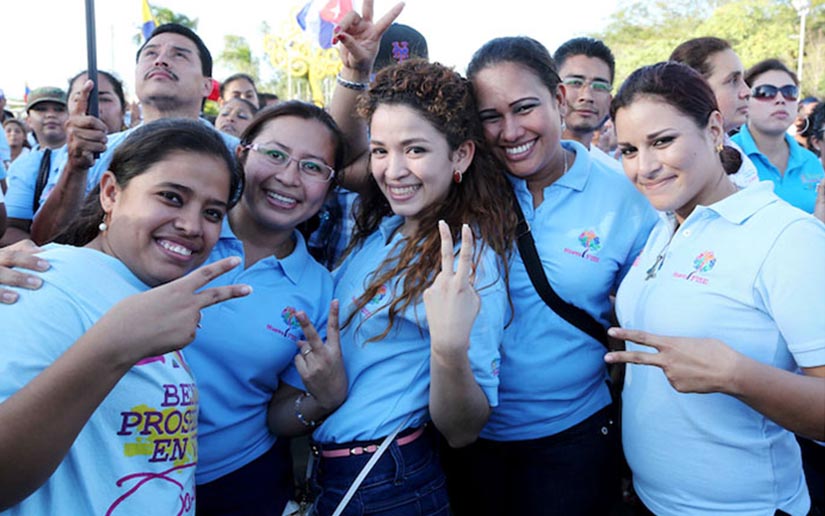
The fact that Nicaragua offers the region and the world a successful model of a revolutionary society necessarily implies that it also offers an example in gender equality. Relevant to this issue are not only the outstanding representation of women in Nicaragua’s legislature and in the other state and government institutions, but also the levels of equity and equality in all spheres of the country’s socio-economic life and national culture. The advances in gender equality in Nicaragua have been essential steps in developing a true democratization of the country during the last 20 years.
They have been essential in the national emancipation from the heritage of colonial culture and the barbarism of the Somoza dictatorship serving US imperialism and also in overcoming the aftermath of the decade long 1980s war, followed by 17 years of neoliberal misrule. Now Nicaragua is entering the twentieth year of the second phase of the Sandinista revolutionary democratization process and it is evident that the commitment to equality between women and men and genuine gender equity are not simply slogans but a dynamic reality that is lived and developed in practice every day.
An evolving revolutionary process
Compañera Rosario referred to this on Women's Day in 2021, “... we need to do more. It is a cultural change that we need to achieve. This is a very important aspect... The fact that the Constitution establishes equity and establishes that we must carry out equity, precisely, in all areas of life. Of public life. Of life in terms of the positions and responsibilities that exercising Power implies... because we have achieved it, with our presence, with our heroism in the struggles we have had to wage, so that Nicaragua, as Sandino says, “is free because she has sons and daughters who love her.”
Now the political Constitution refers specifically in its Preamble to heroic women likeBlanca Stella Araúz Pineda, the Women of El Cuá, and the women students, protagonists in every struggle. Article Five recognizes that, "Women in Nicaragua are protagonists of our lives and we exercise rights in equity, through our capacity and effective presence, in all spaces, events and moments of our history. Women in Nicaragua have been and are forging ahead as direct and active participants throughout our history of libertarian, revolutionary and evolutionary struggles for Homeland and Freedom."And in its Article 25, "Absolute equality between men and women in the fulfillment of their duties and the exercise of their rights is established.”
Perhaps less well known among the population is that in Article 73 “The State grants special protection to pregnancy, childbirth and postpartum” and, as part of this protection, the responsibility of men is integrated since “A man in marriage or in a stable de facto union shall have the right to no less than five calendar days with salary and without loss of any social benefit on the occasion of the childbirth of his partner." Which highlights the central focus of the Magna Carta on the family expressed in Article Four, "The family is the center of community coexistence and the forging of values and feelings that promote humanism, tolerance and harmony from love” and an essential protagonist “in daily advances in the fight against the injustice of inherited poverty, seeking the human development of each and every Nicaraguan.”
Thus, the essential gender equity that has been achieved in Nicaragua has been and continues to be an integral process of the evolution of Nicaraguan society towards even higher levels of human development, social stability and poverty reduction to consolidate true economic and social democratization. Equality and equity between women and men in Nicaragua is a highly practical expression of our society's commitment to the revolutionary Christian, Socialist and Solidarity inspired values of its People as President. It is also the realization of the ambitious revolutionary program of the Sandinista National Liberation Front promulgated in 1969, in which point seven reads “The Sandinista Popular Revolution will abolish the odious discrimination that women have suffered with respect to men; it will establish economic, political and cultural equality between women and men.”
Revolutionary women
It is relevant as well to quote Sandino's words again when he said that in his struggle against the Yankee empire "The heroic acts of the women who collaborated in the Army, are not only many, but also most of them to require long stories to explain the sacrifices they suffered and the dangers they faced for the love of the homeland, and all of them, peasants, school teachers, nurses, housewives, and even ladies of society, made sacrifices without which our war would not have been possible." In the same way, there were thousands of women who gave their lives to achieve the Triumph of the Sandinista Popular Revolution on July 19th 1979.
Along with the countless anonymous peasant women and women workers heroines like Luisa Amanda Espinoza, Arlen Siu, Julia Herrera, Amanda Aguilar, Mildred Abaunza, Claudia Chamorro, Angela Morales, Silvia Ferrufino, Clotilde Moreno, Aracely Perez, Yelba Antunez, Aura Ortiz, Lina Herrrera, Fátima Pavón are remembered as only a few of the women among the thousands of compañeras who sacrificed their lives to make the Sandinista Popular Revolution possible. It has been estimated that between 25% and 30% of the combatants in the insurrection were women, a very high proportion compared to the other armed struggles on the continent.
Then, during the first phase of the Sandinista government, compañera like, for example, Dr. Concepción Palacios, Nora Astorga and Doris Tijerino stood out among the countless thousands of Sandinista women who strengthened that first period of the revolutionary process at almost all levels. Among the terrible threats and dangers of the terrorist war of the 1980s, women made possible the gesture of the National Literacy Crusade, the massive mobilization at the coffee harvests and the establishment and consolidation of national mass health campaigns. Women made possible the innovative development of the national education and public health systems and contributed greatly to the broad development of sectoral business and farming organizations, trade unions and cooperatives.
It would not have been possible to resist the tremendous difficulties and pressures of the war imposed by the government of President Reagan without the steadfast dedication of women faithful to the revolutionary process. Even in the midst of the desperate difficulties of the war against counterrevolutionary terrorism sponsored by the US government, the Sandinista Front reaffirmed its commitment to equality between women and men. The 1987 proclamation on the issue affirmed the fight against machismo, the recognition of the role of women in the Revolution, the commitment to the promotion of equal opportunities and the abolition of discrimination against women in laws and institutional policies.
After the end of the war and the arrival of Violeta Chamorro as president, Sandinista women played a fundamental role in defending the achievements of the Sandinista Front's first period of government. But they also ensured the unity of the party against the insidious attempts at division before and after the historic FSLN congress of 1994. Throughout the years of neoliberal misgovernment, they made possible the accumulation of electoral strength that allowed the victory of the FSLN led by Comandante Daniel and Compañera Rosario in the 2006 national elections.
A new phase of Peace, Reconciliation, Unity and Hope
Since then, the momentum to promote gender equality and equity has intensified. The process of Reconciliation and National Unity required a true and firm commitment to the democratic decision of Nicaraguan women and a categorical respect for the country's culture, without imposing criteria alien to the values of Nicaraguan society. This process has been developed based on laws and government policies such as Law No. 648, the Law on Equal Rights and Opportunities, passed in 2008, which opened the possibility of a much broader participation for women in national public life.
Law 648 made possible the decree of the principle of parity in the candidacies of all political parties for the 2011 elections, which was consolidated by Law 331 with Incorporated Reforms of 2012 for all subsequent elections. In Latin America, only Cuba, Mexico and Nicaragua have achieved parity between women and men in their legislatures. But also, with 62.5%, Nicaragua is the Latin American country with the highest percentage of women ministers. Since January 2007, the National Assembly has prioritized the issue of gender equity to ensure the approval of laws that prevent and punish crimes of gender violence and domestic violence.
Among others, Law No. 779 Comprehensive Law against Violence, the reforms to Law No. 641 of the Penal Code to update the penalties for crimes committed against women and also the Law against Human Trafficking. The Assembly maintains Gender Policy among the five main institutional policies, which are reinforced through the guidelines of the national plans to combat poverty. For example, point five of the twelve guidelines of the National Plan to Combat Poverty and for Human Development for 2022-2026 includes gender equality and equity.
On this point the presentation of the Plan explains "Our President Daniel Ortega and Compañera Rosario Murillo have given us this mandate, it is one of the most important because as there is greater equality and gender equity it will have a greater impact on the economy and social development. Important resources were mobilized in previous years for women to capitalize on them and become protagonists in production, in trade. This support will be strengthened in the coming years." Since this policy’s inception in the years after the 2007 electoral victory of Comandante Daniel and Compañera Rosario, programs aimed at women, such as Zero Usury and the Productive Bonus, have promoted the inclusion of millions of women in the national economy.
It is estimated that Usura Cero has provided loans to more than two million entrepreneurial women and a similar or greater number have been protagonists of the Productive Bonus and related programs, such as the Healthy Patio program, the Christian, Socialist and Solidarity Coffee program, among others. These and other programs which have been key to the economic democratization and productive growth of the country continue to be promoted. In recent years, great progress has also been made in the creative economy, which comprehensively covers many aspects of the national culture in which women figure as key socio-productive protagonists who energize the conventional economy with innovative new business ventures.
As regards women's socio-economic security, the issue of property titling has been fundamental. An important law was the in 2010 Law 717, Creating the Fund for the Purchase of Land with Gender Equity for Rural Women. As the Attorney General's Office explains, a property title "means legal security, first of all, it means the government's commitment to the people who have been restoring to Nicaraguan families this much-desired document that was not recognized in previous governments." Between 2007 and 2025, what is now the Office of the Attorney General for Justice has issued a total of 758,334 property titles for both urban and rural properties, benefiting almost two million women.
The strengthening of gender equity includes, among many other elements, comprehensive preschool care. In Nicaragua, preschool care is provided by the Ministry of Education through more than 270 Child Development Centers nationwide which guarantee attention, care and educational development to more than 16 thousand girls and boys up to age 5. Another fundamental issue for Nicaraguan families is maternal health. Maternal mortality has been reduced by more than 80% since 2006 to 16 women per 100 thousand live births last year.
As part of its national strategy to care for pregnant rural women, the Ministry of Health now operates more than 180 Maternity Homes which care for more than 70,000 women every year. In addition, among other important advances in women's health, now every hospital in the country offers mammograms and last year more than 1.2 million cervical cancer early detection exams were provided in 219 specialized clinics around the country, reinforced by 7 departmental chemotherapy centers and 23 pathology laboratories. The incidence of mortality due to this cancer has fallen by more than 16% since 2006 thanks to early detection.
In terms of women's safety, it is relevant to highlight that almost 40% of the officers of our National Police are women and now a woman officer shares the role as joint police chief in each of the country’s 153 municipalities. More than 300 Women's Commissariats have been established throughout the country to receive complaints of gender-based violence, provide care and protection to victims and investigate cases. With Law 779, the judicial system now includes Specialist Courts Addressing Violence which are courts in the first instance aimed at resolving in an expeditious way the majority of cases of violence against women.
In all spheres of national life in Nicaragua, progress towards equality between women and men continues of which Nicaragua’s Copresidency of Comandante Daniel and Compañera Rosario is the most evident example. As Compañera Rosario has said "How much we have advanced in Gender Equality! We have in the National Assembly, Women and Men in equal numbers, and we have in the Municipal Authorities, in the Municipal Councils, and in the Government Cabinet, women and men complying with our Law of Equity, 50% for Women, 50% for Men, but all of us representing the Supreme Interest of Nicaraguan Families: Peace and the Joy of Living in Peace, in a Country of Faith, of Hope, of Family Values, of Community.”