
Tortilla con Sal

Un enfoque diferente - Nicaragua - A different focus

Stephen Sefton, 16 de noviembre 2026
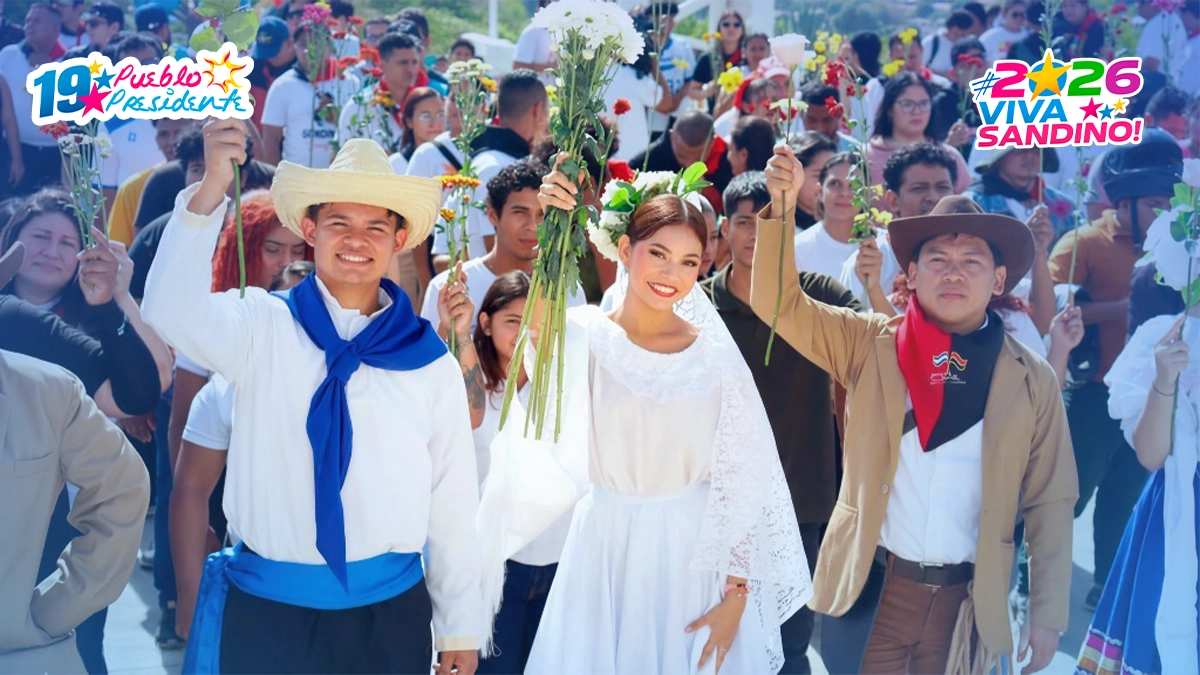
One way to evaluate a nation’s sovereignty is to assess the relationship between its national dimension of peace and prosperity, on the one hand, and, on the other, its international dimension in terms of independence, participation and cooperation. Since January 2007, during what compañero Fabrizio Casari considers its third stage, the Sandinista Popular Revolution has been exemplary in affirming a popular sovereignty that responds in an inclusive and successful way to the needs and aspirations of Nicaragua’s people. In both dimensions, the national and the international, it is a concept of sovereignty evolving naturally from the model of the People President, which projects in its foreign policy the same values it cultivates nationally, namely, the imperative of Peace, stability and security, respect among equals and solidarity-inspired cooperation for the Common Good.

This highly coherent concept of sovereignty has deep roots in Nicaragua’s historic struggle against foreign intervention, a history shared in one way or another with many countries of the majority world. In the “We Have a Nation” presentations on the proposed electoral reforms, made around the country by the Special Commission of the National Assembly and its president, Dr. Gustavo Porras, a constant theme has been how the defense of sovereignty in Nicaragua has evolved during different historical eras. It has been a story of how foreign greed and ambition towards Nicaragua takes advantage of disunity among Nicaraguans to attack, invade and meddle in the internal affairs of the country.

It is a history which highlights how every foreign intrusion provokes both episodes of ignominious betrayal along with impressive patterns of dignified resistance and extraordinary heroism. It is history which has evolved to express the increasingly clear relationship between national sovereignty and the right of Nicaraguan families to the fullest human development. When our General Augusto C. Sandino affirmed that “My sword will defend National Decorum and bring Redemption to the oppressed,” he summarized that profound relationship whereby realizing sovereignty must include, not only resisting predatory invaders, but also freedom and justice as revolutionary values to ensure a true democracy for the Common Good of all.

Comandante Carlos Fonseca and the founding compañeros of the Sandinista National Liberation Front assimilated and brought together, as fundamental principles, the values of Sandinismo developed by General Sandino and Blanca Aráuz. As compañero Aldo Díaz Lacayo commented in 2019 in relation to the then national and international context, “General Sandino is current, no one can say this situation can be faced without the ideas of General Sandino. We Nicaraguans know this, and we have no doubt at all, we know Daniel’s position is the right one: To continue in the current moment with the ideas of General Sandino.”

As compañero Xavier Diaz-Lacayo Ugarte has observed “Sandinismo links peace with human dignity. It cannot exist for some sectors and not others, in a context of exclusion and extreme inequality. In Nicaragua, one’s neighbor is recognized as a subject of rights, respect and solidarity. This dimension is key because it transforms peace into a lived experience, directly influencing citizen perception and participation.” And it is important to remember how, under the leadership of Comandante Daniel, during all the years of US terrorist aggression, Nicaragua’s foreign policy developed as a central element of sovereignty faithful to those values and principles of Sandinismo.

A sovereign and independent foreign policy

The historical program of the Sandinista Popular Revolution treated the matter of Nicaragua’s foreign policy as an integral part of the struggle to “forge a free, prosperous and revolutionary homeland... a Nicaragua without exploitation, without oppression, without backwardness, a free, progressive and independent homeland.” For the first time in the country’s history, the Sandinista National Liberation Front guaranteed a patriotic foreign policy of absolute national independence, without foreign interference and promoting authentic universal peace with the other peoples of the world based on relations of mutual respect, fraternal collaboration among peoples and cooperation without conditions.

Even before the Triumph in 1979, Sandinista diplomacy had developed its foreign relations with the governments of the region in order to achieve a broad international condemnation of the genocidal barbarism of the Somoza regime. The consequent international isolation of the dictatorship was essential to facilitate the eventual Triumph of July 19th and to establish a revolutionary government committed to defending Nicaragua’s full sovereignty.

Then, in the face of the terrorist war imposed by the government of President Ronald Reagan with the complicity of the country’s oligarchy, successful Sandinista diplomacy guided by Comandante Daniel along with our Chancellor of Dignity, Father Miguel d’Escoto, was crucial in the defense of national sovereignty, based always on the principles of mutual respect, solidarity-based cooperation and an unquestionable commitment to peace.

The accumulated experience of the Contadora group’s regional peace processes and the Esquipulas Agreements, as well as the successful historical case against the U.S. government’s terrorism before the International Court of Justice, made it possible to overcome the U.S. imposed state of war. The integrity of the FSLN’s commitment to the Nicaraguan people’s aspiration for peace achieved the first peaceful handover of government between opposing political forces in the history of Nicaragua.

From that point, Sandinismo has undertaken the long and difficult process of recovering a popular revolutionary sovereignty in all its dimensions. In recent years this process has gone hand in hand with the progressive construction by the majority world of a new world order that takes up the original ideals of the Non-Aligned Movement of the 1950s.

In our times, we are dealing with even more complex challenges in a global environment, which increasingly require solidarity and responsible cooperation among the nations of the world. Thanks to our Co-Presidency of Comandante Daniel and Compañera Rosario, Nicaragua is recognized throughout the majority world for its dignified and consistent sovereign position in the face of these challenges, for example in relation to Climate Change or the global regulation of Artificial Intelligence, among many other issues of international importance.

Similarly, the vast majority of countries in the world respect Nicaragua for its unwavering solidarity against the genocidal US blockade of Cuba and the merciless genocidal campaign against the Palestinian people.

It is worth highlighting the great difference between the revolutionary popular sovereignty of Nicaragua which responds to the needs and aspirations of its people and the merely formal varieties of sovereignty of other countries, both internally and externally, which respond to the interests of national oligarchies and their foreign masters.

It is progressively more and more clear that Nicaragua’s revolutionary sovereignty aligns it with the vanguard of contemporary progress towards a truly democratic, multipolar world, of those international forces who faithfully uphold the values of the United Nations Charter of non-aggression, non-interference, solidarity-based cooperation, respect among equals and the defense of these essential principles of international law.

As our Co-President Comandante Daniel constantly affirms in relation to peace and regional integration: “We have to defend Sovereignty in order to have Peace. If we defend sovereignty, all of us Central Americans, we will have Peace, and if there is Peace, there will be progress, there will be well-being, for everyone.”

And also our Co-President Compañera Rosario has insisted “...Nicaragua’s Government of Reconciliation and National Unity, all too familiar with the policy of intervention and meddling of US imperialism which tries and seeks, unsuccessfully thanks to the struggles of the world’s Peoples, to dominate the world, our government demands, we demand, respect for the Sovereignty, Independence, and Will of the Peoples, because that is what is just, right and essential.”
A revolution in good health

- Publicado en Artículos por

Fabrizio Casari, November 15th 2026

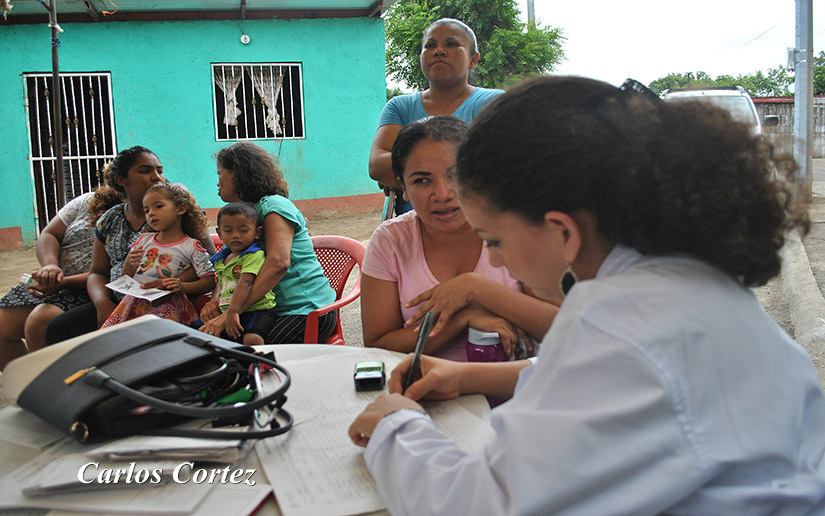
The universal model of health care in Nicaragua had already begun to develop during the first revolutionary decade in the 1980s, despite the enormous limitations due to the war and the economic backwardness of a country devastated for decades both by a savage dictatorship and also natural catastrophes. During the 16 years of neoliberal governments through the 1990s, health care once again became a class based model, inaccessible to the majority of the population. With the return of the FSLN to the government in 2007, public health care and the family and community health model were reactivated, transforming the face and essence of national healthcare.

As is the case with all Nicaragua’s socioeconomic indicators, it should be noted that, before the Sandinista era and during the 16 years of neoliberal Darwinism, health care was concentrated in the cities while rural and indigenous populations had very limited access; most resources were allocated to the most affluent social groups and preventive and community medicine were very poorly developed.

Already in the 1980s, the Sandinista reform pursued three objectives: the free availability of benefits in public health facilities, the extension of the health network to rural and peripheral areas and the transition from a predominantly hospital system to one based on primary care.

When Daniel returned to the Presidency, the fundamental political decision was to rebuild public responsibility for health care. The program to achieve this has been the Model of Community and Family Health Care (MOSAFC). Its value lies not only in the services it offers, but also in the different conception of health care organization it proposes. The conceptual break with the past consisted in assuming public responsibility for the provision of services, superseding the previous tendency towards privatization and two-tier provision of care.

The decision to guarantee free access is not only an economic measure: it radically changes the relationship between the citizen and the health system. In a system in which the patient pays directly for care, access depends on their economic capacity; in a free public system, health care needs become the criteria for access. This has three consequences: it promotes early access to treatment, reduces economic inequalities in access to care and allows preventive interventions which would otherwise be postponed until the onset of serious symptoms.

The problem, of course, is that free availability must be supported by sufficient public funding as well as by sufficient well-trained personnel, medicines and technologies. In these respects, Nicaragua has been able to make progress according to its resources and, with great effort, has made decisive progress.

The family and community health model: from the patient to the family and from the family to the community

The traditional model of care was organized around health centers: the citizen fell ill, went to the outpatient clinic or hospital, received some care and returned home. The GRUN wanted to reverse this logic. The center of gravity for health care shifted from the hospital to the community. The idea has been to accompany not only the individual patient when sick, but also their family and living environment, by taking into account the social determinants of health.

In fact, according to the WHO, health is not simply the absence of disease, but the mental, physical and social well-being of the whole person. Therefore, this requires not only policies specifically for health care, but also broader policies affecting economic, social and cultural determinants. Health depends, in fact, on how and where one lives, on work and income, on the quality of the environment, on the level of education and on the network of family and social relationships.

In the organizational Model of Community and Family Health Care, the fundamental unit of observation and intervention therefore becomes the family, integrated in its own social and community environment. The system operates based on elements such as knowledge of the families’ make up, the identification of pregnancies, vulnerable children, the elderly and other people at risk.

The fundamental principles of this model are therefore:

Community focus: the health system takes as its reference the population and their living environment, instead of being limited to providing services only inside health centers.

Prevention: Health is also addressed through intervention addressing risk factors and social determinants, before disease can appear.

Participation: The community is considered an active component of the health organization.

This model acts by identifying the main risk factors by means of home visits, well-planned preventive interventions, monitoring developing health conditions and referring people to the appropriate care. This last aspect is of fundamental importance for the successful functioning of the health care system and for monitoring the results obtained, as well as, of course, ensuring effective treatment by optimizing timely intervention.

This approach implies an important transformation: the health service no longer passively waits for demand, but instead assumes an active responsibility towards the population. The decisive aspect is precisely the return to the community. This is an appropriate model because it allows significant care to be provided outside hospitals and health centers. On the other hand, a primary care system is truly integrated when it manages to maintain responsibility for the patient even after a hospital admission or a specialist consultation. It is not enough to send the patient to the hospital: it is necessary to ensure that, once discharged, they continue to receive follow-up so that the treatment is maintained and that any possible complications get detected in good time. The distinctive feature of the Sandinista experience is therefore not only the increase in health care access, but making the objective of building a system in which health care is a public and collective responsibility. The revolutionary dimension of health care policies lies precisely here, in the transformation of the vision and organization of health care. Historic results have been achieved, guaranteeing the democratization of access to medical care by extending health services to rural and socially disadvantaged sectors which were previously excluded; creating a system of mass preventive medicine, with vaccinations, health education, prevention of infectious diseases and interventions against infant mortality. This health care system includes promoting community participation through the training of volunteer promoters (brigadistas) and the deployment of mobile clinics, which has made it possible to reach communities difficult to access by means of traditional health structures. Maternal and child healthcare have also been strengthened by prioritizing the monitoring of pregnant women and children so as to reduce infant and maternal mortality.

The facts speak for themselves

None of this is about dreams, but rather about realities. And since numbers also speak to the even the most demanding ears and have the virtue of accompanying dreams when they become projects, here are some examples.

Currently, the hospital network has 79 hospitals in operation and another 6 under construction, in addition to 1,625 first-level care units. Another 6 hospitals are planned for 2027. 101 mobile clinics deliver health care services to patients, while 586 ambulances (to which another 244 will soon be added) respond to emergency needs. There have also been important advances in the implementation of digital health, with electronic medical records searchable in each existing health facility with another 38 health facilities under construction.

All this construction effort is reflected in the results. In 2026, there has been an 84% decrease in maternal mortality since 2007, a fourfold reduction in infant mortality and a 3.5-fold reduction in neonatal mortality. Chronic malnutrition in children under the age of five decreased by 21% in 2026 alone, while the vaccination rate reaches 97%. Medical care went from 16,898,893 consultations in 2025 to 52,737 in 2026: three times more in a single year.

In 2026, the system carried out 381 neonatal surgery interventions, 1,382 cardiac surgery interventions and 58 kidney transplants. There are 26 specialized centers for kidney disease, equipped with 1,364 hemodialysis chairs. Numerous units of diagnostic equipment are also available, including 3 linear accelerators, 4 angiography units, 758 ultrasound machines, 52 mammographs, 619 pulmonary ventilators, 24 electroencephalographs, 301 anesthesia machines and 3 ophthalmological ultrasound units.

The "Mission Miracle" program has made it possible to perform 14,886 ophthalmological surgery interventions. In 2026, alone, 208,897 people with disability were admitted to specialized centers. Natural medicine has been integrated into the health system with 420,247 consultations already carried out. Currently, 400,000 chronic patients receive health monitoring and the mental health program now has a national coverage network which includes a dedicated psychosocial hospital, 2 specialized centers and 20 specific care centers.

The well thought-out path taken by Sandinismo in terms of health care has been recognized by international organizations, from the WHO to the World Bank itself, which has praised the data on health policies, framing them in the general development of the country. The improvements achieved with the Model of Community and Family Health Care have been highlighted, but also the advances in all the determinants of good health, such as income, education, housing conditions and demographic trends. This shows that the expansion of health care provision has indeed been accompanied by greater access by low-income sectors and improvements in health indicators.

The Sandinista vision of the protection provided by promoting health care prioritizes reducing inequalities, by considering health care and other policies capable of influencing the determinants of health to be closely linked and integrated. The organizational model makes it possible to move from a predominantly hospital and curative logic to an integrated conception of prevention, primary care and treatment.

In this sense, the value of the new road network cannot be underestimated, since it connects all corners of the country to each other. The possibility of reaching places in a short time that were previously inaccessible greatly reduces diagnostic and operational intervention times, while the subsidized cost of fuel also maintains an affordable cost of transportation.

It is worth emphasizing that all social progress contributes to improved health care and, in turn, better health generates greater social and economic development. According to public health studies and economic analyses, every dollar invested in preventive health care generates an estimated average return of approximately $14 for the economy and the social welfare system. Preventive care is a strategic, essential necessity to ensure a healthier and more sustainable future and reduce the burden of disease and illness on health systems. Preventive care promotes more active communities and, hence, more investment in human capital and a future where disease is no longer a life sentence.

The data Nicaragua is able to show to its people and to international organizations are, in general terms, excellent and, in the specific context of the national system, extraordinary. They indicate a profound, transversal social transformation, as well as an aspiration to excellence typical of those who truly love their people and believe in their national project.

The revolutionary dimension resides precisely here: it is the result of a political, cultural and ethical strategy affirming health care as a universal right contributing to achieving the objective of integral progress for all of society. The name for that is Revolution, a commitment which, since 2007, is being fulfilled.

Gobierno de Reconciliación y Unidad Nacional
Unida Nicaragua Triunfa

31st CONFERENCE OF THE PARTIES TO THE UNITED NATIONS FRAMEWORK CONVENTION ON CLIMATE CHANGE (COP31)

ANTALYA, REPUBLIC OF TURKIYE

NOVEMBER 2026

NATIONAL DECLARATION OF NICARAGUA

Thank you very much, Mr. President.

Your Excellency ministers, vice-ministers, heads of delegation, delegates, brothers and sisters:

1. Our delegation has the honor to convey fraternal greetings from our Co-Presidents, Comandante Daniel Ortega Saavedra and Compañera Rosario Murillo Zambrana, to the distinguished delegations present and, especially, to the people and Government of the Republic of Turkiye for their hospitality in Antalya.

Mr. President:

2. As our Co-President, Compañera Rosario Murillo Zambrana, has pointed out: “What they call climate change is no longer what it is, it is the destroyed earth, it is Mother Earth that we have stripped of its protective, natural elements; the looting, the eagerness to take everything in exchange for nothing and leave the consequences to us all, that is what generates these phenomena and what we call climate change.”

3. For our country, tackling climate change is part of the fight against poverty and our commitment to the well-being of Nicaragua’s families. Every harvest we manage to protect, every community which receives electricity and every effort to protect our water and our forests have a purpose: “to ensure better living conditions for our people.”

Mr President, Nicaragua contributes with concrete actions to environmental and climate management:

4. We have transformed the electricity sector, expanding families' access to energy and reducing dependence on fossil fuels. With this, we avoid the emission of 2 million tons of carbon dioxide (CO₂). In 2006, only 54 percent of the country had electricity and 74 percent of the generation came from fossil sources. Today, electricity coverage exceeds 99 percent and, as of August 2026, renewable sources represented 69 percent of our generating capacity.

5. In rural areas, adaptation to climate change begins by addressing the decisions farming families must make with each agricultural cycle: what to sow, when to do so and which variety to use. We are linking meteorological information with technical support to guide these decisions according to the expected rains, the soil characteristics and the water needs of each crop.

6. As regards our natural patrimony, Nicaragua has approximately 5 million hectares of forests and is home to 8 percent of global biological diversity. This natural heritage is fundamental to protect our water sources, to conserve biodiversity and to address climate change. According to the UN Global Forest Assessment, our country has significant reduced deforestation and forest degradation.

7. With the National Reforestation Campaign “Verde que te Quiero Verde", we plant 10 million trees a year. Families, youth, municipal governments and institutions all participate in this effort to recover degraded areas and protect our forests.

Mr. President:

8. We carry out these efforts despite the fact that our carbon dioxide (CO₂) emissions represent only 0.05% of the global total: “Nicaragua emits 28 million tons, compared to the 59 billion tons emitted in the world.” However, we face intense and frequent natural phenomena.

9. In 2020, Hurricanes Eta and Iota caused an estimated US$993 million in damage, equivalent to 8 percent of gross domestic product. They affected our families' homes, their crops, the roads and the services they need every day. Rebuilding requires resources that are also necessary to continue fighting poverty.

10. That is why Nicaragua is steadfast in demanding “climate justice and reparation” and respect for the principle of “common but differentiated responsibilities and respective capabilities.” The countries of the "Global North" must take the responsibility that corresponds to them for their historical emissions, reduce their emissions and fulfill their financing commitments with the countries of the “Global South".

Mr. President:

11. At this COP31, Nicaragua recognizes the work of youth, families, indigenous and Afro-descendant peoples and rural communities for climate justice. Their participation is essential to face climate change. Their knowledge, transmitted from generation to generation, and their daily work caring for land, water and biodiversity are indispensable to sustain these efforts.

12. Nicaragua hopes that, at this COP31, commitments for Climate Justice will emerge, as well as an indispensable Reparations Policy, converted into direct and unconditional cooperation for the benefit of our Peoples.

13. The emitters and those responsible for depredation, degradation and ecological instability must recognize our losses and contribute to recovery, to the extent of their responsibilities, so as to restore the right to life of Mother Earth and the Peoples of the World.

Thank you very much, Mr. President.

Gobierno de Reconciliación y Unidad Nacional
Unida Nicaragua Triunfa

31.ª CONFERENCIA DE LAS PARTES DE LA CONVENCIÓN MARCO DE LAS NACIONES UNIDAS SOBRE EL CAMBIO CLIMÁTICO (COP31)

ANTALYA, REPÚBLICA DE TÜRKIYE

NOVIEMBRE DE 2026

DECLARACIÓN NACIONAL DE NICARAGUA

Muchas gracias, señor presidente.

Excelentísim@s ministr@s, viceministr@s, jef@s de delegación, delegad@s, herman@s:

    1. Nuestra delegación tiene el honor de transmitir el fraterno saludo de nuestros Copresidentes, el Comandante Daniel Ortega Saavedra y la Compañera Rosario Murillo Zambrana, a las distinguidas delegaciones presentes y, de manera especial, al pueblo y al Gobierno de la República de Türkiye por su hospitalidad en Antalya.

Señor presidente:

    2. Como ha señalado nuestra CoPresidenta, Compañera Rosario Murillo Zambrana: “Lo que llaman cambio climático ya no lo es, es la tierra destruida, es la Madre Tierra que hemos despojado de sus elementos protectores, naturales; el saqueo, el afán de llevarse todo a cambio de nada y dejarnos las consecuencias, eso es lo que genera estos fenómenos y lo que llamamos cambio climático”.

    3. Para nuestro país, enfrentar el cambio climático forma parte de la lucha contra la pobreza y de nuestro compromiso con el bienestar de las familias nicaragüenses. Cada cosecha que logramos proteger, cada comunidad que recibe energía eléctrica y cada esfuerzo por cuidar el agua y nuestros bosques tienen un propósito: “asegurar mejores condiciones de vida para nuestro pueblo”.

Señor presidente, Nicaragua contribuye con acciones concretas a la gestión ambiental y climática:

    4. Hemos transformado el sector eléctrico, ampliando el acceso de las familias a la energía y reduciendo la dependencia de los combustibles fósiles. Con ello, evitamos la emisión de 2 millones de toneladas de dióxido de carbono (CO₂). En 2006, apenas el 54 por ciento del país contaba con electricidad y el 74 por ciento de la generación provenía de fuentes fósiles. Hoy, la cobertura eléctrica supera el 99 por ciento y, a agosto de 2026, las fuentes renovables representaban el 69 por ciento de nuestra generación.

    5. En el campo, la adaptación al cambio climático comienza por atender las decisiones que las familias productoras deben tomar en cada ciclo agrícola: qué sembrar, cuándo hacerlo y qué variedad utilizar. Estamos vinculando la información meteorológica con el acompañamiento técnico para orientar esas decisiones según las lluvias previstas, las características del suelo y las necesidades de agua de cada cultivo.

    6. En nuestro patrimonio natural, Nicaragua cuenta con aproximadamente 5 millones de hectáreas de bosques y alberga el 8 por ciento de la diversidad biológica global. Este patrimonio natural es fundamental para proteger nuestras fuentes de agua, conservar la biodiversidad y enfrentar el cambio climático. Según la Evaluación Forestal Global de la ONU, nuestro país está reduciendo significativamente la deforestación y la degradación de los bosques.

    7. Con la Campaña Nacional de Reforestación “Verde que te Quiero Verde”, sembramos 10 millones de plantas al año. Las familias, la juventud, los gobiernos municipales y las instituciones participan en este esfuerzo por recuperar las áreas degradadas y proteger nuestros bosques.

Señor presidente:

    8. Realizamos estos esfuerzos a pesar de que nuestras emisiones de dióxido de carbono (CO₂) representan apenas el 0,05% del total mundial: “Nicaragua emite 28 millones de toneladas, frente a los 59 mil millones de toneladas que se emiten en el mundo”. Sin embargo, enfrentamos fenómenos naturales intensos y frecuentes.

    9. En 2020, los huracanes Eta e Iota ocasionaron daños estimados en 993 millones de dólares, equivalentes al 8 por ciento del producto interno bruto. Afectaron las viviendas de nuestras familias, sus cultivos, los caminos y los servicios que necesitan todos los días. Reconstruir exige recursos que también son necesarios para seguir combatiendo la pobreza.

    10. Por eso, Nicaragua es firme en demandar “justicia climática y reparación” y el respeto al principio de “responsabilidades comunes pero diferenciadas y capacidades respectivas”. Los países del “Norte Global” deben asumir la responsabilidad que les corresponde por sus emisiones históricas, reducir sus emisiones y cumplir sus compromisos de financiamiento con los países del “Sur Global”.

Señor presidente:

    11. En esta COP31, Nicaragua reconoce el trabajo de la juventud, las familias, los pueblos originarios y afrodescendientes y las comunidades rurales por la justicia climática. Su participación es fundamental para enfrentar el cambio climático. Sus conocimientos, transmitidos de generación en generación, y su trabajo diario en el cuido de la tierra, el agua y la biodiversidad son indispensables para sostener estos esfuerzos.

    12. Nicaragua espera que, en esta COP31, surjan compromisos por la Justicia Climática, así como una indispensable Política de Reparación, convertida en cooperación directa e incondicional en beneficio de nuestros pueblos.

    13. Los emisores y responsables de la depredación, la degradación y los desajustes ecológicos deben reconocer nuestras pérdidas y contribuir con la recuperación, en la medida de sus responsabilidades, para restituir el derecho a la vida de la Madre Tierra y de los Pueblos del Mundo.

Muchas gracias, señor presidente.

MINISTERIO DE SALUD

Situación del Coronavirus al 17 de Noviembre 2026, 10:00 a.m. Informe Semanal.

Durante la presente semana que comprende del 10 al 17 de Noviembre 2026 hemos atendido y dado Seguimiento Responsable y Cuidadoso a 4 nicaragüenses con COVID-19 confirmado.

De la misma forma 7 personas que estaban en Seguimiento Responsable y Cuidadoso han cumplido con el período establecido.

Desde el inicio de la pandemia hasta el día de hoy, hemos atendido y dado Seguimiento Responsable y Cuidadoso a 17,466 personas.

Las personas que han estado en Seguimiento Responsable y Cuidadoso por COVID-19, con frecuencia han tenido padecimientos asociados como: hipertensión arterial, diabetes mellitus, obesidad, enfermedades cardíacas, síndrome de inmunodeficiencia, insuficiencia renal crónica, antecedentes de accidente cerebro vasculares, tuberculosis pulmonar y enfermedades pulmonares crónicas.

En la presente semana NO se presentaron fallecidos atribuibles al COVID 19.

Hasta la fecha hemos logrado la recuperación de 17,217 nicaragüenses.

Seguimos trabajando, en la prevención y la atención de las personas, ¡En el Nombre de Dios!

MINISTRY OF HEALTH

Coronavirus Situation as of 17th November 2026, 10:00 a.m. Weekly Report.

During the current week, from 10th to 17th November 2026, we have attended and provided Responsible and Careful Care to 4 Nicaraguans confirmed to be COVID-19 positive.

Likewise, 7 persons who were under Responsible and Careful Care have complied with the established period.

From the start of the pandemic until today, we have attended and provided Responsible and Careful Care to 17,466 persons.

People who have been receiving Responsible and Careful Care for COVID-19, have frequently had pre-existing conditions such as: arterial hypertension, diabetes mellitus, obesity, heart diseases, immunodeficiency syndrome, chronic kidney failure, a history of cerebrovascular disease, pulmonary tuberculosis and chronic pulmonary diseases.

During the current week, there were NO deaths attributable to COVID-19.

To date, we have attained the recovery of 17,217 Nicaraguans.

We continue working on prevention and caring for our people, in God's Name!

Stalin Vladímir Centeno, Stalin Magazine, 17 de noviembre 2026

María todavía no había tenido a su hijo entre los brazos, pero en su vientre llevaba al niño destinado a cambiar la historia de la humanidad. Todo había comenzado en Nazaret, una pequeña población de Galilea, donde la joven recibió, según el Evangelio de Lucas, la visita del ángel Gabriel, portador del anuncio de su elección como madre de Jesús, el Hijo del Altísimo. La noticia llegó a su vida cuando estaba comprometida con José, un hombre de la descendencia del rey David, y desde ese momento comenzó una espera recordada con profundo amor por los cristianos.

La futura madre aceptó la voluntad de Dios Padre y llevó adelante su embarazo acompañada por José, quien también recibió en sueños la visita de un ángel con el mensaje de acogerla y confiar en el nacimiento anunciado. Los Evangelios no describen los detalles de esos meses ni los cuidados y las preocupaciones propios de la espera, pero sí dejaron constancia del anuncio del nacimiento de Jesús, recibido por los creyentes como una buena noticia para la humanidad.

El tiempo siguió avanzando y se acercaba el final del embarazo cuando José tuvo que trasladarse a Belén de Judea, la ciudad de sus antepasados, debido a un empadronamiento ordenado por las autoridades romanas durante el gobierno del emperador Augusto. El viaje comenzó en Nazaret y llevó a la pareja por tierras que formaban parte de una región sometida al dominio de Roma, donde las familias debían cumplir las disposiciones de quienes ejercían el poder imperial. La futura madre lo acompañó llevando en su vientre a Jesús, en una travesía cuya distancia y dificultades reflejan las duras condiciones en que se realizó aquel viaje.

La tradición cristiana ha representado muchas veces a la joven sobre un burro, con su esposo caminando a su lado, aunque los Evangelios no precisan cómo realizaron el trayecto. Lo verdaderamente importante ocurrió al llegar a Belén, porque el momento de dar a luz estaba cada vez más cerca y necesitaban encontrar dónde alojarse en la población conocida también como la ciudad de David, que desde entonces sería recordada por un nacimiento que millones de personas continuarían celebrando generación tras generación.

Fue allí donde llegó la hora que María había esperado durante tantos meses y finalmente dio a luz a su hijo primogénito, lo envolvió en pañales y lo acostó en un pesebre, porque no había un cuarto disponible para ellos.

La improvisada cuna, utilizada normalmente para poner comida para animales, terminó convirtiéndose en el símbolo más conocido del nacimiento de Jesús, y hasta hoy los pesebres muestran al pequeño descansando en ella, bajo el cuidado de su madre y con José a su lado. Los relatos cristianos tampoco mencionan grandes celebraciones alrededor del nacimiento, además de no describir riquezas ni comodidades, pero sí conservan el recuerdo de su llegada al mundo, que para los creyentes representaba el cumplimiento de una promesa divina.

En el recién nacido, rodeado del cariño y los cuidados de ambos, la fe cristiana reconoce al Hijo de Dios Padre, enviado al mundo para anunciar el amor, el perdón y la salvación, dando comienzo en Belén a la vida terrenal de Jesús de Nazaret, con enseñanzas que llegarían mucho más allá de las tierras donde nació.

La noticia del nacimiento de Jesús de Nazaret también llegó a los campos cercanos a Belén, una pequeña ciudad de Judea, situada en tierras de la actual Palestina, donde unos pastores pasaban la noche cuidando sus ovejas, cuando un ángel se les apareció para anunciarles la llegada del Salvador. Lucas, uno de los evangelistas que escribió sobre la vida de Cristo, relata que los hombres recibieron el mensaje con asombro y decidieron dirigirse al lugar indicado para conocer al recién nacido.

Al llegar, encontraron a María y José junto a su pequeño hijo, compartieron con ellos las palabras del ángel y regresaron alabando a Dios por lo que habían visto y escuchado.

La joven madre guardó en su corazón todo lo sucedido y meditó sobre su significado, al comprobar cómo comenzaban a cumplirse los anuncios recibidos antes del nacimiento.

Tiempo después llegaron unos sabios de Oriente, conocidos en la tradición religiosa como los Reyes Magos, Melchor, Gaspar y Baltasar, los cuales siguieron una estrella en busca del recién nacido, según relata el evangelista Mateo. Primero llegaron a Jerusalén, donde sus preguntas despertaron la preocupación de Herodes, rey de Judea bajo el dominio romano, quien consideraba una amenaza para su poder el nacimiento de Jesús, anunciado como rey de los judíos.

Los visitantes continuaron su camino hasta encontrar al pequeño y le ofrecieron oro, incienso y mirra. Herodes, temeroso de perder su trono, ordenó matar a los niños pequeños de Belén, por lo que José, advertido en sueños por un ángel, huyó con María y su hijo hacia Egipto para salvarle la vida. Allí permanecieron hasta la muerte del gobernante, cuando desapareció el peligro que los había obligado a abandonar su tierra y pudieron regresar para establecerse en Nazaret, donde Jesús pasó su infancia y creció bajo el cuidado de sus padres.

Con los años, Jesús comenzó a predicar en Galilea y Judea, enseñando el amor al prójimo, la misericordia, el perdón y la importancia de ayudar a los más necesitados. Su crucifixión y la fe en su resurrección se convirtieron en pilares del cristianismo, que se extendió por numerosos pueblos del mundo. En Nicaragua y otros países, cada Navidad las familias recuerdan con profundo amor su nacimiento y conservan la hermosa tradición de llamarlo Niño Dios, expresión de cariño y devoción hacia Jesucristo, reconocido por los creyentes como el Hijo de Dios Padre.

Aunque no se conoce con certeza el día en que nació Jesús, los cristianos celebran su nacimiento cada 25 de diciembre.

La costumbre de representarlo en un pesebre tuvo uno de sus momentos más importantes en 1223, cuando San Francisco de Asís, un religioso italiano fundador de la orden franciscana, reunió a los habitantes de Greccio, un pequeño pueblo de Italia, y preparó un nacimiento con heno y animales para mostrarles cómo había llegado Jesús al mundo, en un lugar sencillo y sin las comodidades de un hogar.

Más de ochocientos años después, esta tradición sigue viva y forma parte de Nicaragua desde hace aproximadamente quinientos años, cuando los religiosos franciscanos la llevaron a ciudades como León y Granada durante la época colonial. Con el tiempo, las familias comenzaron a preparar sus propios nacimientos con las figuras de María, José, los pastores y los Reyes Magos, acompañados de villancicos y novenarios, conservando cada diciembre la devoción al Niño Dios.

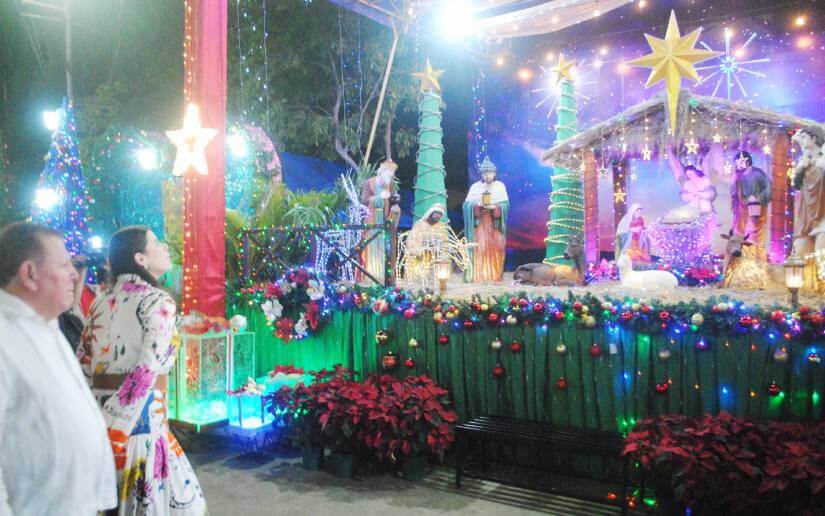
La Avenida de Bolívar a Chávez, en Managua, se prepara para recibir los hermosos nacimientos dedicados al Niño Dios durante esta Navidad de 2026, elaborados por distintas instituciones del Buen Gobierno Sandinista.

La Copresidenta Compañera Rosario Murillo anunció celebraciones todos los domingos en los municipios del país, con pastorelas, posadas, desfiles de San Nicolás y actividades para las familias y la niñez, además de la apertura de los altares dedicados a nuestra Madre María, Reina de la Paz, el viernes 27 de noviembre. La distancia entre Belén y Managua es inmensa, pero el amor por Jesús ha mantenido viva esta tradición entre generaciones de nicaragüenses, que podrán contemplar nuevamente al pequeño descansando en su pesebre, tal como lo sostuvo María entre sus brazos al nacer, recordando al Hijo de Dios Padre que nuestro pueblo sigue llamando con profundo cariño el Niño Dios.

FIESTAS DE LA FAMILIA FIESTAS DEL RENACIMIENTO FIESTAS DEL AMOR

Declaraciones de Rosario, Copresidenta de Nicaragua, en Edición de Mediodía de Multinoticias Canal 4

16 de Noviembre del 2026

Buenos Tiempos, Compañera, los que Dios derrama sobre nuestra Nicaragua Bendita. Y ayer, por la tarde, en el Domingo Familiar que siempre tenemos, Gracias al Padre, en todo el País se encendió la Alegría de Vivir en Paz, honrando a Nuestra Madre María y a Nuestro Niño Dios, que, seguramente, nos traerá más Bendiciones, abundancia de Seguridad, Trabajo, Armonía, Prosperidad.

Vivimos con nuestras Familias, ayer, un Domingo Especial de Luces y Colores, de Música y Amores, de reconocer que somos Bendecid@s, porque creemos y sabemos que Cristo, que Dios és el Rey de Reyes, y nace y renace, y vuelve a nacer, en los Hogares y entre las Comunidades Familiares, que le reconocemos y veneramos como el Dios Omnipotente, el Dios de Tod@s, el Dios de las Victorias del Pueblo nicaragüense, de la Buena Voluntad de las Familias nicaragüenses.

Todos los Domingos, de aquí a Diciembre, vamos a estar celebrando las Fiestas, las Fiestas propias de esta Temporada Linda. Siempre esperamos Diciembre para vivir los Colores, los Aromas, y sobre todo los Rostros de la Alegría, en todas partes.

Vamos a estar todos los Domingos celebrando las Fiestas Decembrinas, las Alegrías del Nacimiento y el Renacimiento, la Maternidad de María, Purísima y Santísima, que és de Nicaragua, y Nicaragua de Ella... Nicaragua, Toda Suya !

El Viernes 27, precisamente, vamos a estar en todos los Municipios y aquí en Managua en la Avenida De Bolívar a Chávez, abriendo los Altares a Nuestra Madre María, Reina de la Paz...! Abriendo, mostrando, sintiéndonos orgullos@s por tanta Bendición y por tenerla como Madre... Vencedora, Ella, de todos los Fieros Dragones !

Haremos también Programas Especiales para las Familias, para l@s Niñ@s que disfrutan tanto, en cada Municipio donde reina la Paz y el Cariño. En cada Municipio, todos los Domingos, estarán Pastorelas, estarán Desfiles de San Nicolás, estarán también los bailes propios de las Navidades, de las Posadas, las Pastorcitas, una Bella Pastorcita... Todo eso en las calles de nuestras Ciudades y en nuestras Calles y nuestras Plazas aquí en Managua.

Como anoche, cuánto, cuánto Pueblo allí reunido, para ver encenderse los Adornos Navideños, para ver la instalación de los Altares, que ya se están instalando, y para vivir el espectáculo también de la Pólvora Festiva, con la responsabilidad que siempre nos estamos encomendando, y que, sabemos, somos capaces de tener.

Compañer@s, entre las Buenas Nuevas de esta Semana destacamos el inicio, a partir de hoy Lunes, de la entrega a 70,000 nuevos Bachilleres, de un Bono Presidencial Ampliado que disfrutarán cada uno con sus Familias y Comunidades, con sus Amigos. Y con esa Alegría intensa de la Nueva Etapa, del Nuevo Capítulo en sus Vidas, Alegría que comparte Nicaragua entera, llena de Esperanza y dando Gracias a Dios.

La Juventud Presidente entrega, de Joven a Joven, esos Bonos en cada Municipio de esta Nicaragua de tanta Luz, de tanta Vida, de Verdades Verdaderas.

Concluyó también exitosamente, y con el reconocimiento de todos los participantes, la Copa Mundial de Béisbol U23, que se realizó en nuestra Nicaragua Bendita entre el 6 y el 15 de Noviembre.

Los 12 Mejores Equipos del Mundo protagonizaron sendos partidos en los Estadios de Managua, León y Masaya, resultando como Campeón Mundial la República Bolivariana de Venezuela, muchas felicidades a ese tremendo Equipo que tiene; como Subcampeón Australia, y luego Japón. Felicidades a todos los participantes y felicidades a todos los ganadores, y felicidades a nuestra Selección nicaragüense que va Adelante.

Y ayer Domingo, Domingo 15, entregamos la Orden Honor al Mérito Deportivo “Stanley Cayasso”, Gran Beisbolista nicaragüense, como Reconocimiento Especial a Personalidades del Beisbol Nacional e Internacional, cuya contribución al desarrollo de este Deporte ha sido muy relevante.

El Hermano Presidente de la Confederación Mundial de Béisbol y Softbol, Ricardo Fraccari, recibió el Reconocimiento... El Hermano Dusty Baker, Leyenda de Grandes Ligas y Manager de nuestra Selección Nacional de Béisbol, también... El Hermano Miguel Cabrera, venezolano, ex Jugador de Grandes Ligas, también lo recibió... El Hermano Marvin Benard, nicaragüense, ex Jugador de Grandes Ligas, también... El Hermano Juan Igor González, puertorriqueño, ex Jugador de Grandes Ligas, lo recibió, y Víctor Martínez, Compañero venezolano, ex Jugador de Grandes Ligas.

Nosotr@s, orgullos@s de entregar este Reco-nocimiento a la Excelencia de Jugadores Estrellas del Beisbol de Grandes Ligas.

Queremos destacar también, con mucha satisfacción y agradecimiento, que el Presidente de la Confederación Mundial de Béisbol y Sóftbol, Hermano Ricardo Fraccari, hoy en Conferencia de Prensa en el Estadio Nacional Soberanía, nos hizo el Honor de confirmar a nuestra Nicaragua como Sede de la próxima Edición de la Liga de Campeones del Beisbol.

En este importante Evento se reúnen los Equipos Campeones de distintos Torneos de la Región, y seremos Sede, por primera vez, de un Evento como este, con mucho Respeto y Orgullo, en Marzo del año próximo. Con alegría, además, de recibirles siempre llenos de Respeto, Admiración y, sobre todo, siempre dispuestos a dar esa bienvenida del Corazón, de parte de nuestro Pueblo nicaragüense.

El actual Campeón del Pomares, Frente Sur-Rivas, será quien nos represente en el Evento.

Reafirmamos que estamos fortaleciendo nuestra capacidad, y que el nivel de nuestras Instalaciones Deportivas también nos permite tener, sostener, este tipo de Eventos. Nos permite, además, sentirnos content@s, nosotros nos sentimos content@s por esta Designación, donde nuevamente mostraremos el Talento y el Corazón Fraterno que desplegamos con nuestros visitantes, así como todo lo que podemos hacer, con la Bendición de Dios, en un Programa, de este Programa que hemos venido desarrollando, de Inversiones y Promoción del Deporte, desde nuestro Pueblo Presidente.

Desde las Alcaldías el Reporte que tenemos hoy és de 20 Calles nuevas en Villa El Carmen, El Castillo y Sébaco... Viviendas a Familias en El Rama... Parques actualizados en Quilalí, Villanueva, El Coral, San Juan del Sur y Waslala... Estadios de Beisbol y Canchas actualizadas en Chinandega, El Rama y Masaya... Terrabona con Escuelas Comunitarias ampliadas... San José de los Remates, la Casa Comunal también reconstruida, rehabilitada... Y Drenaje y Saneamiento en El Castillo, La Paz de Carazo y El Rama.

ENACAL nos reporta Obras de Saneamiento, más Saneamiento en Tipitapa.

El MAG nos informa que la cosecha de Maíz Blanco tiene una producción de 1.2 millones de quintales en todo el País, y representa el 28%, esta cosecha, del área prevista para este Ciclo de Primera.

Usura Cero entrega créditos a 1,000 Protagonistas, en 45 Municipios, para fortalecer el trabajo, para fortalecer el Bienestar también, desde el Trabajo, la Seguridad y la Paz.

Celebramos desde el Ministerio de Empren-dimientos la capacidad creativa de nuestros

Artesanos, que se reunieron en todas las Cabeceras Departamentales compartiendo riqueza de Tradición, diversidad de Creación, y Conocimientos y Habilidades que reflejan cómo somos de dedicados, cómo nos distinguimos por nuestra laboriosidad, y por ser capaces de preservar con Orgullo nuestra Identidad Nacional.

Nueva Plataforma Digital, nos anuncia el MINED, para aprender Matemáticas, y estará en uso desde ahora, y ya en activo rendimiento el próximo año.

2,000 albergados, dice INATEC, de los Centros Penitenciarios de todo el País han realizado Cursos en una cantidad de Oficios, para mejorar su capacidad y rendimiento laboral en cada una de sus Especialidades, ya sea allí en los Centros Penitenciarios, o cuando puedan retornar a sus Familias y sus Hogares, y alcanzar un Nivel de Vida mejor.

Las Universidades avanzan en Prematrículas de Carreras Universitarias para 84,000 Estudiantes en las 14 Pueblo Presidente. Se incluye, entre las Universidades Pueblo Presidente, la Facultad de Ciencias Médicas “Doctor Julio Briceño”, que tiene más de 400 Estudiantes.

475 Familias, por otra parte, reciben Títulos de Propiedad hoy, en Tipitapa, Ciudad Sandino, San Francisco Libre, en Managua... San Sebastián de Yalí, Jinotega Municipio, La Concordia, en Jinotega... San Lorenzo, Teustepe, en Boaco... Condega, La Trinidad, Pueblo Nuevo, en Estelí, también San Juan de Limay y San Nicolás... El Jícaro, Ocotal, Murra, en Nueva Segovia... Tuma-La Dalia, Ciudad Darío y Matiguás, en Matagalpa... Nueva Guinea y Paiwas, en el Caribe Sur.

En Epidemiología el MINSA nos reporta que hay una disminución Gracias a Dios, son Buenas Nuevas : 7 Personas con Dengue... 16 menos con Chikungunya... 7 menos de Malaria... 30 menos en Neumonía... Igual número en Influenza... Y una Persona con Leptospirosis. Sin fallecidos, Gracias a Dios.

Avanza la Vacunación, mañana vamos a estar presentando también los datos de ese avance.

Las Familias de Chinandega están contentas, nos dicen, porque inicia la II Etapa del Proyecto de Viviendas “Nuevas Victorias”, con 109 Casas construyéndose para entregarse en los próximos meses a Familias Trabajadoras de ese Departamento.

Y, Compañer@s, cuánta Bendición sabemos que ilumina esta Patria Nuestra, y cómo somos de trabajador@s, cómo somos de dedicados, como somos también, y cómo nos sentimos de orgullos@s de poder vivir, y merecer, además, estos Tiempos que son de Triunfos. La Alegría de Vivir en Paz, la Alegría de tener un País que somos Tod@s, un Pueblo seguro, estable, y con la certeza de que el Porvenir que estamos construyendo és un Porvenir que representa nuestros Sueños y los Sueños también de tanto nicaragüense que ha dado la Vida para que vivamos como debe ser, como merecemos, con Derechos, con Seguridad, con Estabilidad, con Trabajo para Seguir Venciendo.

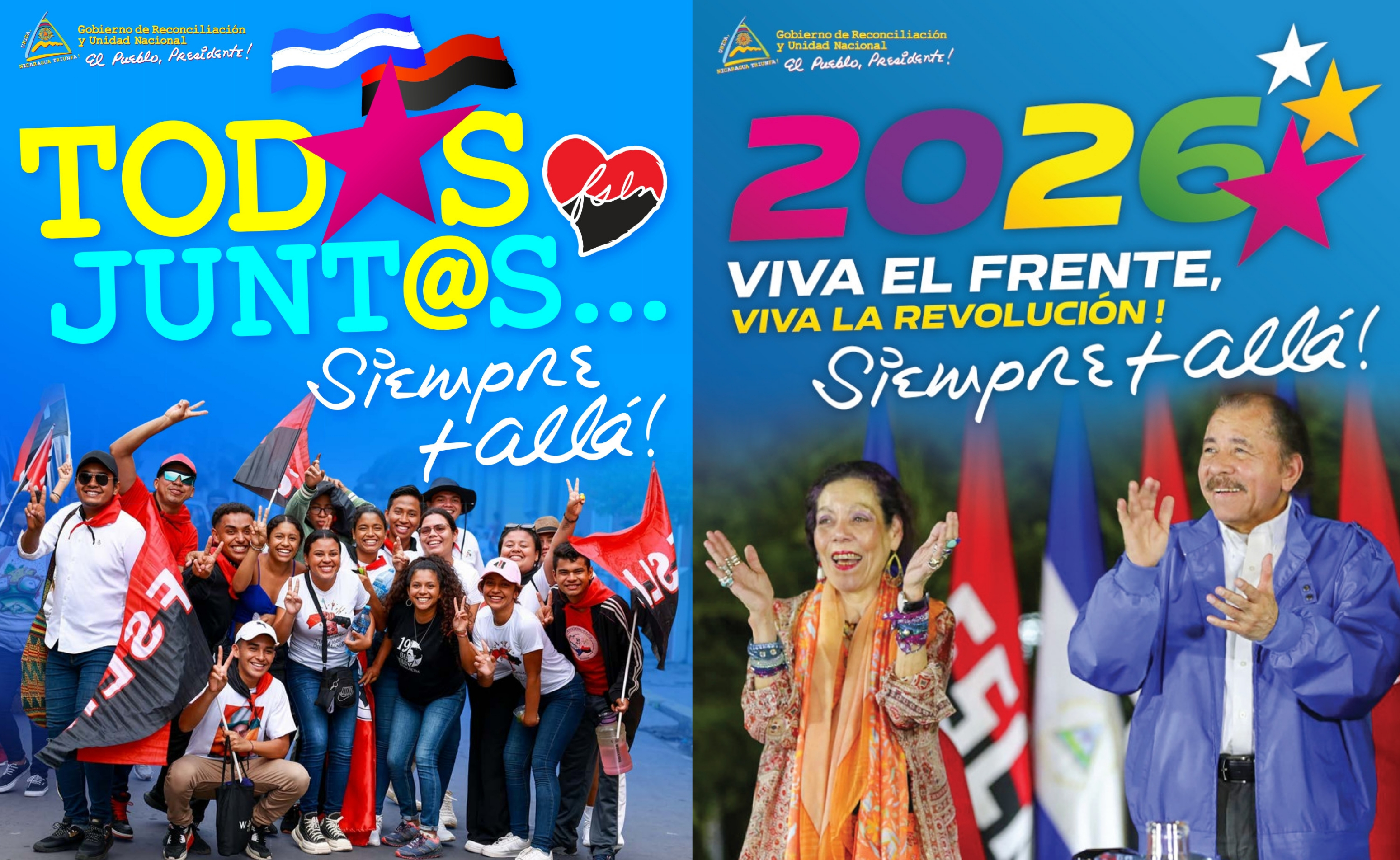
Nos sentimos content@s también de todos los Programas HAY PATRIA que vimos esta semana, donde Jóvenes, Mujeres, Personas de Tercera Edad, tod@s nos manifestamos a favor de la continuidad de este Proyecto de Pueblo Presidente.

Tod@s en esta Nicaragua nos sentimos ungidos por el Espíritu Santo... Presidentes, porque merecemos ser Presidentes, porque nos pertenece esta Patria Nuestra, de Tod@s, y nos pertenece, tenemos Derecho a construir un Futuro de Armonía, un Futuro Libre de Pobreza, un Futuro para avanzar prosperando, pero además hacerlo en la mejor voluntad, como Herman@s, como Pueblo de Dios, como Cristianos, Socialistas y Solidarios.

Abrazos Grandes de nuestro Comandante Daniel, y aquí tod@s en esta Familia, tod@s en este Gobierno del Pueblo Presidente, contentos y orgullosos, labrando ese Porvenir que tanto merecemos.

Abrazos Grandes, Compañer@s. És nuestro el Porvenir ! Abrazos.

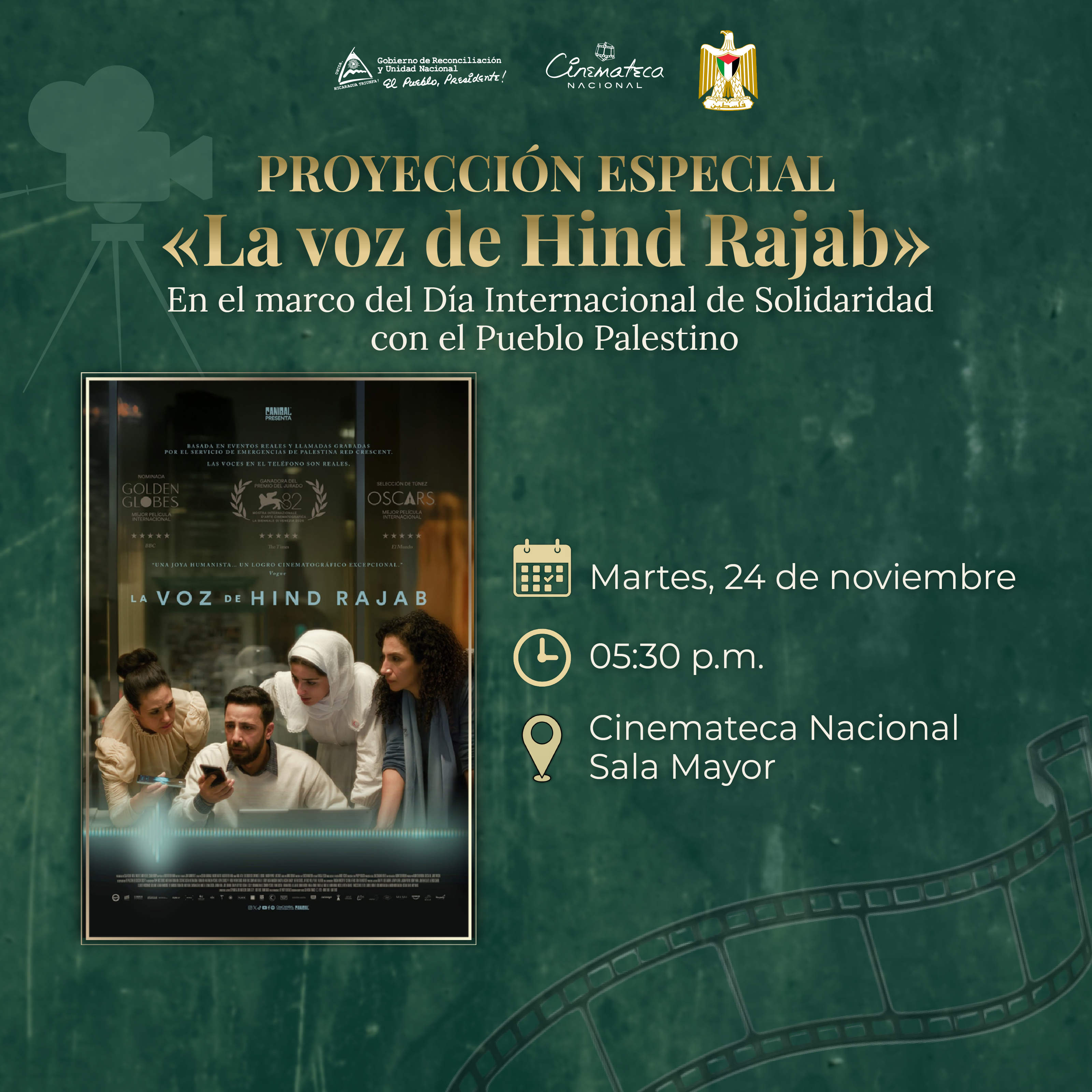
La Cinemateca Nacional presentara proyección especial de "La Voz de Hind Rajab" en el marco del Día Internacional de Solidaridad con el Pueblo Palestino a las 5.30pm el 24 de noviembre

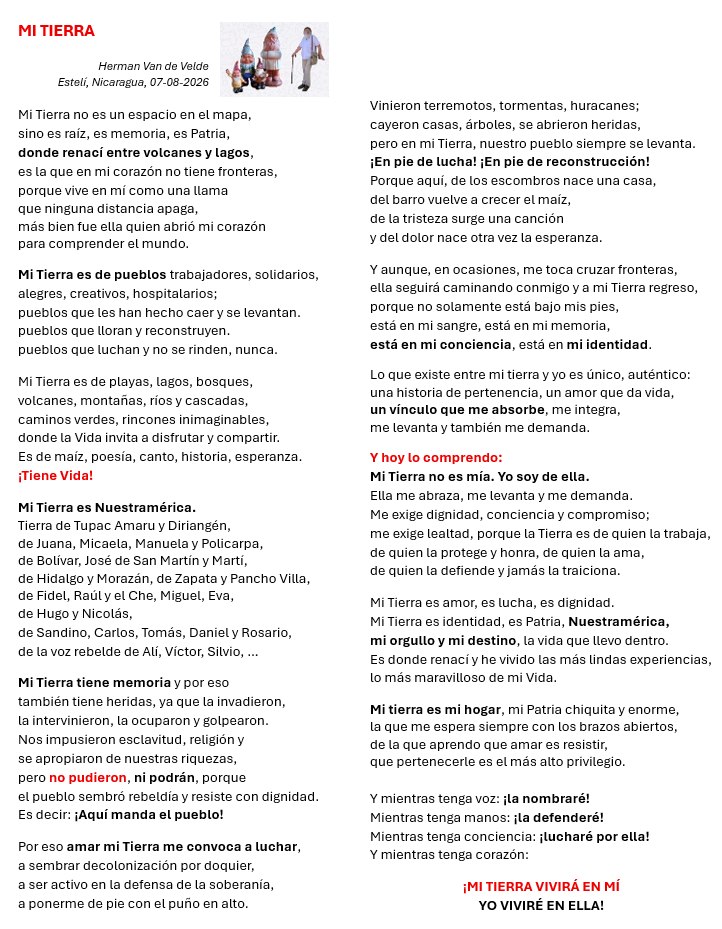
Poema - Mi Tierra (completa)

- Publicado en Artículos por


Tortilla con Sal
Archivo


Recursos Útiles
de Años Anteriores