
Stephen Sefton, November 22nd 2026
The recent summit of Presidents Xi Jinping, Vladimir Putin and Donald Trump signals the unquestionable end of Western dominance in international relations. It is a precarious historical moment full of risk, because the Western powers and their allies aggressively resist the loss of their privileged status to which they have been accustomed for centuries. The countries of the majority world strive to consolidate the legitimacy of a new world order based on more just and representative international governance. Their leaders know that to prevent even worse varieties of the current crisis requires great steadfastness and solidarity among their peoples.
The drive on the part of the majority world towards more equitable international relations has been constant since the end of the Second World War. More than 70 years ago, non-aligned countries promoted their vision seeking greater international balance to ensure the human development of their peoples. 30 years ago, at the end of the Cold War, the peoples of the world expected a real change towards international relations free of serious conflict and hoped for an era of greater prosperity for the whole world. But the Western powers’ greedy appetite for dominance only intensified. Their arrogant and disloyal abuse of international law accelerated the loss of legitimacy of the United Nations system.
Already in 1986, Nicaragua had demonstrated the capacity of the international law system to provide a just response to Western criminality with the condemnation by the International Court of Justice of terrorism against Nicaragua by the Reagan administration. But at the same time, the fatal weakness of the UN international governance system, being unable to enforce the Court's ruling, was demonstrated. The US government still owes tens of billions of dollars in compensation to the Nicaraguan people. Because of this deep, contradictory structural weakness, the Sandinista Popular Revolution in Nicaragua supports with especial firmness the initiative to reform the UN.
During his period as President of the UN General Assembly between 2008 and 2009, our Chancellor of Dignity, Father Miguel d'Escoto, elaborated with his colleagues and collaborators a detailed plan to refound the United Nations. His proposal shared the vision of the Sandinista Popular Revolution, and of many governments and political movements in the majority world, of a more just and solidarity inspired world, committed above all to peace. The Western ruling elites ignored the proposal completely and a short time later proceeded with a campaign of aggression to destroy Libya, attack Syria and overthrow the government of Ivory Coast.
Now the failed political-military and economic aggression of the US and European governments against Russia in Ukraine and against Iran in the Persian Gulf have provoked a high-risk crisis for the peace of the whole world. It was in this context that President Xi Jinping presented in September last year on the eightieth anniversary of the victory in 1945 over the genocidal fascism of the Japanese Empire and Nazi Germany, his Initiative for Global Governance. The initiative supports the majority world's demands for greater representation throughout the UN system, reforms to enforce the UN Charter and better implementation of agreed policies, for example in relation to climate change, the use of outer space or artificial intelligence.
Just over a year after president Xi Jinping’s declaration, more than 160 countries of the 192 UN members now support the Global Governance Initiative, and 60 countries have joined the initiative's Friendship Group. This support demonstrates the broad consensus of the majority world around the urgency of a profound reform of the UN. However, the stubborn resistance on the part of the Western powers and their allies makes a genuinely democratic reform of the UN in the near future very difficult. Even in relation to issues vital to the global Common Good such as Climate Change or Marine Biological Diversity, the Western powers refuse to assume their responsibilities, much less cede their undeserved dominance of the UN Security Council.
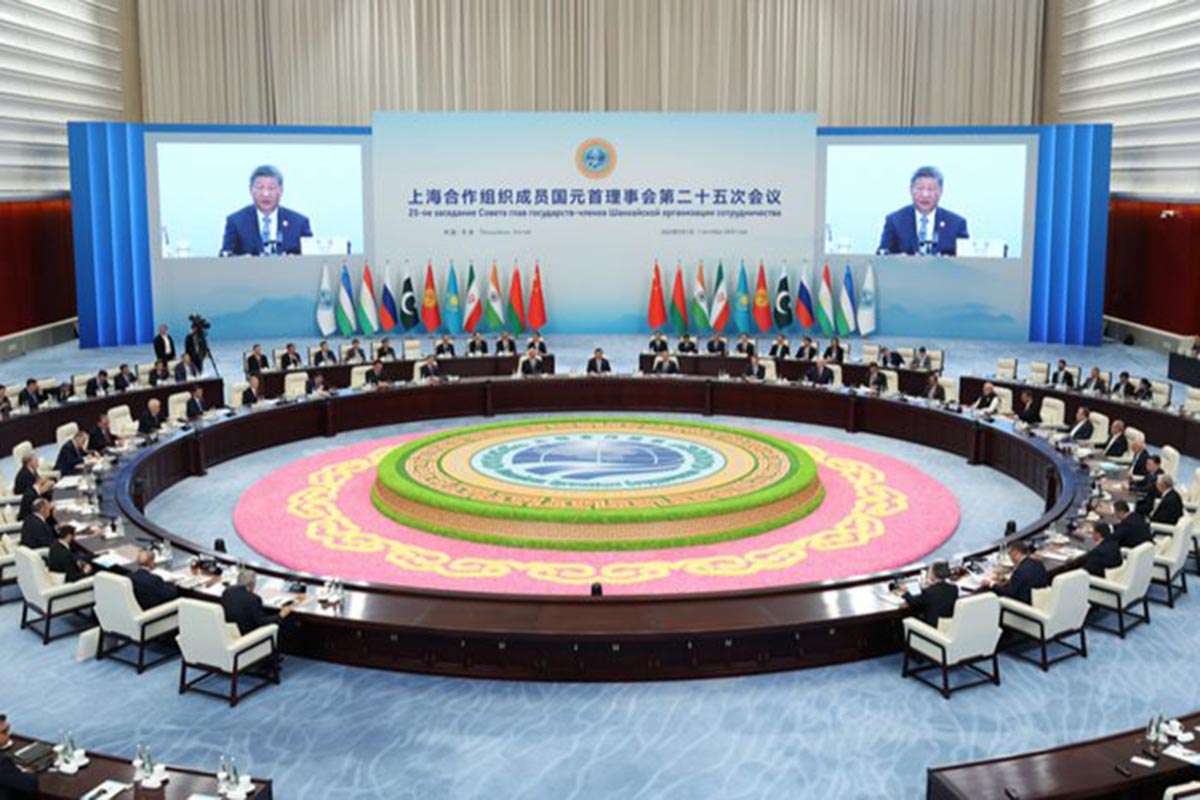
Faced with this reality, the governments of the majority world move forward building international and regional structures capable of solving, independently of the UN, a large part of the problems and disagreements that arise. This is the logic of organizations developing initiatives free from direct Western interference, such as the BRICS or the Shanghai Cooperation Organization. Also operating in this sense are the International Mediation Organization founded in May 2025 with its headquarters in Hong Kong and the World Organization for Cooperation in Artificial Intelligence founded in July of this year with its headquarters in Shanghai.
On the other hand, spaces such as the Asia-Pacific Economic Cooperation Forum, the Eastern Economic Forum in Russia or the Africa-China Cooperation Forum have demonstrated their great value and scope. They are examples of how regional exchange and cooperation can move ahead without getting bogged down in the sterile counterproductive discussions which characterize the activities of the UN system due to the arrogance and intransigence of Western governments. The parallel structures of the majority world have proven themselves more capable than the United Nations itself of ensuring the principles of the UN Charter such as sovereign equality among nations and compliance with international law.
They also promote with much greater sincerity a spirit focused on the needs and aspirations of the human person aimed at achieving a shared future for all humanity. For all these reasons, Nicaragua joined President Xi Jinping's Global Governance Initiative on the same day of its declaration on September 1st 2025. Our Co-Presidency declared: "The Republic of Nicaragua, as a Revolutionary, Free, Sovereign and Independent State, which bases its international relations on respect, friendship, complementarity and solidarity among Peoples and reciprocity based on the Sovereignty of States, adheres to the ‘Initiative for Global Governance (IGG)’, proposed by the President of the sister People's Republic of China, Xi Jinping”
On April 28th this year, Nicaragua took part in establishing the "Group of Friends of Global Governance" at the United Nations headquarters in Vienna. As our brother Qu Yuhui, Ambassador of the People's Republic of China in Nicaragua, explained last September, “The world has already changed, but the current international system is still not corresponding to these changes. The biggest change is precisely the growth of developing countries... We need to have better coordination, especially among developing countries, to give voice to our common concepts. For example, insisting on equal sovereignty, non-interference, insisting on putting people first, insisting on the central role of the international rule of law.”
It is natural for Nicaragua to support President Xi Jinping's initiative because the Sandinista Popular Revolution has always shared these same principles. Five years ago, our Co-President Comandante Daniel declared, "A New World is being born, and that New World is going to be a democratic world, where there will be respect among Nations, where there will be cooperation among Nations, where there will be no threats among Nations." And last year our Co-President Compañera Rosario also highlighted how "We are already in a New World...! in a New World where, precisely because they are new and vigorous, the struggles are intense, but they are true struggles, of True Truths, where the desire for Justice, Justice and Peace of our Peoples shines out."