Sofía Clark, September 4th 2020
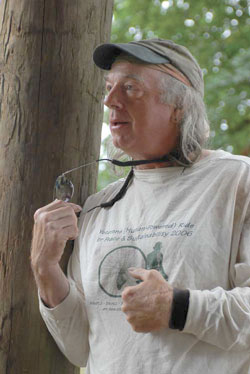
What we really need to understand is, that without empathy, we cannot survive as a species. It is that social feeling that unites all humans. So my future is linked to yours… and maybe vice versa.
S. Brian Willson, UNAN-Managua, September 1, 2020
Last Tuesday I had the privilege of accompanying Brian Willson to the National Assembly and to the UNAN-Managua where he received well deserved accolades for half a century of waging peace.
His remarks also brought to mind random observations.
Clarity. There is a remarkable transparency to Brian. What you see is what you get. Brian does not seek approval or popularity. He has story. He has a message, one that he shares candidly with anyone who wants to listen.
Brian's awakening came the hard way. To avoid recruitment, he enlisted in the U.S. Air Force in 1966. By then, U.S. war efforts in Vietnam were increasing by leaps and bounds. In 1969, during the height of the mobilization of U.S. ground forces*, Brian was sent to Vietnam to the Mekong Delta, an area of fishing villages, as head of a night security unit. Being serious, studious, alert and, above all, sober, he was asked to evaluate the success or failure of his country's bombing missions in the area. The horrors Brian saw changed him forever. It was a visceral experience. And suddenly, the insanity of it all hit him head on. "Everything is a lie," Brian thought. He had been sent 9,000 miles from his home to be on the wrong side of a war. Brian was not shy. He reported what he saw. He wrote numerous reports to his superiors describing the bombings and murder of hundreds of peasants as illegal. In other words, Brian became a nuisance and his superiors sent him home early.
But this "irreversible knowledge," as Brian puts it, made it impossible for him to go back to being his former self, a white supremacist, privileged male. He was forced to build himself a new identity. He set out to find the truth, to study the history of his own country and to expose the lies. His quest was to our benefit.
I have always liked troublemakers, not the problematic individuals who generate mindless noise and fuss, but those who make us uncomfortable by telling the truth without mincing words, who afflict the powerful and the comfortable.
Brian is a compelling speaker. Some might think since he has that gift, it has been easy for him. But his awakening came from pain, and the aftermath and post-traumatic stress linger to this day. Facing the lies enshrined in the myths can be frightening and disorienting. Brian deserves respect for deconstructing and rebuilding his identity, and helping countless veterans through that same process.
Brian did not choose to be a Vietnam veteran or to become an outspoken critic of his own government. The atrocities he saw shocked his conscience. They unleashed his empathy and made him rebel. It led him to question his country's official narrative, first of the war itself, then of everything his country stood for. It is difficult to understand the magnitude of such a revelation, to come to terms with the fact that your government, the so-called good guys, systematically and deliberately lied to the American people, and to the entire world, during four consecutive administrations. “So, who are we?”
All Nicaraguans should feel indebted to Brian for offering intelligent and sincere solidarity during the bloodiest part of Reagan's obsession with Nicaragua.
I, however, feel a special, and deeply personal, debt of gratitude. My mother was a Vietnam war widow. With six children and after losing a husband she adored, she needed to believe that my father's sacrifice was for a noble cause. In the late 1970s, under the GI Bill, my mother attended evening classes at the local community college where she was confronted by a generation of disenchanted and angry students who condemned America's war in Vietnam. My mother, being my mother, could sympathize with the sincerity of her young classmates, but she found it difficult to reconcile their (patriotic) "protest" with her enormous sense of loss. It was through the Veterans for Peace that my mother was able to overcome her pain and find peace.
And so my mother, Doña Rita, was there in 1986, in solidarity and to bear witness, during each of the 47 days that Brian, Charlie, Duncan and George fasted for life on the steps of the U.S. Capitol. The success of that historic fast, [conducted just after the World Court ruling and when Reagan was asking for $100 million for the Contras], triggered more than 500 nonviolent actions across the United States in opposition to the aid and led to the four veterans being blacklisted by the Reagan administration as "suspected domestic terrorists.
After concluding the fast, several veterans came to Nicaragua where they visited war zones, verifying Contra atrocities on-site. They visited victims in hospitals and in their communities, listening with empathy to their stories. They conducted an in-depth interview of CIA cargo kicker Eugene Hasenfus at the jail in Tipitapa. The 1986 visit was only the first of many visits Brian would make to Nicaragua during the 1980s.
Brian's civil disobedience in front of the Concord Naval Weapons Station a year later was a continuation of this same process. It was not a rash or impulsive act of rebellion. It was a well thought out action taken in conjunction with a solid group of 40 committed activists. Nor was it a novel idea. As the Pentagon’s largest weapons depot on the West Coast, Concord had a reputation since the Vietnam era as a site for protests. A longstanding protocol was in place. Literally a few meters from the site of the action was a billboard a warning to protesters that blocking the tracks could incur jail sentences of up to one year and a $5,000 dollar fine. Brian and his compatriots dutifully notified authorities at the Concord Naval Weapons Station of their intentions and anticipated their own arrests. That is why the military’s order for the train not to stop, indeed to accelerate, can aptly be described as assault with intent to kill.
Brian is a living example that being a peace activist means being willing to take risks and accept the consequences. He also shows how actions, even setbacks, can become points of leverage if we know how to take advantage of them. And so, when Brian woke up three days later, some 9,000 people descended on Concord to block the trains passage. And not just for a single day, but daily for 32 consecutive months, volunteers blocked the tracks. More than 2,100 people were arrested, many with sentences of up to six months in jail, some with broken elbows or other injuries.
It is a reflection of Brian’s integrity that within months of his recovery, with new prosthetics (or “on third world legs”) and with lots of gumption, he returned to Nicaragua, fortified with a deeper empathy for war victims who lost their limbs. He remained steadfast in his solidarity with Nicaragua and the Frente Sandinista well beyond 1990 and into the new millennium.
A penetrating thinker, Brian saw the global connections of the people's struggles. He continued on his journey, which led him to document, in situ, U.S. policy in over 25 countries, including, in addition to Nicaragua, El Salvador, Honduras, Panama, Brazil, Argentina, Mexico, Colombia, Ecuador, Cuba, Haiti, Iraq, Israel, the occupied Palestinian territories, Japan, and North as well as South Korea. He continues to resist imperial wars. Brian has protested the sending of US troops to Afghanistan, Iraq and Syria.
His example, full of love and sacrifice, contrasts sharply with opposition figures who measure solidarity in the number of likes, tweets and followers on social media. "Social marketing" has become the tool par excellence for political manipulation. There is a real need and place for the kind of direct, person-to-person solidarity that defined the 1980s in Nicaragua, and that Brian brings with him into the 21st century.
Neither aging or a worldwide pandemic have dampened Brian’s insatiable curiosity, his desire to know what is happening in our world, locally and globally, or his commitment to support the people’s right to peace, sovereignty and development. Brian’s appeal to young people to defend the gains of the revolution and counter the lies of the empire comes from someone whose eyes are open. His invitation to do so with love and empathy is a reflection of his great humanism.
Yes, I do like “troublemakers”. The world could use a few more Brian Willsons.
* U.S. ground troops in Vietnam reached 543,000 in 1969.