 Winnie Narváez Herrera, Nicaragua Solidarity Campaign, December 8th 2021
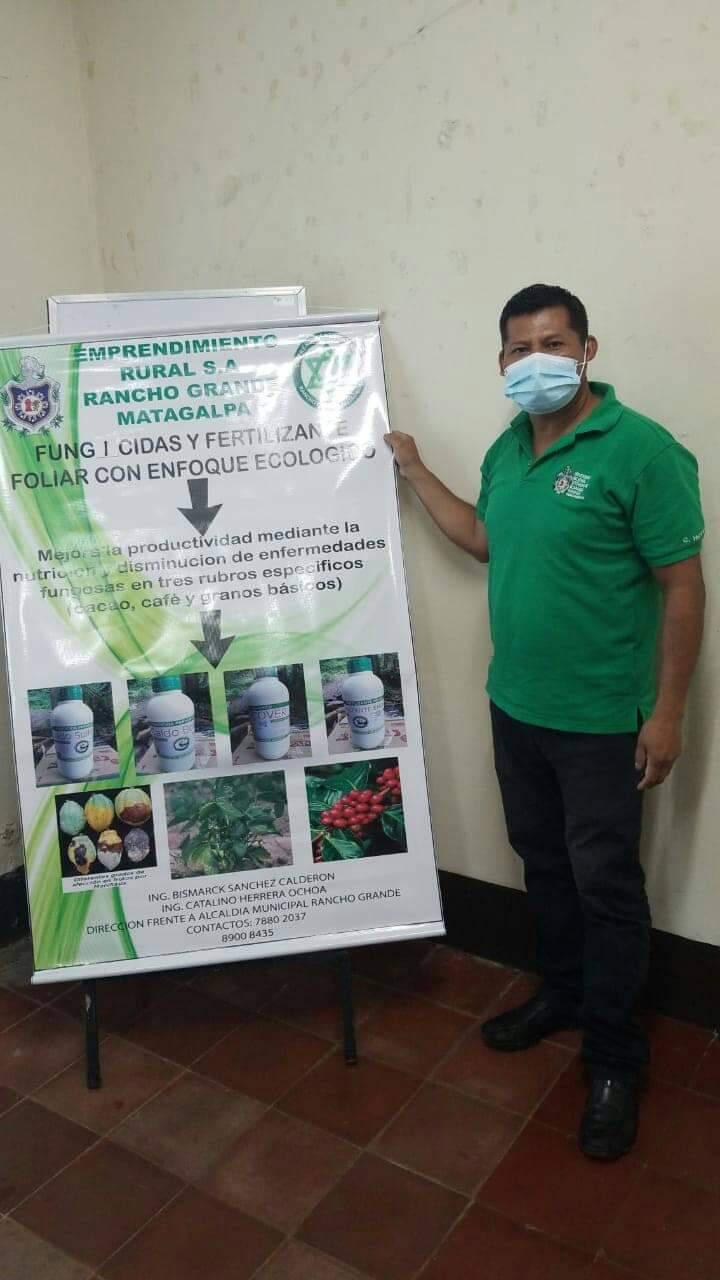
Catalino Herrera Ochoa is from a peasant family in Matagalpa, He has worked for the past eight years as a gardener at the José Martí Normal School in Matagalpa.
This year he graduated as an engineer in sustainable rural development at UNICAM (The Rural University of the National Autonomous University) based in the municipality of Waslala, in northern Nicaragua.
As the culmination of his studies, Catalino worked on a project to develop and market fungicides and biofertilizers using an ecological approach. His project won second place in a scientific conference organised by UNAN-Managua / FAREM Matagalpa.
Catalino explains: "I chose these studies career because I have always liked working in agriculture, the environment and conservation. Meanwhile I gave classes in developing school gardens and supported the teachers in the growing basic grains and vegetables on two manzanas of land owned by the school.
Catalino is currently studying zootechnics at the Santiago Baldovino Technology Centre in Muy Muy. It is the largest technological centre in the country with specialisations in technification and infrastructure as part of agricultural studies.
It guarantees a learning contextualised in the socioeconomic interests of the área: Catalino explains that courses are 70% practical.
With the support of MEFCCA, Catalino plans to trademark his products in order to be able to market them through fairs.
Regarding the migratory pressures in some municipalities in Matagalpa, he commented: "We have a country rich enough in resources to be self-sustainable. We have plots of land and the necessary tools. The government promotes technical careers whereby you can become your own boss, I have experienced it myself. There is support from institutions such as MEFCCA and the National Institute of Agricultural Technology (INTA). We are all important for the social development of the country.”
This experience is one more example of the integration of development policies and the promotion of the social solidarity economy in Nicaragua.
It also highlights the co-operation between different institutions that promote a coherent approach combiningg empirical and academic learning. In other words, from contextualised university and technical training to the registration of trademarks and marketing.
This experience illustrates the vindication of a participatory model of education initiated during the Revolution focused on learning and working, where the participants are the protagonists.