Winnie Narváez Herrera* Nicaragua Solidarity Campaign, January 16th 2022
For many people, Ciudad Darío in the municipality of Matagalpa, is a place they pass through. However, this small town, 80km from Managua covering an área of 432 km2 with a population of 50,000, is a place of interest in its own right.
Originally called Totumbla, in pre-colonial times it was inhabited by the Ulúa people but in the 18th century was renamed Metapa. It is the birthplace of the poet Rubén Darío and the writer Félix Pedro Pastora, among others.
According to ethnohistorian Mario Rizo, the city lies in the fertile Sébaco valley with soil suitable for growing all kinds of crops. Therefore, agriculture was the main activity in pre-colonial times and has remained so ever since.
Another interesting geographical feature is the system of three lagoons: Tecomapa, Las Playitas and Moyúa, situated 400 metres above sea level. These form a unique system of wetlands which dry up and then fill up again [according to the seasons].
 The economy of Ciudad Darío is still mainly based on the cultivation of maize, beans, wheat and vegetables, but there are also other attractive enterprises such as the ones described below.
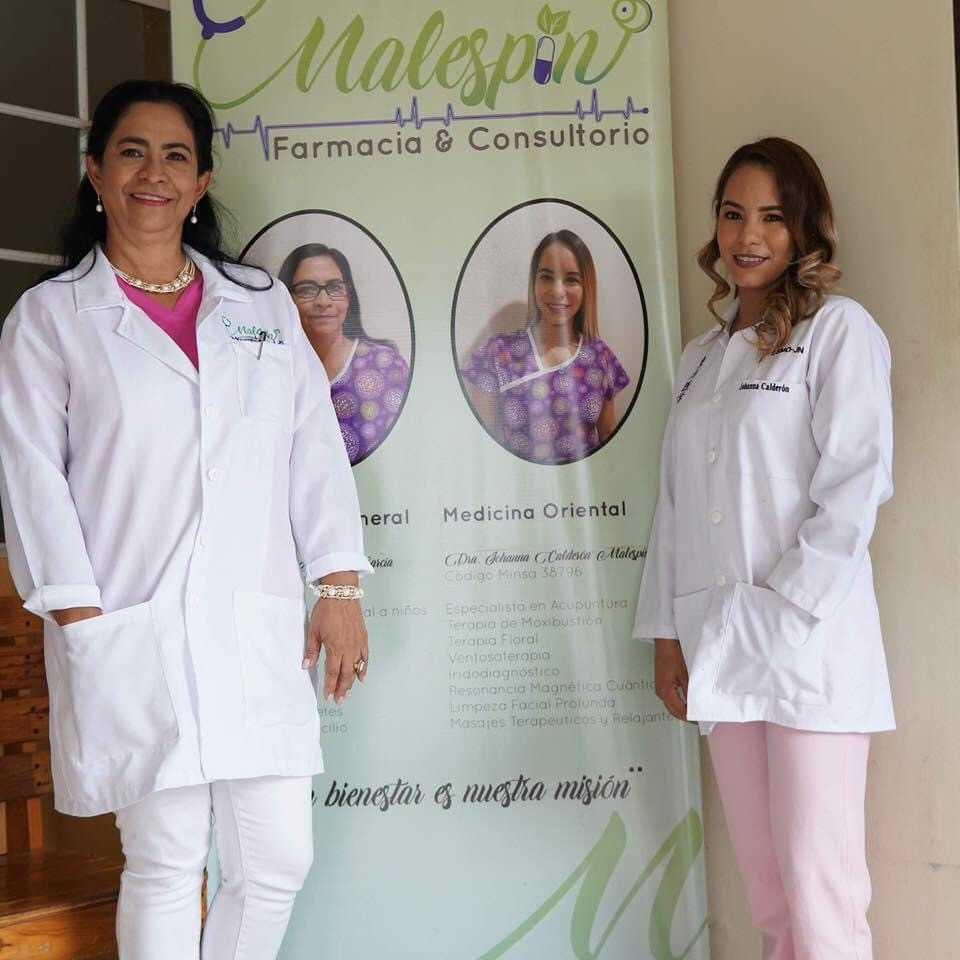
Clínica Malespín was founded in 2001 by Dr Johana Malespín
Johana was born in Bilwaskarma in the Rio Coco región of the northern Caribbean Coast.
In 1981, at the age of 14, she was offered a scholarship to study in Cuba and managed to convince her mother to allow her to go.
In Cuba she went to secondary school and then medical school. Returning to Nicaragua in 1993 she faced many challenges, but succeeded in finding a place in the public health system on the Caribbean coast.
Ten years later she moved to Ciudad Darío where she set up an innovative clinic that combines Western with Eastern medicine. This is based on the accumulation of diverse experiences throughout her life.
Johana's grandmother used to make tea for her; [for example] there was always a eucalyptus twig hanging in the house, and plant based medicine was used to heal minor ailments,
This is how the legacy of the clinic was passed down through the generations: Dr Johana Calderón, her daughter, specialised in oriental and later regenerative medicine, also in Cuba.
Currently the doctors are not part of the public [health] system, but they support the government model: "there is coincidence with the government's macro programme to promote natural medicine and it would be a good way to contribute our experiences from a local, evidence-based point of view".
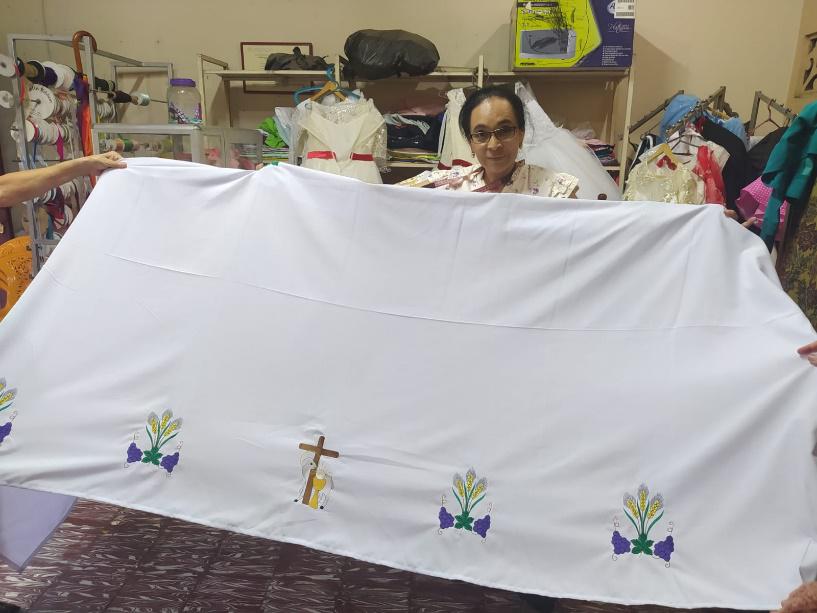
Another enterprise is Modas Rosibel, owned by Rosibel Méndez, originally from Hato Nuevo, a community in Ciudad Darío. It was during the Revolution that she had the opportunity to study and while in 5th grade she taught in other schools in the evenings.
She remembers that in her home, among other enterprises, they made and sold cheese: "we couldn't eat the cheese because that's what we lived on". At the age of 23, when she was unemployed, she started making clothes for her family.
"My mother gave me a treadle machine that she had inherited from her mother-in-law and that's what I started working with", said Rosibel.
In 2013, 19 sewing workshops in Ciudad Darío formed a co-operative; although it did not continue in the longer term, it was a boost for all of them to develop their projects.
With the support of MYPIME, now MEFCCA, Rosibel started attending workshops and continued to investigate possibilities until she participated in a MIFIC small industry programme which enabled her to register her trademark.
She reflected: "Before, to embroider a shirt I had to go to Masaya, Estelí or Managua because I didn't have a machine, nor a brand, a label or training. Thanks to this programme, I bought industrial machines, I was trained, I developed an advertising programme and I managed to get a laon which included an embroidery machine as a donated component. I was one of the first businesswomen in Matagalpa."
Rosibel has participated in many national events. Eighty per cent of her designs are personalised and the remaining 20 per cent are contracts with institutions for example for uniforms. However, her greatest inspiration has been the commemorative events of the Ruben Darío Muses because it has enabled her to explore her creativity.
With an interest in expanding her business, Rosibel looked for support through the national ‘Nicaragua Designs’ fashion and design event "I had my products checked and they told me that I was eligible to participate". This has allowed her to expand her market to an international level.
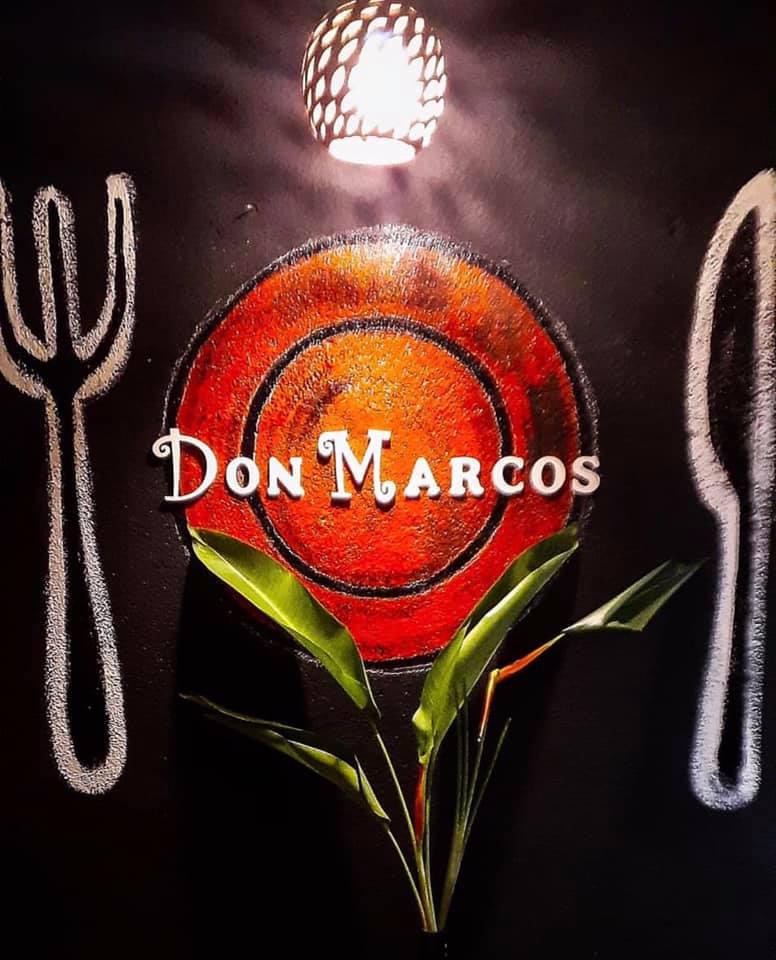
Café Don Marcos is the enterprise owned by Marcos Vallecillo, a young man from Ciudad Darío.
This business started seven years ago as a coffee shop and bakery, continuing his mother's legacy.
Marcos studied tourism and for a while worked at INTUR; he resigned because his ambition was to work in the hotel and restaurant industry.
"I have always liked cooking and my mother always encouraged us set up our own businesses so I said one day I'm going to have a restaurant.’
The business was small and in 2018 it declined due to the economic crisis caused by the attempted coup.
However, in 2019 it was restructured to become a restaurant: "I started working with my family and went on a trip where I learned a lot and started implementing new things".
Regarding the transition stage, Marcos reflected: "When I started, I felt so sorry to see that Café Don Marcos was almost in ruins. We started developing ideas of what could be done because the place had the potential to be a beautiful so that it could emerge like a phoenix from the ashes.
These three enterprises are, among many others, examples of the dynamism of Nicaragua’s social economy thanks to the favourable conditions that have been created.
Moreover, they offer different, attractive economic activities in the municipality of Ciudad Dario.
* Winnie Narváez Herrera is an education research woerer with the on line education project ÁBACOenRed