Jeremy Kuzmarov, Internationalist 360°, February 13th 2022
https://libya360.wordpress.com/2022/02/13/the-cover-up-begins-philip-ze…
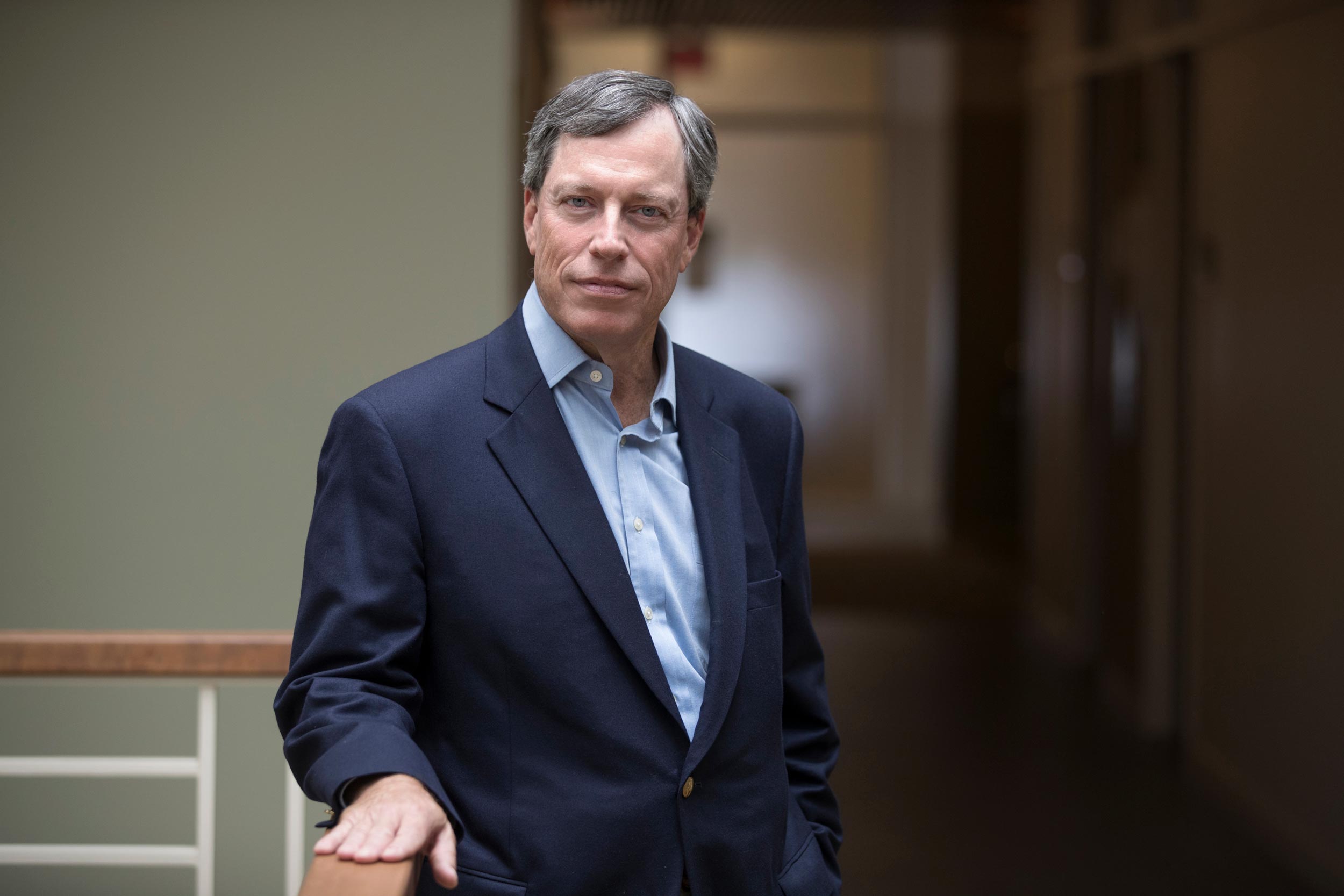 Philip Zelikow’s Role in Proposed Bipartisan COVID-19 Commission Raises Serious Doubts About its Credibility. Zelikow was Executive Director of the 9/11 Commission which suppressed evidence and misrepresented facts
A bipartisan group of senators, led by Patty Murray (D-WA) and Richard Burr (R-NC), has developed legislation to create a commission to investigate the origins of the COVID-19 pandemic and government response, modeled after the 9/11 Commission.
The foundation for the commission has been quietly laid by Philip Zelikow, a lawyer who happened to have been the executive director of the 9/11 Commission, which released an investigative report on 9/11 in July 2004.
This past October, according to the New York Times, Zelikow received a telephone call from Eric Schmidt, the philanthropist and former chief executive of Google, who urged Zelikow to put together a proposal to examine the pandemic.
Zelikow subsequently went out and obtained financial backing from four foundations and formed a staff that has now interviewed more than 200 public health experts, business leaders, elected officials, victims, and their families.
The four foundations are: a) Schmidt Futures, founded by Mr. Schmidt and his wife Wendy; b) Stand Together, backed by libertarian-leaning philanthropist Charles Koch; c) the Skoll Foundation, founded by eBay pioneer Jeff Skoll; and d) the Rockefeller Foundation.
9/11 Gatekeeper
Zelikow’s involvement in the COVID-19 pandemic commission raises immediate red flags given his oversight of the 9/11 Commission. 9/11 Commission co-chairs Lee Hamilton, a former Democratic Party Congressman from Indiana, and Tom Kean, former Republican Governor of New Jersey, who co-authored the 9/11 Commission Report, said publicly “We were set up to fail.”[1]
Political analyst Peter Dale Scott has pointed out that “9/11 was the largest homicide by far in American history, yet it has never been adequately investigated.” The 9/11 Commission Report, though well researched and professional in some aspects, “systematically suppressed evidence and occasionally misrepresented some crucial facts,” according to Scott.
Scott writes that the 9/11 Report is “an example of concerted cover-up, partly by omissions and just as important by its cherry-picking of evidence and contrived misrepresentations.”[2]
One major flaw, according to Scott, was that the report failed to acknowledge confusion over the identities of the 9/11 hijackers, which FBI Director Robert Mueller acknowledged on September 20, 2011.[3]
The 9/11 Report also failed to adequately explain the collapse of the 47-story steel-framed World Trade Center 7 (WTC-7) building when it was 355 feet from the nearest tower hit by planes.[4]
In addition, the Commission provided misleading information about the timing of the warnings that American Airlines Flight 77 was headed toward the Pentagon, affecting assessment of whether it could have been shot down.
It also failed to raise questions about a suspicious Joint Chiefs of Staff memo three months before 9/11 making plane interception a matter for the White House; and about a North American Aerospace Defense Command (NORAD) military drill conducted that morning testing responses if a plane were to strike a building; a “bizarre coincidence,” which compromised the government’s response.[5]
Vice President Dick Cheney’s role in 9/11 was greatly minimized in the 9/11 Commission Report, while unexplained and disturbing actions by him were concealed, including that he was the one to order the NORAD drill.[6]
The Commission heard conflicting accounts of who gave orders to ground all planes after the attacks, but reported only the one account that distanced Cheney from the decision.[7]
It claimed that Cheney arrived in the Presidential Emergency Operations Center (PEOC) at 10:00 a.m., when evidence suggests he arrived there a half-hour earlier. (Cheney told NBC’s Tim Russert on September 16th that he arrived at 9:37 a.m. and Norman Mineta, the Secretary of Transportation, had him there at 9:20 a.m.) The timing is not trivial because what is at stake is whether he was present to give three major orders, including one not to have aircraft shot down.[8]
9/11 Cover-up Commission
Scott’s assessment is corroborated by numerous other observers.
Writing in Harper’s magazine, Benjamin DeMott called the 9/11 Commission Report “a cheat and a fraud,” noting its failure to critically evaluate the gap between President Bush’s claim he was never informed about the threat of al-Qaeda and testimony of intelligence experts that they had repeatedly tried to draw his attention away from Iraq and onto this threat.[9]
New York Times reporter Philip Shenon reported on the 9/11 Commission’s failure to conduct a thorough search of the terrorism archives of the National Security Agency (NSA)—despite a $15 million budget.
Professor David Ray Griffin, a noted theologian who wrote the book The 9/11 Report: Omissions and Distortions, said that the 9/11 Commission should best be remembered as the “9/11 cover-up commission,” since it “whitewashed the administration, especially its top leaders, of any guilt.”
According to Griffin, the omissions and distortions in the 9/11 report included: a) ignoring a book by former counter-terrorism czar Richard Clarke that contradicted certain claims in the report; b) mischaracterization of Mohamed Atta, the alleged lead hijacker, as an Islamic fundamentalist when he had been observed at a strip club and taking cocaine; and c) failure to report that the Pentagon had plans to invade Afghanistan in October 2001 because of the failure of Unocal to go forward with a pipeline plan, and that there were also advance plans to invade Iraq.[10]
Griffin expresses bemusement as to why the 9/11 Report did not question discrepancies in reports about Mohamed Atta’s whereabouts on the morning of 9/11, or why Atta —whom researcher Daniele Ganser connected to a top-secret operation of the Pentagon’s Special Operations Command (SOCOM)—was on a commuter flight to Boston’s Logan Airport from Portland, Maine, which could have easily been delayed; or why his luggage (which did not make the Boston-Los Angeles flight) contained a will when he had been planning to fly the plane into the World Trade Center (later Atta’s passport suspiciously appeared at Ground Zero).[11]
The 9/11 Commission additionally never questioned how Hani Hanjour could have skillfully maneuvered American Airlines Flight 77 into the western side of the Pentagon, when a Phoenix, Arizona, flight school had questioned the validity of his pilot’s license because of the shoddiness of his piloting skills. A former employee of the flight school told The New York Times: “I’m still to this day amazed that he could have flown into the Pentagon. He could not fly at all.”[12]
Who Is Philip Zelikow?
Born in New York City in 1954, Zelikow holds a law degree from the University of Houston and a Ph.D. in International Relations from Tufts University’s Fletcher School of Law and Diplomacy, a training ground for many in the foreign policy elite, or “blob,” as Obama’s deputy national security adviser Ben Rhodes famously termed them.
After practicing law in the early 1980s, Zelikow taught national security affairs at the Naval Postgraduate School in Monterrey, California, and then joined the U.S. State Department, working as an aide to Secretary of State George P. Shultz during the second Reagan administration.
In 1989, in the George H.W. Bush administration, Zelikow was detailed to join the National Security Council (NSC), where he was involved as a senior White House staffer in the diplomacy surrounding German reunification and the diplomatic settlements accompanying the end of the Cold War in Europe.
During the first Gulf War, he aided President Bush, National Security Adviser Brent Scowcroft, and Secretary of State James Baker in diplomatic affairs related to the coalition that carried out the invasion.
In late 2000 and early 2001, Zelikow served on President George W. Bush’s transition team, and then was named to a position on the President’s Foreign Intelligence Advisory Board [PFIAB].[13]
In 2002, he authored the Bush administration’s 2002 “National Security Strategy” that outlined the pre-emptive war doctrine that would be used against Iraq.
Subsequently Zelikow worked for Barbour Griffith & Rogers, a powerhouse Republican lobbying firm, which took on as a client, Ayad Allawi,[14] a CIA and British MI6 asset and the White House’s favored candidate to succeed Saddam Hussein and then replace Nouri al-Maliki, Iraq’s Prime Minister from 2006 to 2014.
Referred to by a former friend as “Saddam Lite” and a “thug,” Allawi had peddled disinformation about WMD with his cousin Ahmad Chalabi and personally executed terrorist suspects by shooting them in the head.[15]
Zelikow has served on the Council of Foreign Relations and on the advisory board of the Gates Foundation and has taught at Harvard University’s Kennedy School of Government and the University of Virginia’s Miller Center of Public Affairs. A prolific writer, he has authored scholarly studies on the Cuban missile crisis, American military strategy, German reunification (with Condoleezza Rice) and lost opportunities for peace during World War I.
One of Zelikow’s academic areas of expertise is in the nebulous area of “catastrophic terrorism”—events which enabled U.S. political leaders to concentrate executive powers and violate constitutional freedoms in pursuit of offensive imperial wars and in developing the “public myth”—which he appears to have helped create.
According to former CIA analyst Melvin Goodman, Zelikow “headed a case study project at Harvard and took hundreds of thousands of dollars from the CIA. He used CIA documentation and produced case studies that exonerated the CIA from any charges of politicization of intelligence, particularly with regard to the Soviet Union.”[16]
In Rise of the Vulcans (2004), James Mann reports that when Richard Haass, a senior aide to Secretary of State Colin Powell and the director of policy planning at the State Department, drafted an overview of America’s national security strategy following the September 11, 2001, attacks, Dr. Rice, the National Security Adviser, “ordered that the document be completely rewritten. She thought the Bush administration needed something bolder, something that would represent a more dramatic break with the ideas of the past. Rice turned the writing over to her old colleague, University of Virginia Professor Philip Zelikow [with whom she had worked in the first Bush administration].”[17]
The Fix Is In
In The Commission: The Uncensored History of the 9/11 Investigation (2008), Philip Shenon claimed that Zelikow had closer ties with the Bush White House than he publicly disclosed and tried to influence the final report in ways that the staff perceived as limiting the Bush administration’s responsibility and furthering his anti-Iraq agenda.[18]
When Zelikow was first appointed as 9/11 Commission Executive Director, former counter-terrorism czar Richard Clarke remarked that the “fix is in.” The 9/11 Family Steering Committee opposed his appointment citing his close ties to the Bush White House.
- He and Rice worked closely together in the first Bush White House as aides to former National Security Adviser Brent Scowcroft. The two co-authored a book together and the two associated again when Zelikow directed the Aspen Strategy Group, a foreign-policy strategy body co-chaired by Scowcroft, which Dick Cheney and Paul Wolfowitz were also members of.
- Zelikow directed the Markle Foundation’s Task Force on National Security in the Information Age under co-chairman James Barksdale, a Bush adviser and major Bush-Cheney donor. A 9/11 commissioner, Senator Slade Gorton (R-WA) also served with Zelikow on the task force.
- After the 2000 election, Zelikow and Rice were reunited when George W. Bush named him to his transition team for the NSC. Rice reportedly asked Zelikow to help organize the NSC under the Scowcroft model, which was insular and steeped in a Cold War worldview.
Zelikow’s closeness to the Bush administration was apparent by his being granted access to key classified intelligence briefings about 9/11.
Kristen Breitweiser, a 9/11 widow, was among those to insist that Zelikow has a “clear conflict of interest,” noting his contacts with Bush’s political adviser Karl Rove, whose job was to make sure that the 9/11 report did not hinder his boss’s re-election chances in the 2006 presidential election.
We Haven’t Seen the Evidence Yet, But Really We’re Sure
Before the 9/11 Commission staff even had its first meeting, Zelikow had written along with his former professor Ernest R. May a detailed outline of the 9/11 Commission Report, complete with chapter headings, sub-headings, and sub-sub-headings.
When Kean and Hamilton were later shown this outline, they worried that it would be seen as evidence that the report’s outcome had been pre-determined, so the three of them decided to keep it a secret from the rest of the staff.
When the staff did finally learn about this outline a year later, they were alarmed. Some of them circulated a parody entitled “The Warren Commission Report: Preemptive Outline.” One of its chapter headings read: “Single Bullet: We Haven’t Seen the Evidence Yet, But Really, We’re Sure.’” The implication was that the crucial chapter in the Zelikow-May outline could have been “Osama Bin Laden and Al Qaeda: We Haven’t Seen the Evidence Yet, But Really, We’re Sure.”[20]
Evidence Derived from Torture
Though Zelikow objected to the CIA’s torture policies in a 2006 memo to the NSC, a considerable amount of evidence in the 9/11 Commission Report derived from illegal CIA torture sessions.
This included, most notably, the testimony of alleged “9/11 mastermind” Khalid Sheikh Mohammed who was waterboarded 183 times in a single month, whose children were kidnapped by the CIA, who was told that his children were going to be tortured with insects, and who eventually confessed to a whole series of plots, including bombing a bank that did not exist.
As many as one-quarter of the footnotes in the final commission report source from this torture testimony and, as Zelikow himself admitted, “quite a bit, if not most” of the commission’s information on the 9/11 plot itself came from this testimony, whose credibility is questionable at best.[21]
Saudi Connection Censored
As executive director of the 9/11 Commission, Zelikow denied interviews and documents to staffers investigating the Saudi connection to the attacks, eventually firing one of them and removing the text of their investigation from the final report.[22]
One question that went unaddressed was how two of the alleged hijackers—Khalid al-Mihdhar and Nawaf al-Hazmi, suspected of being Saudi double agents who had penetrated al-Qaeda on behalf of the Saudi Royal family—sailed through Customs in the U.S. and why immigration authorities were never alerted that they were on a terrorist watchlist.[23]
Another black hole in the 9/11 commission was the failure to investigate CIA asset Ali Mohammed, an Al Qaeda operative close to bin Laden implicated in the 1998 U.S. embassy bombing in Kenya, and question of why the FBI pushed for his release from Royal Canadian Mounted Police (RCMP) custody in 1993.
Further Suppression of the Truth
According to James Corbett, author of a critical intelligence blog, Zelikow’s participation in a coverup as head of the 9/11 commission was apparent in his:
- Rewriting a Commission staff statement to suggest a systematic link between al-Qaeda and Iraq before 9/11, outraging the authors of the original statement.
- Working behind his own staffer’s back to stop him from serving the Pentagon a subpoena to answer about information NORAD was withholding from the Commission.
- Sitting on a proposal to open a criminal investigation into the Federal Aviation Administration (FAA) and military officials who lied to the Commission for months, and then forwarding that proposal not to the Justice Department, which could have brought criminal charges, but to the FAA’s Inspector General, who could not.
- Covering up information on Able Danger, a military intelligence team that had identified several of the alleged 9/11 hijackers in the country before 9/11.[24]
Say No to Zelikow and the Deep State
Zelikow is so compromised by his association with the 9/11 Commission and the Iraq War to have any credibility before the U.S. public.
His ties with Google and corporate foundations raise further suspicion as to the true motives behind the new COVID-19 commission and whether it is interested in advancing joint corporate-government interests or promoting the truth—wherever that may lie.
The public at this time should demand an independent, publicly funded investigation, headed by independent scientists and researchers untainted by past association with the intelligence world or deep state for whom truth is anathema.
Notes:
- Lee Hamilton and Thomas H. Kean, Without Precedent: The Inside Story of the 9/11 Commission (New York: Alfred A. Knopf, 2006), 14. Hamilton and Kean were themselves not entirely objective or innocent. A member of the Council on Foreign Relations (aka Wall Street’s think tank/the imperial brain trust), Hamilton in the 1980s had helped manage the Iran-Contra hearings to conceal the greatest crimes of that era. Serving at the time as president of Drew University, Kean was also a member of the Council on Foreign Relations and co-chairman of the Homeland Security Project, which laid the groundwork for the creation of the Department of Homeland Security. He was a shareholder of the Hess Oil Corporation which was involved in a joint venture with Delta oil in Saudi Arabia, so evidently would not come down too critically on the Saudis or explore their role in 9/11. See Michael C. Ruppert, edited by James Hecht, with foreword by Catherine Austin Fitts, Crossing the Rubicon: The Decline of the American Empire at the End of the Age of Oil (Gabriola islands, BC: New Society Publishers, 2004), 450-454. ↑
- Peter Dale Scott, The Road to 9/11: Wealth, Empire, and the Future of America (Berkeley: University of California Press, 2007), 184. ↑
- Scott, The Road to 9/11, 197. ↑
- The official explanation of fire or debris damage does not explain the vertical precision with which WTC-7 collapsed in its own footprint. ↑
- Scott, The Road to 9/11, 208, 209, 216, 217; Four Arrows (Aka Don Jacobs), “The Military Drills on 9/11: “Bizarre Coincidence’ or Something Else?” Research in Political Economy, 23 (2006), 123-145. The 9/11 report acknowledged the existence of only one military war game on 9/11 in a footnote. It failed to highlight that Northeast Air Defense Sector (NEADS) staffers said that they thought the first call they received about the plane hijackings was part of the military drill. U.S. military training exercises had been used as a cover for real events a number of times prior to 9/11. Researcher Michael Ruppert found that the exercises included simulated hijacking of aircraft which may have sown confusion in authorities and impeded a proper response to the real hijacked planes. The exercises further involved an emergency evacuation drill that resulted in many key people being absent from their stations watching satellites when the planes first struck the World Trade Center towers. ↑
- Scott, The Road to 9/11, 217. The 9/11 commission report also did not raise questions about the unknown whereabouts of Defense Secretary Donald Rumsfeld right after 9/11. ↑
- Scott, The Road to 9/11, 200. ↑
- Scott, The Road to 9/11, 200, 202, 216, 221. Curiously, the 9/11 commission report has Cheney traveling for 21 minutes in a short tunnel that should have taken only a minute or two to get through. ↑
- Benjamin DeMott, “Whitewash as Public Service: How The 9/11 Commission Report Defrauds the Nation,” Harper’s magazine, October 2004. ↑
- David Ray Griffin, The 9/11 Commission Report: Omissions and Distortions (Moreton-in-Marsh, UK: Arris Books, 2004). ↑
- Another issue is that of cell phone calls from the planes. The 9/11 Report claimed that 13 passengers on Flight 93 made a total of 30 calls to family members, though the technology to make cell phone calls from planes in 2003 was not yet established. Atta, or a man resembling him, had acted suspiciously in the months before 9/11 by telegraphing some aspects of the crime. Pentagon lawyers had suspiciously intervened to protect Atta after Anthony Schaffer of the Defense Intelligence Agency (DIA) had recommended his arrest one year before 9/11. U.S. Senators from both parties claimed that Atta could have been identified before 9/11, with even Joe Biden accusing the Pentagon of a coverup—though none of this is covered in the 9/11 commission report. Four Arrows (Aka Don Jacobs), “The Military Drills on 9/11: “Bizarre Coincidence’ or Something Else?” 141. The issue of Bin Laden’s family being told to leave the U.S. before 9/11 is also suspicious.↑
- Jim Yardley, “A Trainee Noted for Incompetence,” The New York Times, May 4, 2002. ↑
- Later Zelikow was appointed to the Defense Policy Board in the Obama administration, working under Defense Secretary Ash Carter, an old colleague at Harvard. ↑
- See Glenn Greenwald, “How Our Seedy, Corrupt Washington Establishment Operates,” Salon, August 24, 2007. ↑
- Jon Lee Anderson, “A Man of the Shadows,” The New Yorker, January 16, 2005. Born to a wealthy Shia family, Allawi served under Paul Bremer’s governing authority and was after appointed interim prime minister. Colleagues who worked with him remember an impetuous man, authoritarian and occasionally vulgar. Back in high school, Allawi had been known as a fighter. One classmate recalled: “If he wanted to play handball, everybody would leave the court because they were afraid of him.” Anthony Shadid, “Iraq’s Last Patriot,” The New York Times Magazine, February 4, 2011. ↑
- Zelikow had brought on his staff Douglas MacEachin, a CIA analyst responsible for the politicization of intelligence regarding the Soviet Union. ↑
- James Mann, Rise of the Vulcans: The History of Bush’s War Cabinet (New York: Penguin Books, 2004), 316, 317. ↑
- Philip Shenon, The Commission: The Uncensored History of the 9/11 Investigation (Boston: Little Brown, 2008). ↑
- Brian P. McGlinchey, “Bush Administration Official: Saudi Ties to 9/11 Hidden to Protect Iraq War Narrative,” 28pages.org, August 8, 2016. ↑
- James Corbett, “9/11 Suspects: Philip Zelikow,” The Corbett Report, September 18, 2021, https://www.publish0x.com/thecryptic/911-suspects-philip-zelikow-xznrljq ↑
- Corbett, “9/11 Suspects.” ↑
- Corbett, “9/11 Suspects.” ↑
- John C. Miller, et al., The Cell: Inside the 9/11 Plot and Why the FBI and CIA Failed to Stop It (New York: Hachette Books, 2002), 271, 272; Tom Fenton, Disconnecting the Dots: How 9/11 Was Allowed to Happen (Walterville, OR: Trine Day, 2011). The CIA had passed on information to the FBI about al-Mihdhar and al-Hazmi but never followed up on it and somehow they were able to slip through into the country. The 9/11 Commission Report also omitted the fact that the chief of the Pakistani intelligence services, Mahmud Ahmed, had ordered Saeed Sheikh to send $100,000 to Mohamed Atta a month before the 9/11 attacks. Pakistan was a staunch U.S. ally like Saudi Arabia and the CIA had long supported the ISI. See also Peter Dale Scott, “The Falsified War on Terror: How the US Protected Some of its Enemies,” The Asia Pacific Journal, October 1, 2013. ↑
- Corbett, “9/11 Suspects.” ↑
Jeremy Kuzmarov is Managing Editor of CovertAction Magazine. He is the author of four books on U.S. foreign policy, including Obama’s Unending Wars (Clarity Press, 2019) and The Russians Are Coming, Again, with John Marciano (Monthly Review Press, 2018). He can be reached at: jkuzmarov2@gmail.com.