Winnie Narváez Herrera *, Nicaragua Solidarity Campaign, April 12, 2022
https://www.tortillaconsal.com/tortilla/node/14234

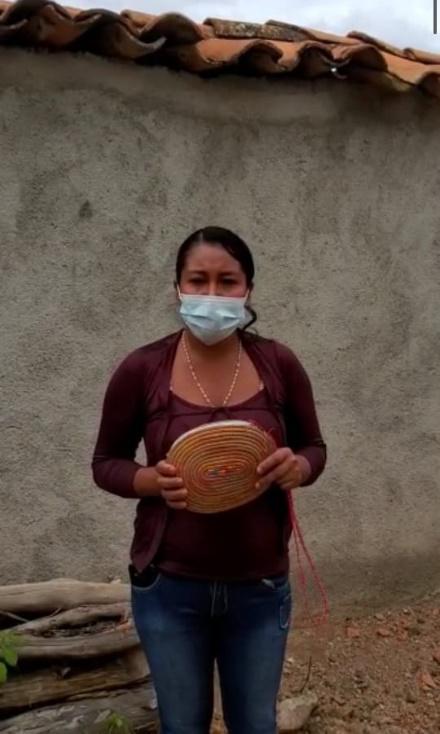
The art of weaving using different plants is an essential part of the history of our Latin America. In Totogalpa, an indigenous municipality in the northern department of Madriz, there are two youth and two adult co-operatives that belong to the Union of Co-operatives of Madriz. Set up in 2008, they are part of a national federation of co-operatives called FECODESA.
In Totoglpa, our group met with Blanca, Flor, Estefania, Emilse, Jose Santos, Santos Natividad, Misael and Rolando who shared their stories about the elaboration of this indigenous crafts, the challenge of cultivating in a dry area, and what they have achieved through genuine cooperation.
Weaving their story
Weaving is learned in families and passed down from generation to generation. This is how Misael described it: "I come from a family that has been dedicated to weaving mats using palm tree leaves, a tradition that comes through my grandmother, aunt, the others. My grandmother carried on this tradition for 106 years, and taught her daughters. The skills have been passed on through learning by observing.
The work is done by both men and women. In some cases, women are in charge of weaving and men are in charge of selecting, cutting, and drying the raw materials. But others such as José Santos or Emilse's partner, also weave: "At home, my partner first made bracelets then key chains, something that I taught him. Now our daughter makes jewellery boxes and bracelets."
The new generation has learnt how to do craft work but they don't always dedicate themselves to the work but to other professions. Others, even after going to university, continue to work in crafts and sell the products at fairs. Being organised has prevented them from migrating and has promoted different activities that provide them with an income. Misael describes life in the co-operative as very dynamic. [For example], some young people who learn to weave mats later opt for other types of handicrafts.
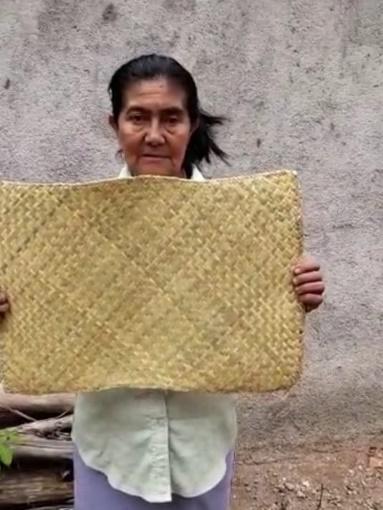 This is how Emilse explains it: "My grandmother and mother wove mats but we didn’t want to do this any more. For six years I’ve been making handicraft using materials derived from pine with a design that me and my sister learnt from my mother.
Local friendships
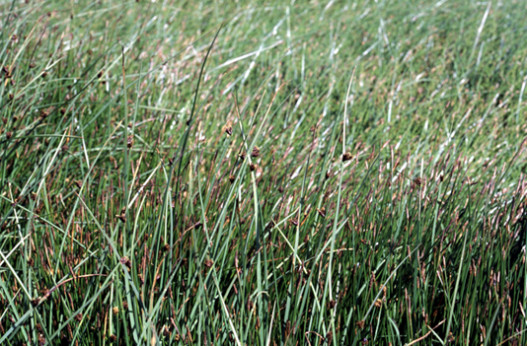
The people we talked to make handicrafts from reeds, pine and palm trees. There are also other people in the area who make clay and calabash handicrafts. The reeds (or tolli in Náhualt) are thick clumps that grow around water holes also known locally as chagüites. Their thickness determines the size of the mat to be woven.
Of all the materials, the reeds are perhaps the one that has undergone the greatest changes over time due to the drought. The scarcity of water has had an impact on people's relationship with the plant because it used to be accessible and now they have to buy it from owners of private property who also control water sources.
Estefania explains: "Previously, the reeds didn’t have ‘owners’, you could find them in any river but now they are scarce and thin. You pull it out and cut off the root and the foot so only the leafy part remains. From the smallest trees come the small mats, the child reed as we call it and the big mats come from the big trees. And they are left out in the sun for a good while.
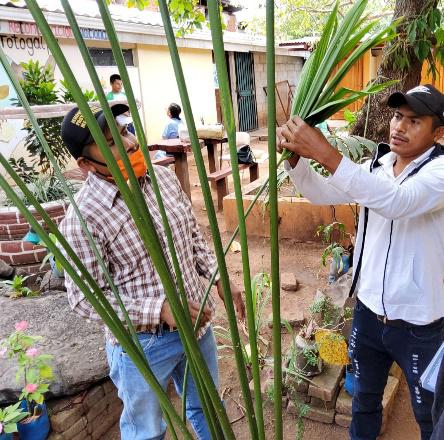
In the case of the palm, it is a plant that takes 15 years to grow to between 1 and 1.5 metres. It is cut and dried for eight days. If it is cut when the leaf is open the tissue will be green and if it is cut when the leaf is closed and opened by force, it is put out to dry and changes to the dry colour.
Some people buy pine, in Emilse's case she selects it and cuts it in a nearby community. Flor explains how the material is used for daily activities other than handicrafts: “You buy the palm and put it to dry, just like the reeds, so as to begin the process. Several families in La Ceiba devote themselves to that. The process has to use a carefully selected material and what's left over is used to make brooms or to bind nacatamales.
Working in handicrafts has been gained strength because the environmental conditions of the area have demanded the search for new income generating activities. Misael explains: “In the face of droughts, we have to look for an alternative so that socio-economic conditions can improve. Crafts are an alternative that really get us involved as a family because what we learn from our forebears we as young people can put into practice.”
But craft work is not just an economic activity. The FECODESA federation of co-operatives, together with other institutions, has carried out participatory research to improve the production of drought resistant seeds using agroecological methods.
Blanca explains that the best alternative has been white sorghum or millet because maize requires a lot of water. But it took a lot of time and learning to obtain good quality seeds because the existing seeds was only suitable for animal consumption. This is how Blanca describes the selection process:
"The producer identifies among thousands of seeds, the one they like. A researcher improving seed decides based on what they think. For example one that has a good yield. Or another that has good characteristics. But the producer is the one who has to live the reality. And they could say no, that type is no good because it can't be eaten. We use both in parallel. What each of them chooses. They know their respective terrains.”
 Art as political economy
Those of us who do not produce art are mere consumers and this also implies a responsibility: to know where the product we buy comes from and recognise the work that goes into it. Even at a local level there are prejudices that prevent us from recognising that making art is a job. Flor explains: " once when I was walking with the suitcases of mats someone said ‘there goes the Christmas tree’; I felt heart broken, but didn’t pay any attention to them".
The more distant the reality, the more unknown it becomes, to the point that we get used to looking at handicrafts as faceless products, without a history, and we even believe we have the right to decide on prices. Emilse describes her experience: "People say why it this so expensive? I recently went to a Ministry of the family and co-operative economy (MEFCCA) training and a girl pointed out that sometimes people say ‘ why so expensive’ without realising how long it takes to make products. "
It takes everyone about 2 hours to travel from their communities to Totogalpa. Emilse goes out to collect pine every eight days. It takes her three days to make a sash or belt, two days to make a large basket and one purse, one day for a small box to store jewellery and one day for 24 pine earrings.
In the case of the woven mats, a bunch of reeds costs C$50 córdobas and Flor and Estefanía take four days to make one large one, which costs C$150 and one day to make a small one, which costs C$25. Jose Santos takes a day to make a palm basket.
It should be noted that before the whole process of [the government] promoting the social economy as a national policy, the mats sold for C$20.
This social or solidarity economy from the cooperative movement represents a process of justice in the face of all the problems mentioned previously because it unites people who are doing the same work and this gives them the strength to think together about strategies to move forward.
If I can't sell things myself, I sell them to another crafts artisan, either from Totogalpa or from somewhere else or I send it to Yalagüina or Palacagüina so the product doesn't just sit there because if it's left for a while then it gets eaten by mice or insects:”
In addition, the solidarity economy implies spaces for exchange, sales and consumption at fair prices for both those who sell and those who consume. This has enabled craftspeople and producers from all over the country to get to know each other and share challenges and successes of their activities while at the same time projecting and recognising the work of each region.
This is how Misael described it from the experience of the multisectoral youth cooperative: "Here we share. Maybe another artisan is making another product. One person is always in charge of marketing. I may buy from someone else, but they helping themselves and I too am helping myself.”
Flor says that in the 1990s woven mats were worth nothing. This process of economic promotion of the social economy - in this case through setting up cooperatives - began in 2008, with the work of FECODESA in coordination with MEFCCA.
Blanca explains: : “It wasn't just the seed, but also the family, the economy, education? One says when setting out to work I am only going to work on this or that but as you get to know things, then you end up doing more and more.”
This process was also consolidated in 2013 with the creation of the national fair marketing park in Managua.
"We made contact with the family economy [MEFCCA], when this fair park. This was great because it provided the opportunity for us to take our work outside our region."
Misael also commented on the fair: "now that there is such a massive marketing fair, the producer is more enthusiastic about it".
Some reflections from Nicaragua
How can we take up the challenge of water scarcity in our municipality?
How can we commit to improving the environment from our home?
Who defines the value of art?
What commitments can we take on as consumers of traditional art from different latitudes?
How can we take care of the resource such as woven mats and the water sources, the palm and our land? Our life?
Thank you to everyone who participated in this conversation for travelling two hours from your community to share your time, art, energy, history and challenges with us.
* Winnie Narvaez visited Totogalpa with her colleagues during a visit organized by ÁBACOenRed / Foundation for Genuine Cooperation and Education (UPECG)