Stephen Sefton, Tortilla con Sal, October 23rd 2019
 Download in PDF (1.7Mb)
I wrote this story originally in 2003 or 2004, mainly to try pinning down my experience of working in Central America since 1986 in solidarity activities, community development and human rights research.
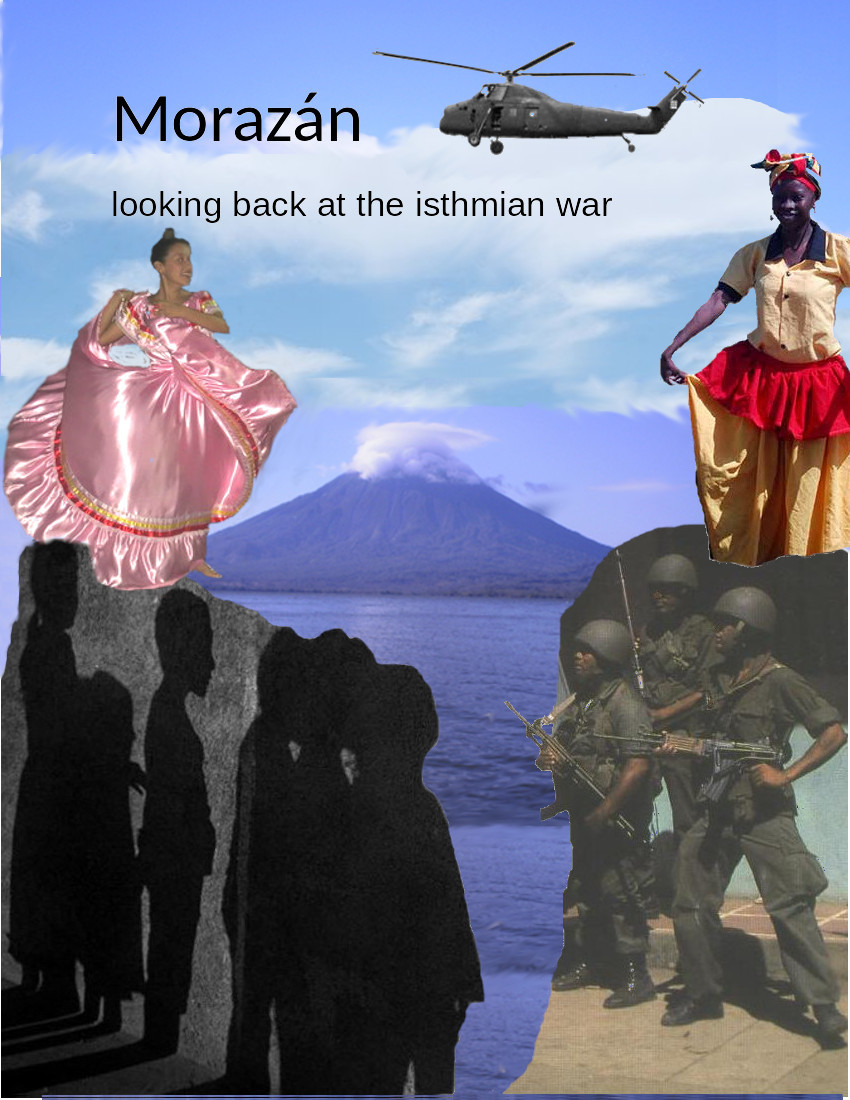
The story itself is a very simple projection onto a young Irish woman, Maeve, who has moved to live in London after a year away in Central America. The year is 1990. Recovering from an accident, she is visited by police investigating a man she knew in Morazán, a country in the Central American isthmus. The interview prompts memories about the time she spent there and the people she knew.
Her life during the year she spent in Morazan was a liberation from her unhappy, sometimes impoverished childhood in Dublin, from her grief at the death of her construction worker father and an unhappy relationship with her mother. Her memories turn around her relationships with Raul Pec, a French diplomat, and with enigmatic right-wing writer and art dealer, Eusebia Roa. In Morazán, Maeve worked on a literacy project for rural families with a women rural workers’ organization.
Despite herself, she got caught up in the country's politics and found herself sheltering a woman political dissident at risk from local paramilitaries. Slowly, her apparent understanding of people and events around her dissolves. Morazán, far from being a quiet backwater is at the heart of a ruthlessly fought secret war for control of supply routes to El Salvador and Guatemala, delivering arms, people and material to sustain the rebel forces in those countries.
Through it's account of one young woman's developing adulthood, the novel affirms people's right to defend common human values in the face of unscrupulous political manipulation. The imaginary country Morazán is a compendium of Honduras and Nicaragua. Three of the characters correspond in large part to real people, beloved friends Janet Melvin, Montserrat Pijuan and Ondina Padilla. Everyone else is invented, although some of the characters’ traits may be based on those of people I have known at one time or another without any one-to-one identification.
For over a decade I forgot about this story, always too busy to look back. But after the failed 2018 coup attempt in Nicaragua it seems to me the two main motifs of this story very much bear repeating. Firstly, the venal, self-serving nature of the development aid business and how it corrupts and co-opts popular movement organizations for the purposes of the imperialist powers. Secondly, the absolutely fundamental imperative of self-critical, anti-imperialist solidarity at every level.
I deliberately invoke memories of the Algerian War and the appalling betrayal it represented of anti-Nazi Resistance as of enduring relevance to solidarity engagements elsewhere around the world, in this case in Central America. I also seek to portray the fragility and elusiveness of faithful reporting in a context where hardly anyone is what they claim to be, appear to be or present themselves as being. All reporting ends up being some variety of propaganda, deliberate or otherwise.