NSCAG, December 12th 2019
http://www.nscag.org/news/article/293/latest-developments-in-nicaragua-…
 As we approach the end of 2019, Nicaragua is once again fearing the worst and battening down the hatches against the likelihood of further attempts by the United States to destabilise the country and bring about regime change. At the same time, emboldened by the success of the US-backed military coup in Bolivia, US-financed Nicaraguan opposition groups are again seeking to cause chaos and destruction in a country which, following the failed attempted coup of 2018, is now enjoying peace, stability and a return to normality.
NSCAG will continue to oppose all attempts by the US to undermine Nicaragua’s democracy. We will continue our campaign to defend Nicaragua’s sovereignty, right to self-determination and right to live in peace. We will also continue to support Nicaragua’s trade union and community groups by offering solidarity and practical support to them in their efforts to defend the hard-won gains of the past twelve years of the FSLN (Sandinista National Liberation Front) government.
 US Aggression Intensifies
Following the US-backed military coup in Bolivia, Donald Trump issued renewed threats to both Venezuela and Nicaragua: On 11 November - a day after the coup - he said ‘These events send a strong signal to the illegitimate regimes in Venezuela and Nicaragua that democracy and the will of the people will always prevail. We are now one step closer to a completely democratic, prosperous and free Western Hemisphere’. This was followed on 25 November with a White House statement characterising Nicaragua as ‘an unusual and extraordinary threat to the national security and foreign policy of the United States’, thus prolonging for an additional year an executive order signed by Trump in 2019 declaring a ‘state of emergency’ in Nicaragua.
Voice of America, the US government’s main foreign broadcasting service, has noted that more economic attacks by way of sanctions will be levelled against Nicaragua. Washington’s Ambassador to the Organisation of American States (OAS), Carlos Trujillo, stated that ‘The pressure against Nicaragua is going to continue’, at the same time stating that Trump will be announcing new sanctions against the Nicaraguan government in the coming weeks. The further escalation of US aggression comes almost exactly one year after Trump signed off the NICA Act whereby the US intended to use its influence to prevent Nicaragua from accessing funds used to finance development and infrastructure, effectively imposing an economic blockade on the country. Coinciding with further US threats, the OAS, 60% of whose budget comes from the United States and whose false allegations played a major role in the military coup in Bolivia, issued a report on 25 November which concluded that in Nicaragua ‘there is an alteration of the constitutional order that seriously affects the democratic order under the terms of article 20 of the Inter-American Democratic Charter.’
In recent weeks, Latin America has been rocked by massive anti-neoliberal protests that have shaken right-wing governments in Ecuador, Haiti, Chile, and Colombia. As evidence of the US desire to exert control over the whole region, US government spokespeople have frequently attributed the uprisings to “meddling” by Caracas, while the OAS has branded them a “destabilization strategy” by the “Bolivarian and Cuban dictatorships.” The Right Wing Opposition
Nicaragua’s right wing opposition groups have applauded Trump for extending the executive order and for pledging new sanctions against their country. They have also published statements applauding the recent military coup in Bolivia and echoing Trump's agenda not only in Bolivia but for the whole of Latin America.
See link here
There are now real fears that the opposition will try to provoke serious incidents of violence and intensify their efforts to destabilise the country. Over recent weeks, opposition activists have exploded bombs around the area of Masaya, one of the main centres of opposition violence last year, in an effort to scare the local population. On 14 November, a group of 13 activists were detained by the police in Masaya; they said they were there to deliver water and medicine to a group of hunger strikers in the San Miguel Church, however were found to have a cache of weapons and explosives on them and were therefore arrested. Whilst corporate media and organisations such as Amnesty International and Human Rights Watch have signed up to the opposition narrative that they were unjustly arrested and that this represents a ‘new wave of repression’ by the Government, the truth is that there are real fears that the opposition would use the church, as they did during the failed attempted coup, as a base for armed attacks.
In a different incident, at the end of November, two police were killed in Masaya in confrontations with an armed gang. Three gang members also died and one was arrested; the opposition are now claiming that they were their supporters. If this is true, it means that the opposition are effectively admitting that they are armed (several weapons were recovered in both incidents). The vast majority of people living in Masaya are fearful of a return to the violence of last year and have welcomed the police presence in their city as a way of ensuring their safety and security.
On 25 November, opposition journalist Carlos Chamorro returned to Nicaragua, bringing an end to almost a year of self-imposed exile in Costa Rica. At least seven more former exiles arrived with him, five of whom are opposition journalists. This seems to be a clear signal that Nicaragua’s opposition are once again preparing for action. Already, fake news stories are appearing almost daily on social media, some of them even using video footage from last year and claiming that it is related to events taking place now. And as in 2018, corporate media such as the Guardian and organisations such as Amnesty International merely repeat the false claims and accusations of the opposition – a detailed critique of Amnesty International’s failings can be found here . Government Achievements
Since 2007, Nicaragua’s FSLN Government under President Ortega has achieved a remarkable transformation in Nicaraguan society, bringing benefits to the poorest and most vulnerable in society and restoring rights to Nicaraguan workers and families. Poverty has been more than halved from 48.35% to 23% and extreme poverty has dropped from 17.2% to 6%. Eighteen new modern hospitals have been built and plans are already underway to reach a total of 33 in the next four years. 97% of Nicaraguan households will have electricity by the end of 2019 (compared to only 54% in 2007) and green energy production has increased from 22% to 62%, with plans to increase the share of renewable energy to 86% by the end of 2020. Nicaragua has now been named by the Renewable Energy Network as one of the world’s top ten for renewable initiatives. The Government has also announced a $110m investment to address the problem of deforestation and degradation of the country’s forests including the Bosawas. This will cover climate change adaptation measures, forest management and education programmes and is being financed partly from the UN Green Climate Fund and partly from the Nicaraguan government budget.
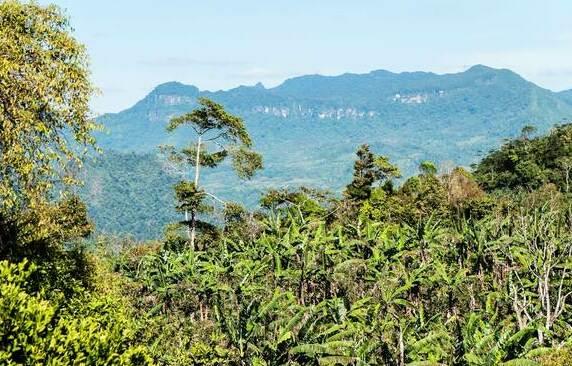
The Bosawas, the largest area of tropical rainforest in the Americas after the Amazon
Maternal mortality and malnutrition been halved, and continue to decrease and chronic malnutrition in children under five years old has also been reduced by 46% since 2006. A network of over 178 maternity centres, mainly in rural areas, has played a significant role in achieving these reductions. Education and health in Nicaragua are free, and the 2020 general budget will see 56.7% earmarked for social spending, including 44.7% for health, education and universities. The number of child development centres for 15,000 children under the age of 6 has increased from 63 in 2007 to 270 at the end of 2018 and the government’s achievements relating to the care of children have earned praise from the United Nations Children’s Fund.
In October this year, a representative from the Pan American Health Organisation (PAHO) said that ‘PAHO has a special commitment to Nicaragua because it has achieved great progress in health indicators like national vaccine coverage, maternal mortality, child nutrition, and others. And Nicaraguan authorities maintain a clear perspective of what aspects need to be improved and the ways in which PAHO can support this work through technical cooperation.’
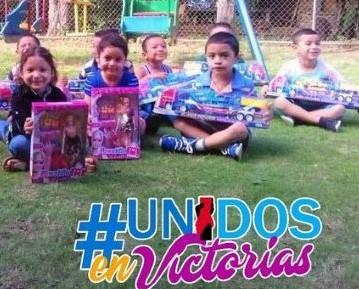
Nicaraguan children represent Nicaragua’s future
Through its School Meals Programme, Nicaragua guarantees healthy meals to 1.2 million children, many of them in rural areas, and through its Zero Usury programme, more than 400,000 women from 140 municipalities have received US$23.9 million to establish and expand small businesses. This has not only helped to revitalise the national economy but is also creating hundreds of new jobs.
The Government has also given priority to social housing in order to provide affordable accommodation to low income families and ensure that they can enjoy a dignified life. The Bismarck Martinez housing project, named in honour of a local government worker killed by the opposition last year, aims to build 50,000 homes over the next five years (10,000 have already been built in 2019).
At the International Seminar on Violence against Women held in October in the Dominican Republic, Nicaragua was congratulated for its important achievements in gender equality and restoration of women’s rights; the Nicaraguan Government cabinet is made up of seven men and ten women representing 58.8% of Ministers, making it the third place country in the world with the best gender balance. And the World Economic Forum Gender Gap report of 2018 placed Nicaragua in fifth place.
It is no wonder that the vast majority of Nicaraguans have no wish to return to the dark days of neoliberalism, when families had to make a choice between eating or sending their children to school, when public services were decimated and power cuts of up to 15 hours a day were commonplace. In the words of Jose Antonio Zepeda, General Secretary of teachers’ union ANDEN – ‘We will not allow a situation where one penny has to be paid to receive an education.'
In a poll carried out by M & R Consultores on 10 December, 65.1% of those surveyed indicated that they would vote for the FSLN in elections due to be held in 2021 as they felt that this would give better opportunities in terms of health, work and education. 87.9% said that under no circumstances should peace be sacrificed and 79.5% expressed rejection of violence and the attempted coup in 2018. 96.9% stated that the National Constitution must be respected. ‘There were signs of new prosperity everywhere. New roads and infrastructure, new developments, shopping centres, public buildings….it was clear how far the standard of living had been raised, further evidence of which came during the week with the air of optimism and the pride in their country’s achievements which somehow crept into virtually every conversation we had with the Nicaraguan population’ – Ruby Cox, member of delegation to Nicaragua, July 2019 Nicaraguans March for Peace
On 16 November, thousands of Nicaraguans marched in different municipalities in the country. The march “We All Have Rights, We Are Millions” was held in support of the Sandinista Government and in solidarity with Bolivia, with messages such as: “Nicaragua is in solidarity with Bolivia,” repudiating the coup d’état, asking for peace and the return of the former president, Evo Morales, with the proclamation “Evo, friend, the people are with you.”
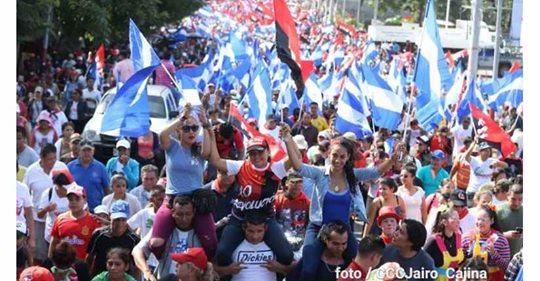
Nicaraguans march for peace
On 30 November, once again tens of thousands of Nicaraguans marched in different parts of the country for ‘peace, rights, joy and love’ and using the slogan ‘We have rights, you don’t mess with peace’.
Nicaragua’s trade unions, who have denounced the coup in Bolivia - see link here - participated in the march and confirmed their commitment to defending sovereignty, peace and dignity. ‘We say to the fascist right wing who think they can do the same in Nicaragua as in Bolivia that here we have a workforce that is alert; we won’t allow the return of fascism and with it the return of cruelty and hate’ – Maritza Espinales, General Secretary, FESITUN (higher education union)
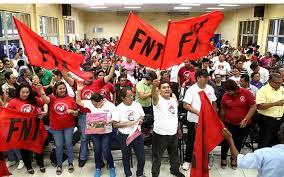
National Workers’ Front, FNT, express solidarity with the FSLN Government and the Revolution
What next
The vast majority of Nicaraguans want only to live in peace and to return the country to where it was before the attempted coup last year when Nicaragua was considered to be the safest country in Central America and had a thriving economy, with economic growth of around 4.5%. Quite apart from the loss of lives, the attempted coup cost Nicaragua at least a billion dollars overall. 130,000 jobs were lost and the devastation to the previously thriving tourist industry totalled almost $420 million.
Yet Nicaragua is nothing if not resilient and is recovering with remarkable speed. Tourism is on the increase, with forward bookings for October to December 2019 up by 98% compared with 2018. The financial rating agency Fitch Ratings announced on November 22 that the economic outlook for Nicaragua is stable and in clear recovery. The report highlighted that the positive economic outlook is due to the macroeconomic policy implemented in the country which has included stabilizing the Central Bank reserves and commercial bank deposits. Fitch also noted that fiscal adjustments and social security reform have reduced domestic financing needs and eased external financing requirements, reflecting a consistent fiscal policy response. Fitch says “the stabilization of deposits in commercial banks and the current account surplus have reduced the pressure” and highlights that the Central Bank reduced the annual depreciation of the Cordoba against the dollar from 5 to 3%, expecting this to reduce the costs of servicing the government’s debt.
On November 20, the International Monetary Fund (IMF) published its economic report pertaining to the Article IV Consultation which measures the current standing and economic prospects of Nicaragua. The report highlights that the cumulative economic strengths and macroeconomic policies established in Nicaragua “have contributed to preserving macroeconomic and financial stability in the face of difficult circumstances.” The IMF also recommends that macroeconomic policies be maintained and that structural reforms be made to safeguard fiscal sustainability. The IMF recognized the efforts made by the Nicaragua Government to comply with the recommendations of the International Financial Action Task Force (FATF), to protect the integrity of financial transactions and mitigate exposure to illicit funds.
The overwhelming majority of Nicaraguans want peace, stability, respect for their basic human rights and a secure future for themselves and their families. Yet the US is trying to suffocate the Nicaraguan economy by the imposition of further sanctions and measures which will affect the ability of the Government to implement social programmes which benefit the most disadvantaged in society. The only threat to the US is that Nicaragua, along with Cuba and Venezuela, has shown that there is an alternative model to neoliberalism, a model which tackles poverty, injustice and inequality, and that a better world is possible. The right-wing fascists who are now in power in Bolivia thanks to the US are cut from the same cloth as those the US wants to impose on Nicaragua and Venezuela. No Pasaran.
For further information see the NSCAG website here
Further reading and source material:-
Alliance for Global Justice https://afgj.org/?s=nicaragua
Tortilla con Sal http://www.tortillaconsal.com/
The Grayzone https://thegrayzone.com/2019/11/27/operation-condor-2-coup-trump- nicaragua-mexico/
MintPress News https://www.mintpressnews.com/?s=nicaragua
Morning Star https://morningstaronline.co.uk/search/results/nicaragua
Nicaragua Solidarity Campaign Action Group 86 Durham Road, London N7 7DT www.nscag.org