|

Dear Stephen ,
President Daniel Ortega and Vice President Rosario Murillo sent a special message to all Nicaraguan mothers on May 30th, our country’s Mothers’ Day, highlighting their heroism and love, and role not only as mothers but as educators, doctors, nurses, professionals and entrepreneurs.
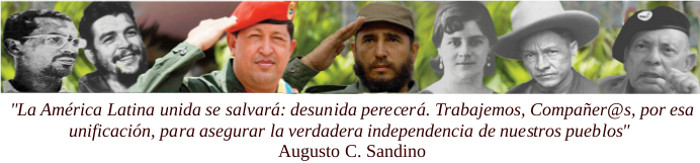
President Ortega also expressed, in his live televised national addresses for International Workers’ Day on the 1st of May and on the anniversary of the birth of national liberation hero Augusto C. Sandino on the 18th May, that the Nicaraguan people, supported by the Sandinista Government of Reconciliation and National Unity, continue their efforts to contain the effects of the COVID-19 global pandemic. He especially emphasised the role of our heroic public workers, emergency services, health professionals and the work of women around the world.
At the time of writing Nicaragua has the second lowest number of confirmed cases in Central America according to official Ministry of Health figures, recognised by the Central American Integration System (CAIS), and the World Health Organisation. In accordance with the strategy outlined in the White Book (published 25th May) - which details Nicaragua’s unique strategy to contain COVID-19 while safeguarding the lives, livelihoods and wellbeing of the population, through inter-institutional co-operation and harnessing the country’s community oriented health system - more 5.2 million household visits (out of a population of 6.2 million people) to provide testing, tracking and tracing, follow-ups, care, education and advice, have been completed by the time of writing, together with regular disinfection of public spaces and transport across Nicaragua, while the new special emergency telephone line has attended more than 300,000 calls since opening in April.
In this Newsletter we include news on the following:
- Nicaragua’s active role in the international community for peace, dialogue, solidarity and co-operation;
- Significant progress towards the UN’s Sustainable Development Goals despite the global challenges, including healthcare, vaccination, quality housing, sanitation, nutrition, information and international co-operation, as well as advances in gender equality, education, human rights, protection of minorities, projects and initiatives of social impact.
- Economic stabilisation and progress of national production, investment, international trade, commerce and sustainability.
- Our Embassy Activities.
… And much more!
Nicaragua's International Engagement:

President Daniel Ortega addressed the Virtual Summit of the Non-Aligned Movement, calling for peace, co-operation and dialogue instead of sanctions and aggressions, to overcome the grave dangers humanity faces. The Summit was presided by HE President Ilham Aliyev of Azerbaijan, and attended by the 37 member states, as well as Mr Antonio Guterres, UN Secretary General, and Dr Tedros Adhanom Ghebreyesus, WHO Director General.

Luis Alvarado, Nicaragua’s Ambassador to the Organisation of American States, (OAS) spoke at, respectively, the 1st Virtual OAS Forum of Interamerican Law, the OAS Extraordinary Session, and the Battle against International Organised Crime in the age of COVID-19 at the OAS Committee on Hemispheric Affairs. Ambassador Alvarado highlighted Nicaragua’s commitment to peaceful, multilateral solutions to regional issues, and opposition to unilateral illegal sanctions, threats and attacks.

Health Minister Dr Martha Reyes addressed the virtual 73rd World Health Assembly, chaired by Dr. Tedros Adhanom Ghebreyesus, where she detailed Nicaragua’s advances due to the prioritisation of the human right to free healthcare for all citizens during the past 13 years of Sandinista Government, and approach to COVID-19 based on prevention, early detection, tracking and, care.

Nicaragua continued working actively within the CAIS, which is co-ordinating one of the world's most comprehensive regional plans against COVID-19. The UK is an extra-regional observer, and participated in a Meeting of Contingency Plan Co-Operators, alongside representatives from the EU and around the world. Nicaragua also partook in the Preparatory Meeting of the III Mixed Commission on the Agreement of Political Dialogue and Co-operation between Central America and the EU, and the Extraordinary Meeting of the Council of Ministers.
Ensuring the Health of the Nation:

Nicaragua’s annual National Vaccination Drive was completed on May 7th, with the endorsement of Pan American Health Organisation (PAHO), and 2 million doses given against polio, diphtheria, tetanus, hepatitis b, measles, rubella, flu and more. This was accompanied by a Nutrition Census, Epidemiological Census and anti-mosquito Fumigation Campaigns. The importance of continuing vaccinations in the context of COVID-19 has also been highlighted by the Global Vaccine Alliance, UNESCO and the WHO.

The Ministry of Health’s Nutrition Census of 1.4 million children across the country showed acute malnutrition reduced to 5.3% in 2019 from 6% in 2018, and chronic malnutrition from 12.4% to 11.4%, while at the time of writing the Epidemiological Census shows a yearly reduction of 34% in dengue cases, 55% in leptospirosis cases and 61% in cases influenza, and Malaria cases falling by 25% in a week.

International co-operation continues: from Taiwan, Nicaragua received a further US$1.5m, 1.78 million, sanitary masks, 90 image and heat based testing kits, expert advice, and a donation of 500 infrared thermometers and 100 medical packs from entrepreneur Yu Fong Chen, while South Korean experts shared experiences in virtual meetings. UNICEF donated 1,360 personal hygiene kits, and the International Organisation for Migration and United Nations Industrial Development Organisation donated information and hygiene kits.

The CABEI has backed the CAIS Contingency Plan with US$1.96bn to the time of writing, and announced a new purchase of 182,000 testing kits from the Republic of Korea to be divided between CAIS member states (further to a previous purchase of the same value, of which Nicaragua received 26,000). CABEI has also announced a 40% increase of authorised capital and signed with the Republic of Korea a US$50 million Trust Fund for Grants.
Economy, Investment, Commerce and Trade:

Economic stabilisation continued, with Standard and Poors retaining short and long-term sovereign ratings at B and B- respectively, and predicting 2% GDP growth for 2021. According to the Export Administration Centre (CETREX), figures to 31st April showed 6.3% yearly export growth Nicaragua is diversifying markets and exporting more to Europe, with exports to the UK increasing by 29% yearly to US$27m, to Iceland by 48% to U$284,671, and to Ireland staying steady at US$1.2m.

British mining company Condor Gold announced unaudited results for Q1 2020, with its flagship La India project in Nicaragua reaching production of 1.12m oz gold daily, as a permit was granted for a third high-grade open open pit. CEO Mark Child discussed his optimism about the project with ProActive Investment. Mineros de Colombia also announced it will increase production from 300,000oz to 320,000oz of gold annually, while Calibre Mining discovered new high-grade deposits at El Limon.

Nicaragua’s 2020/21 National Production Plan was launched, focussed on technology to ensure continued gains in productivity, quality, food security, food sovereignty, pest and disease control, genetic improvements, crop diversification, sustainability, and adaptability to climate change, whilst further ensuring supply and price stability. A 4.5% growth rate of the agricultural sector is projected during this period.
Energy, Renewables, Natural Resources and Sustainability:

As Nicaragua celebrated Earth Day, renewables reached above 83% of energy generated, and are projected to cover growth in demand until 2033. Electrification increased to 97.7%, with new communities reached daily, 18 new electrical substations are due to be built over the coming year, with many others receiving increased capacity. The 2020 Reforestation Plan was also launched, starting with 21 million plants to cover 28,000 ha, and bonds provided for sustainable farming.

The OPEC Fund for International Development announced investments of US$20m in solar energy, while work began on a solar project funded by Exim Bank (pictured). Progress continues for a solar plant in San Benito, to be the country's largest. Nicaragua expects almost US$200m of inward energy investments in 2020 - US$50m of these in biomass - and projects are underway with support of the Nordic Development Fund to increase wind power output, with Nicaragua's potential output estimated at 1,000MW.

Work continues on Central America’s first Natural Gas Plant, at Puerto Sandino, by US company New Fortress Energy and Disnorte-Dissur of Nicaragua, with the plant due to be working by 2021, with a capacity of 230KV. Swedish company Equinor also resumed oil exploration in the Nicaraguan Pacific in its 16,000 km squared of concessions, and project investors have expressed optimism.
Social Impact and Human Rights:

Hundreds of local government projects were launched across Nicaragua in May, to continue expanding human rights, including construction, renovation or extension of roads across the country; new bridges in Managua and Ciudad Sandino and the improvement of many others; new health clinics; potable water installations in rural and indigenous communities; fire stations; the renovation and building of new educational, special needs and daycare centres; and new sporting facilities.

Four new Police Stations for Women were inaugurated, meaning 13 such facilities are now operating, dedicated to attend to women who suffer domestic violence, and deal with this problem. This is part of the government campaign against domestic violence, “Women for Life, Peace and Wellbeing”.

>From January to May, 52 education centres across Nicaragua have been renovated, including 365 rooms or spaces with improved learning facilities and/or water provision (thereby improving hygiene), in line with UNICEF's emphasis on the importance of continuing education during COVID-19. Nicaraguans are also now more connected than ever, with more public spaces with free wifi and mobile signals now reaching every Department and ever more rural and indigenous communities, thereby expanding the human rights to education and information.

The Ministry of Education (MINED) announced the launch of a University of the Countryside, bringing free tertiary education to rural populations, as well as nationwide virtual seminars in the context of COVID-19. MINED also organised the Video-Conference “Education Also Saves Lives”, to share experiences implementing remote education, with experts from Spain, UNESCO, the World Bank and UNICEF. Separately, Nicaraguan participated in a UNESCO Meeting of Ministers of Culture.

Authorities from the North Caribbean Coast Autonomous Region met with 17 representatives of local indigenous territories to discuss the COVID-19 pandemic and the perspective from their lands. A number of joint activities with the Regional and National Governments were agreed upon, to ensure hygiene, prevention and health.
Housing and Land Rights:

CABEI announced a US$171,65m loan to support Nicaragua’s housing projects, while the Human Right to Dignified Housing - key to containing infectious diseases - continued expanding nationally, with hundreds of homes given within various projects, including the Bismarck Martínez programme, which will provide 50,000 homes in total. The number of people receiving legal rights to their land reached 28,000, while the autonomy of indigenous communities was recognised over a land area equivalent to the size of neighbouring El Salvador.
Embassy News:

To commemorate Sandino's 125th birth anniversary, Ambassador Guisell Morales-Echaverry opened a Virtual Roundtable, chaired by Baroness Christine Blower, with Valdrack Jaentschke, Nicaraguan Minister of Presidency for International Relations; Dan Kovalik, American author and Professor of International Human Rights at University of Pittsburgh; Dr Aaron Kelly, Irish author, academic and activist; Louise Richards, Trade Union and Communication Coordinator of the Nicaragua Solidarity Campaign Action Group; with messages from the Venezuelan and Cuban Ambassadors in the U.K.

The Nicaragua Education Culture and Arts Trust (NECAT), a UK registered charity, supported by the Oxford-León (Nicaragua) twin city initiative, launched its COVID-19 Sanitary Protection Support Campaign, to aid Nicaragua's efforts, beginning with the donation of 60 hygiene and cleaning kits for community centres, the production of educational leaflets, and continued promotion of cultural activities for children.

Ambassador of Nicaragua, H.E. Guisell Morales-Echaverry participated in the International Maritime Organisation (IMO) first virtual meeting, chaired by General Secretary Kitack Lim, emphasising that Nicaragua’s ports continue to operate fully with testing, hygiene and social distancing measures, ensuring goods and services keep reaching the population and our exports continue to reach our partners who need them.

Ambassador Morales attended the World Geothermal Congress Virtual Conference, Chaired by the President of Iceland, Guðni Th. Jóhannesson; addressed by experts from the International Geothermal Organization, and the Congress Organising Committee. Nicaragua is a regional leader in the sector, with 159 MW installed, and recognised for its tremendous potential.

First Secretary Ricardo Carioni addressed a virtual meeting between the Latin American Trade and Investment Association and the UK Department of International Trade, regarding the current situation, business opportunities after the Brexit transition period, and the importance of new technologies to facilitate the flow of goods and services between the regions.

The First Secretary participated in a virtual meeting of the International Sugar Organisation, alongside representatives of 32 other member states, Chaired by Executive Director Mr José Orive. Mr Carioni expressed the commitment of the Nicaraguan Government to fair and inclusive reforms of the International Sugar Agreement to protect producers, facilitate trade and allow agile responses to crisis.

The Embassy participated in meetings of the International Coffee Organisation, as Nicaragua is a Member of the Working Group for the Future of the International Coffee Agreement. First Secretary Carioni underlined the need for international action to protect small producers and mitigate the effects of climate change and Covid-19, and participated in virtual meetings of the Specialty Coffee Association, alongside governments and the private sector.

The Ambassador attended a Webinar by the Nicaragua Solidarity Campaign Action Group (NSCAG) on Nicaragua's response to COVID-19 in the face of illegal sanctions and misinformation, chaired by Louise Richards (NSCAG), and addressed by Dr Florence Levy MP, President of the Commission for Indigenous Peoples of the Nicaraguan National Assembly, Nicaraguan based British journalist John Perry, and social impact British entrepreneur Nick Hoskyns.

First Secretary Carioni and Head of Consular Affairs, exchanged experiences in virtual meetings with other Latin American Consuls, co-ordinating support for Nicaraguan and Latin American citizens in Britain, and repatriation flights in collaboration with the U.K. Foreign and Commonwealth Office.

Furthermore, Nicaragua attended several virtual events with, among others: The Foreign and Commonwealth Office; Nobel Prize candidate Sir Professor Salvador Moncada; the Vice President of the World Bank; Chatham House; LSE; University of Oxford; Mr Dante Mossi, President of CABEI; Latin American Development Bank; the Inter-American Development Bank; Imperial College; UNWTO, Latin American Travel Association; Official Monetary and Financial Institutions Forum (OMFIF); Irish-British Chamber of Commerce; Universities UK; Embassy Magazine; University of Manchester; Financial Times; The Economist; Euromoney; Parkside Forum; and the Financial Services Club.
|