|
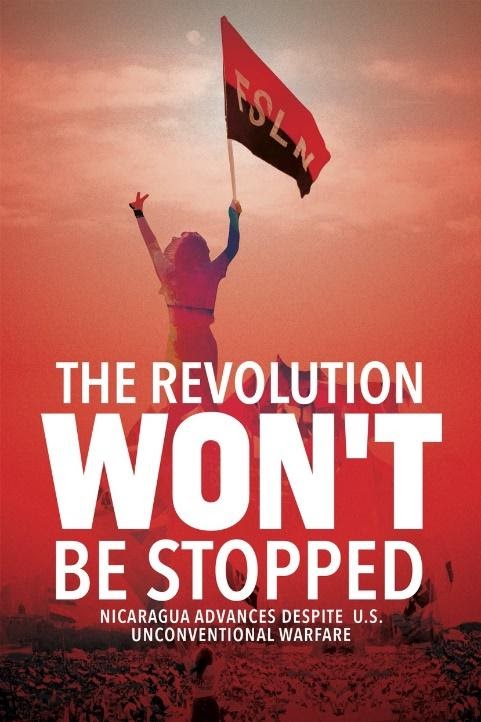
The new book, The Revolution Won’t Be Stopped: Nicaragua Advances Despite US Unconventional Warfare describes the country progressing in every aspect of national life up to and including the arrival of the global pandemic in early 2020. All the work and progress described took place despite a cruel unconventional war that is explained in four chapters. The writers are a collective of researchers, historians, analysts and journalists the majority of whom are women; six Nicaraguans, five residents, one author who lived here for years and experienced the final offensive of the Sandinista push to oust the dictatorship and two more deeply connected with Nicaragua for more than thirty years. You can download the book in English or Spanish here.
The chapter titled Economic and Social Progress Continues compiles an exceptional group of articles and news briefs that highlight the many aspects of that progress. Louise Richards states that the government has emphasized “policies which benefit the poorest and most vulnerable in society.” As an example, she notes spending on health care has tripled since 2006 and the maternal mortality rate has declined from 97 to 37 for every 100,000 live births. Writing on the anniversary of the death of Carlos Fonseca Amador, Nan McCurdy highlights achievements that would have made the FSLN founder proud including reducing the poverty rate from 48.3% to 24.5% and extreme poverty to 6.9%. She states that, in carrying out internationally financed projects in roads, hospitals, electrification, water and sanitation projects, Nicaragua “has a perfect execution rate of its project portfolio and serves as an example for other Central American countries,” according to the Central American Bank for Economic Integration. In the first of two articles, Jorge Capelán highlights the recovery of the Nicaraguan economy after the 2018 coup attempt including an increase in agricultural production, food price stability, and the construction of affordable housing. In his second article, Capelán writes about infrastructure improvements, quoting Minister of Transportation Oscar Mojica who stated that, according to the World Economic Forum Ranking, Nicaragua has the best roads in Central America. Then, David Archuleta describes what he learned about food sovereignty as part of a delegation of visitors to projects of the Rural Workers Association (ATC). News briefs from the publication NicaNotes covering economic and social development issues month by month complete the chapter.
Polls and Surveys provides authoritative data confirming the results of elections, the popularity of the Sandinista government and miniscule support for the US-funded opposition. Multiple polls confirm that all but a small fraction of Nicaraguan voters oppose opposition violence, trust the police and military, and would re-elect the current government in a landslide that would be envied by other elected leaders. Independent poll data provides no support for opposition claims of dictatorship, police brutality, or any of the other Big Lies that the US and its internal agents hope to make true by constant repetition.
The Amnesty describes the historic process that led the Sandinista government to an audacious decision to pass a simple law that would free criminals from the 2018 coup attempt convicted of murder, kidnapping, torture, extortion, arson and more, and even extend it to those for whom the justice system had ample evidence to capture, process and try who were in other countries, so that they could return and enjoy complete freedom and a clean slate. The victims of the criminals’ horrendous acts as well as the family members of those killed, kidnapped, tortured, burned and most of the population traumatized by the unbelievably brutal state of terror created by the opposition from April to July 2018, understandably were resistant to letting them out of jail. Nevertheless, President Daniel Ortega, Vice President Rosario Murillo, Sandinista leaders and analysts and journalists like William Grigsby helped the people recall that forgiveness is a revolutionary trait. Only with forgiveness and devotion to reconciliation will the country arrive at a real peace that will allow prosperity and wellbeing for all.
The chapter on Peace and Reconciliation first describes the history of the Sandinista Front for National Liberation’s long commitment to seeking reconciliation and peace, as
in the examples of Sandino, Miguel d’Escoto, the peace accords of Esquipulas and Sapoa, Tomas Borge, etc. Then it explains how the Peace and Reconciliation Commissions were formed immediately after the attempted coup of April-July 2018
to facilitate reconciliation between neighbors on a community level all over Nicaragua. After the cruel Somoza dictatorship and the US war on the new revolution in the 80s came 17 years of three neoliberal governments that caused the death of hundreds of thousands of people from illnesses related to poverty, unemployment and almost a total lack of heath care for anyone who couldn’t pay. The Sandinista government has always been deeply committed to bringing about peace so that the people can enjoy wellbeing.
Physically uniting the Caribbean and the Pacific of Nicaragua had been on the international agenda, especially that of Spain, England and the United States, for centuries. But it took a Revolution to really take on that challenge and succeed. Even more important is the ongoing work to unite a country´s people from different cultural heritages, and to facilitate their socio-economic development with programs which bring education, health, electricity, water and sanitation, communication infrastructure and other programs to stimulate food security and economic development on the Caribbean Coast. A person in the US recently told a story of her experience with a local group in a city in the southwest of the United States that wanted to come to Nicaragua to build wells. She told them to just look down the road from where they lived and they would find Native Americans living in shacks, no electricity, water or sanitation so why travel so far to help? US Native community members were the last on the list to receive their one-time financial support. Their people, along with non-white communities, are the hardest hit from the pandemic in the US. That harsh reality is becoming more and more evident now in the US, to those who want to see the truth. And the truth about what is happening in the Caribbean Coast of Nicaragua presented in this chapter tells a story of processes which could be replicated in other countries, north and south.
The chapter on Nicaragua’s environmental policy gives a broad overview of the many elements that make up Nicaragua’s incredibly diverse range of marine, forest, fresh water, land, mineral and wild life resources. It covers how the country is addressing the diverse challenges of conserving the country’s natural resources and adapting to the effects of climate change at a national and regional level. But it also covers the leading role Nicaragua has played in the UN system of international conferences addressing climate change, insisting on the issue of climate justice. Nicaragua’s environmental policy has been an integral part of the country’s economic democratization via the development of the popular economy which has also accompanied defense of the wellbeing and rights of the country’s many ethnic groups, especially on the Caribbean Coast. Among the most important achievements in defending the environment has been the decisive shift to the use of renewable energy resources for electricity generation. The chapter on the environment is an important resource explaining how government policy has managed the complex dilemma of promoting economic development while protecting and conserving natural resources on which that economic development depends.
The World Economic Forum ranks Nicaragua 5th in the world in its 2020 Global Gender Gap Report, behind only the Nordic countries, and by far the leading country in the Americas for gender equality. Women have advanced because of the astounding halving of poverty, free education and health care, amazing reduction in maternal mortality and great availability of child development centers where their children are cared for, fed and taught, and maternity wait homes where women from the countryside can live for the last weeks of pregnancy to insure professional attention to their births. Nicaragua has relaunched women’s police stations all around the country as part of an all-out push to lower violence against women. Nicaragua has the lowest rate of femicides in the region. Women have benefitted from the government’s conscious promotion of every kind of small business through training and loans for nearly a million women since 2007. Some 300,000 rural women who are organized cooperatively have benefitted from government programs as you will read in numerous interviews with women in the countryside who describe the concrete changes in their lives.
As 2020 approaches, the Sandinista-led people of Nicaragua continue to challenge conventional models of thought and action, fighting creatively and heroically for social justice while facing imperialist economic sanctions and a media manipulation campaign against them. In this journey, the popular economy has been a key factor in guaranteeing the resistance of a people who are clinging to their freedom and dignity. The chapter on the popular economy shares the progress made by the people of Nicaragua in consolidating the popular and solidarity economy as an economic and social alternative for the majority of Nicaraguans. It describes the historical genesis, characteristics, values that underpin it and the public policies that the Sandinista government has promoted from 2007 to the present day, to favor and dignify it, as part of an integrating and revolutionary project that seeks, from its own realities and cultural roots, an alternative path of democratization of wealth, social justice and political sovereignty in the face of financial, impoverishing and imperialist capitalism.
While the major Western international news media continue to peddle fake news about a “dictatorship”, a “regime” and a “crisis of democracy” in Nicaragua, they ignore one of the most important threats that the Sandinista government poses not only for Nicaragua, but also the world. The Nicaraguan government, and specifically the Sandinista movement, is a threat to one of the most important ideological babies of the West: Development. Since coming back to the presidency in 2007, the Sandinista government has continued to grapple with the contradictions of breaking with the conventional development. Recognizing the limits of development – while facing global and internal contradictions, such as a capitalist money system, unequal wealth and land distribution and a globalized monoculture encouraging world economy – the Nicaraguan government has attempted to re-embed the economy in the biosphere as well as within Nicaraguan culture(s). And it is within government tourism policy that one can effectively observe how the break from Development is taking place.
How Nicaragua is presented in the national and international media is crucial, both for its effect on Nicaraguan people and for its effect on opinion abroad, from intentional bodies like the United Nations, to governments especially in the US and Europe, to left-leaning opinion and solidarity networks. Tackling a false image of present-day Nicaragua has been a big part of the media battle. Another has been to continue to ascertain the truth of what happened in 2018 and present the evidence, to the Nicaraguan people and also abroad. In this, official bodies, government supporters and independent investigators have been very active, uncovering the real stories behind some of the worst violence. The opposition-supporting media – and the mainstream international press – have ignored such investigations, sticking to the versions of events that were concocted immediately after they took place in 2018. Many well-known examples of opposition violence, ones whose responsibility cannot be disputed, are still treated as if they didn’t happen. This chapter tells the media story, with many examples, through 2019 and into the first part of 2020. We can be sure that the media battle will only intensify as the 2021 elections approach.
The Nicaraguan Opposition chapter is a damning portrayal of groups opposing the current FSLN government, and of their US and EU benefactors. It shines light on a web of lies, such as the creation of false media events – actors tearfully pretending to be under gunfire, bidding farewell to their loved ones, while passersby are continuing life as usual. Opposition claims of being peaceful are also laid bare, not only by the witnesses and victims of their crimes, but by their own proud admissions, in a leaked video, of murder and other violent acts. Their alleged desire for democracy and freedom from “dictatorship” is also belied by examining their bedfellows – like the murderous coup mongers in Bolivia and the most right-wing politicians in the United States. All this and more is covered by solid evidence and incisive analysis.
The chapter on human rights organizations exposes the complicity of such bodies, including some of the most prestigious in the world, with the campaigns to overthrow the government of Nicaragua by the United States. Readers will be able to understand how the main international human rights organizations, operating in coordination with their equally corrupt local counterparts, have worked on behalf of their financier, the United States government, to destabilize Nicaragua and ultimately attempt to overthrow its president, Comandante Daniel Ortega Saavedra. The selection of articles paints a clear and discouraging picture of how said organizations, as international institutions, lack objectivity and rigor, and play the role of a for-profit industry that serves the interests of the world’s premier neoliberal powers. The chapter ends with a selection of article summaries that covers a series of measures that the Sandinista government has taken to fight for its sovereignty and protect the human rights of all its citizens.
The history of US obsession with control of the Nicaraguan people and their resources is long. US military intervention in Nicaragua began in the 1850s when the US destroyed Greytown as punishment for thwarting US interests there. Until the successful Sandinista Revolution on July 19, 1979, the Nicaraguan people suffered under a series of US-puppet regimes assuring US investors a field day. After waging a vicious war against the Sandinista-led revolutionary government, the US in 1990 forced them out of power expending nearly $50,000,000 on its chosen candidate, along with a promise to continue the brutal war if the US candidate lost. When the Sandinistas won the elections in 2006, the US angrily began plans for a US-“approved democracy.” It has committed at least $300,000,000 to oust the Sandinistas in their re-elections, one way or another, including its 2018 dirty coup attempt. It continues to wage an ugly corporate and social media campaign against Nicaragua based on incredible lies. The US has never forgiven the Sandinistas for overthrowing its all-time favorite dictator, Somoza. But, the one force obstructing the US will is the democratic will of the Nicaraguan people to preserve their political economy.
The new book The Revolution Won’t Be Stopped: Nicaragua Advances Despite US Unconventional Warfare brings all these efforts forward while giving valuable background on recent and past events.
|